Affordable black arched bathroom vanity mirror - Bulk Supply and Specification Guide
Replacement rate, not unit price, is the useful comparison when qualifying a second source. For wholesale and private-label buyers, dimensional drift, finish variation and transit breakage can turn a lower quote into more returns and inconsistent reorders.
Where Cheaper Alternatives Fall Short
| Inspection point | Factory check | Why drift matters |
|---|---|---|
| Overall width, height and arch profile | Measure against the approved drawing or sample at defined points. | A changed silhouette can disrupt shelf matching and create mismatch complaints across a reorder. |
| Glass condition and reflection | Check for scratches, visible spots, edge damage and image distortion under consistent viewing conditions. | Defects become apparent at close vanity viewing distance, where the product is judged directly. |
| Frame finish and hanging position | Compare black finish with the approved reference; verify hanger placement and level on a test fixture. | Colour shifts show between batches, while misaligned hardware can leave the mirror visibly off-level. |
| Packed unit and gross weight | Record unit weight and inspect protective separation and carton condition during packing checks. | Weight or packing changes can affect freight planning and the rate of damage claims. |
Low-cost offers often trim material or packing before buyers can see the effect in a quote. A lighter frame can flex during handling; inconsistent glass-to-frame clearance can leave an uneven border around the arch. Either issue may pass a quick visual check but become clear in customer photos or after the mirror is mounted.
Total cost of ownership shifts once returns are counted. Ask a prospective second source to retain measurement and finish records by lot, then compare production samples with the same approved reference. That makes an apparent saving easier to assess against return exposure and reorder consistency.
What Actually Determines Performance
In a humid bathroom, the mirror depends on intact glass edges, protected reflective backing and a frame finish that tolerates routine wiping. Edge chips can expose the mirror backing to moisture; standing water or harsh cleaners can speed visible deterioration. The product specification should therefore identify glass dimensions, edge treatment, frame material, finish and rear protection rather than relying on the word “black” as the full description.
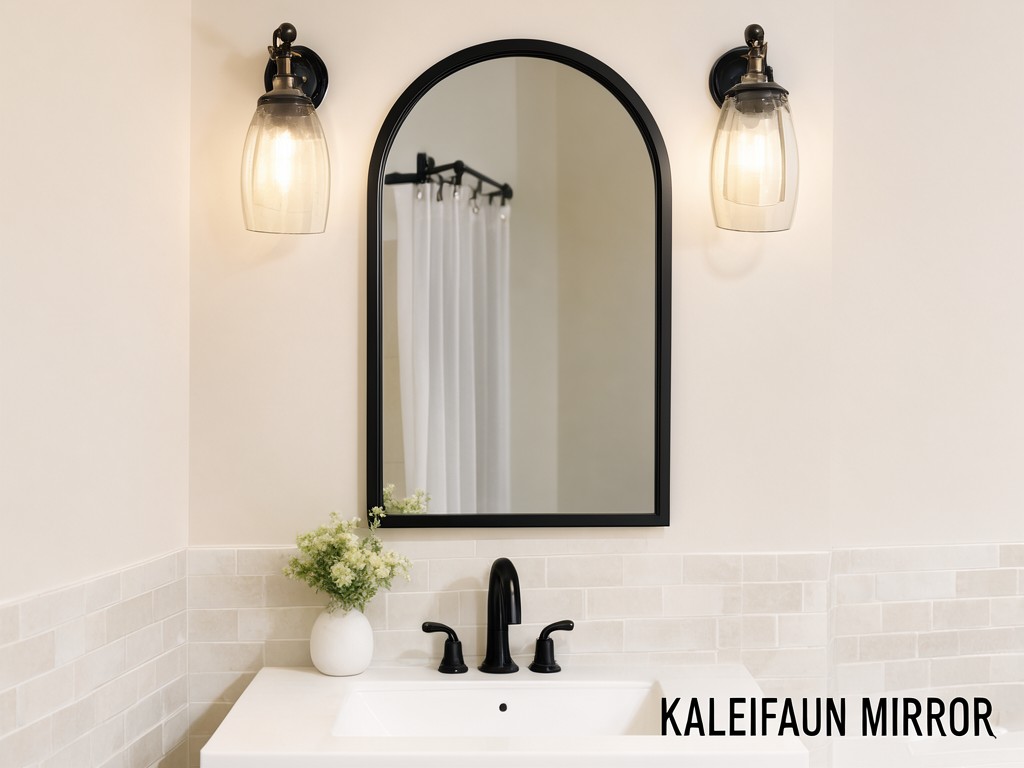
Steel Frame
A formed steel frame can support a slim profile at a competitive unit cost. Its finished edges and coating coverage need close control; exposed metal near joints or cut edges can corrode in persistently damp conditions.
Aluminum Frame
Aluminum reduces frame weight and does not rust like steel, but the material and finishing route can raise the piece price. Check profile stiffness and coating consistency so a lighter frame does not flex or vary in appearance between lots.
Neither frame choice sets the full delivered weight by itself. Glass size and thickness, frame section, hanger hardware and protective packing all contribute. Compare finished units from the same configuration, and confirm that the mirror sits flat and hangs level; weight alone does not show whether hardware placement or frame geometry has shifted.
Use an approved physical sample and a dimensioned drawing as the shared reference for both sources. A written tolerance for overall size, arch shape and hanger location makes lot comparisons actionable; a general instruction such as “match sample” leaves room for gradual drift.
What Gets Checked Before Shipment
Before release, inspection should follow the buyer-approved sample, drawing and agreed acceptance criteria. The checks need consistent lighting and measurement points; otherwise, differences between inspectors can obscure a real change in glass appearance or frame finish.
A practical lot review combines dimensional measurement with a visual examination of the mirror face, edges, joints, coating and rear surface. Fit the hanging hardware to a test fixture and confirm that the unit rests level without frame distortion. Record the quantity checked, defects found and lot reference so a later claim can be traced to the shipment rather than treated as an isolated anecdote.
Transit protection also deserves a pre-shipment check. Verify that the mirror face and frame cannot contact hard surfaces inside the pack, that corners receive suitable protection, and that the carton suits the planned handling route. For a second-source trial, compare packed samples and damage feedback as well as factory inspection records.
Care, Storage and Service Life
Regular bathroom use exposes the mirror to moisture, residue and repeated cleaning. Wipe the glass with a soft cloth and a mild cleaner, then dry the lower edge and frame. Avoid abrasive pads, strong acids, alkalis and prolonged contact with pooled water, since they can mark the finish or damage vulnerable mirror edges.
Store cartons indoors in a dry area, upright only where the packaging instructions permit, and away from impact or pressure on the glass face. Keep stock off damp floors. Before installation, check the wall and fixing method against the packed mirror weight; unsuitable anchors can cause movement or breakage regardless of the mirror’s factory condition.
Ordering, Tooling and Lead-Time Questions
How should we qualify a second source without changing the retail specification?
Share the current drawing, approved sample, packaging details and acceptance points before requesting a comparison quote. Ask the supplier to identify any differences in glass, frame section, finish, hardware or packed weight. Approve a pre-production sample before a volume order if any detail differs.
When does tooling amortisation affect the unit price?
Tooling amortisation decides how a low-volume run compares with repeat orders. A standard frame profile may avoid a dedicated tooling charge, while a non-standard arch or frame detail can add setup cost and time. Request tooling, sample and unit costs as separate quote lines, with the amortisation basis stated clearly.
What affects minimum order quantity and lead time?
Glass availability, frame material, finish scheduling, packing components and order quantity all affect the production window. Confirm whether the quoted lead time begins at deposit, sample approval or artwork approval, and ask how the supplier handles repeat orders when a component is temporarily unavailable.
Which records help keep successive lots consistent?
Retain the approved sample, drawing revision, finish reference, inspection record and lot identification. These references help resolve disagreements about arch dimensions, black finish appearance, unit weight or packing condition before the next purchase order.
For a quotation review, send the target dimensions, expected order quantity, required packaging and approved reference details. A like-for-like review can separate genuine unit savings from specification or freight changes.