B2B gold arch mirror for interior designers Vendor - Bulk Supply and Specification Guide
Weight and stiffness trade off against each other: a larger mirror needs enough frame support to stay square through handling, but added metal raises freight cost and installation load. For a second-source review, compare the finished mirror and its packing configuration, not the frame finish or glass thickness in isolation.
Materials and Construction Trade-offs
Lock the glass, backing, frame section and gold finish as one approved build. A change to any one of these can alter the mirror’s weight, edge protection, perceived colour or fit with the mounting hardware.
Most arch mirrors use silvered float glass cut to shape, with a protective coating on the rear surface. Glass thickness affects rigidity and finished weight; the appropriate choice depends on the mirror’s dimensions, support design and intended mounting. A safety backing film can help retain fragments if glass breaks, but it does not make ordinary mirror glass equivalent to safety glazing. Confirm any market-specific glazing requirement before approving the specification.
For the frame, formed steel can provide a firm perimeter at a competitive unit cost, while aluminum can reduce shipped weight. Gold appearance may come from a plated, anodized or coated surface, depending on the selected metal and finish route. These finishes do not produce an identical shade or sheen; approve a physical finish sample against the intended interior palette, then hold that sample as the batch reference.
Measured Performance in Real Use
The limiting factor is rarely the headline specification. Returns more often follow a visible mismatch between approved and delivered gold tone, chipped glass edges, distorted reflections or a frame that flexes during installation. Agree the inspection view, reference lighting and acceptance sample before a production order; otherwise, both parties may judge the same finish differently.
| Format and use condition | Common complaint or failure | Specification to control it |
|---|---|---|
| Wall-mounted formats around 600 × 1600 mm; indicative finished weight is about 12–17 kg, depending on glass area and frame. | Mounting points sit out of position or the perimeter flexes during handling. | Specify overall dimensions, mounting-point locations, frame section and allowable finished-weight range on the approved drawing. |
| Large formats around 800 × 1800 mm; indicative finished weight is about 20–28 kg, subject to arch profile and frame construction. | Glass-edge damage or frame distortion appears after repeated warehouse handling and delivery. | Set edge-protection details, carton or crate support points, glass thickness and a packed-unit weight target. Confirm final dimensions and weight on the production sample. |
| Repeat private-label orders where units from different batches appear side by side in one project. | Gold tone, gloss or arch shape varies enough to prompt a customer return or replacement. | Retain a signed finish master, dimensioned profile drawing and approved packing sample; compare each batch to those controls. |
The dimensions and weights above are planning ranges, not a fixed catalogue promise. Arch geometry changes the glass area, and frame gauge, backing and hardware shift the final weight. For landed-cost comparisons, request the packed dimensions and gross weight as well as the finished mirror size.
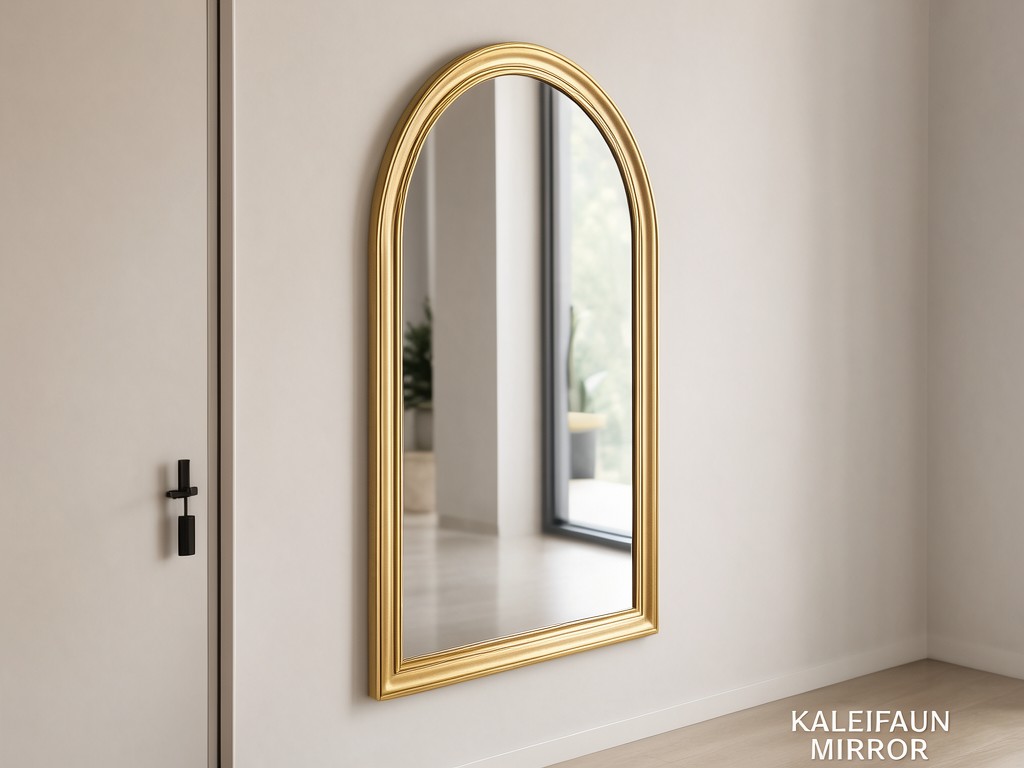
Customisation Options and Their Limits
Custom dimensions, arch profiles, frame colours, mounting hardware and private-label packaging are practical OEM options. Each added variation creates another point to control across samples, drawings and reorder records.
- For a new arch outline, approve a full-size template or dimensioned drawing before glass cutting. Small changes to the crown or shoulder radius affect the visual match between units.
- Choose the gold finish by physical sample and record the surface sheen and base metal. A finish name alone may not hold colour between suppliers or production routes.
- Branding can be applied to the carton, protective label or supplied documentation. Confirm artwork position, language, barcode data and carton marks before print release.
- If a design calls for a frameless or reduced-frame edge, confirm how the glass is supported and protected. Removing frame material can change both edge vulnerability and mounting requirements.
The lower-cost route is usually to keep a proven frame profile and finish while changing only the label or carton artwork. New tooling or profile changes can make sense for a committed volume, but they add sampling and approval work before repeat production settles.
Quality Control and Batch Consistency
Repeat loading drives the failure: each lift, carton transfer and installation can stress the glass edge, frame joints and mounting points. Inspection should therefore cover the finished assembly and the packed unit, not just incoming glass or a frame sample.
A factory-side control plan can check overall height and width, arch profile, squareness, mounting-point position, finished weight and frame alignment. Inspect the mirror face for scratches, blemishes and visible reflection distortion, and check the rear coating and glass edges for damage. Compare finish colour and sheen with the retained approved master under consistent viewing conditions. Record results by batch so a replacement order can be matched to the same reference rather than reinterpreted from a product photograph.
Set acceptance limits before mass production. A lower unit price can cost more overall if finish drift, edge damage or missing hardware leads to site replacements, freight claims and warranty handling.
Capacity, Tooling and Scheduling
Capacity depends on the approved design and its material route. Standard frame sections and an existing arch profile generally need less preparation than a new profile, custom colour or revised mounting arrangement. Glass cutting, finishing and packing also need to be scheduled against the same approved dimensions; late changes can make completed components unusable.
Existing Profile and Finish
A current frame profile and stocked finish can shorten the approval path. Confirm that the existing master matches the buyer’s required gold tone and mounting layout before using it for a repeat order.
New Profile or Special Finish
A new arch shape, frame section or finish may require tooling, trial pieces and a separate colour approval. Include those steps in the launch calendar before setting a shipment date.
For a second-source qualification, compare sample approval time, available production windows and the supplier’s ability to retain drawings, finish references and packing specifications. Lead time should be confirmed against the selected glass size and finish at order release rather than copied from a standard item listing.
Keeping Repeat Orders Supplied
Availability is more predictable when the approved design uses repeatable glass dimensions, a retained frame specification and a controlled finish reference. Ask which components are routinely held and which are purchased or made only after order confirmation; stock claims without a defined part number and finish can leave a reorder exposed to substitutions.
For continuity, keep the product drawing, bill of materials, label artwork, inspection record and packaging details under one revision. Agree how the supplier will notify you if a source material or finish route changes. That record supports a second source without forcing the buyer to absorb unnoticed differences in colour, dimensions or carton configuration.
Share the target sizes, forecast quantities, gold finish reference, mounting requirements and destination packaging needs for a project review. Discuss a second-source specification and sampling plan before placing a bulk order.