Bespoke black industrial arched wall mirror: What Buyers Should Check Before Ordering
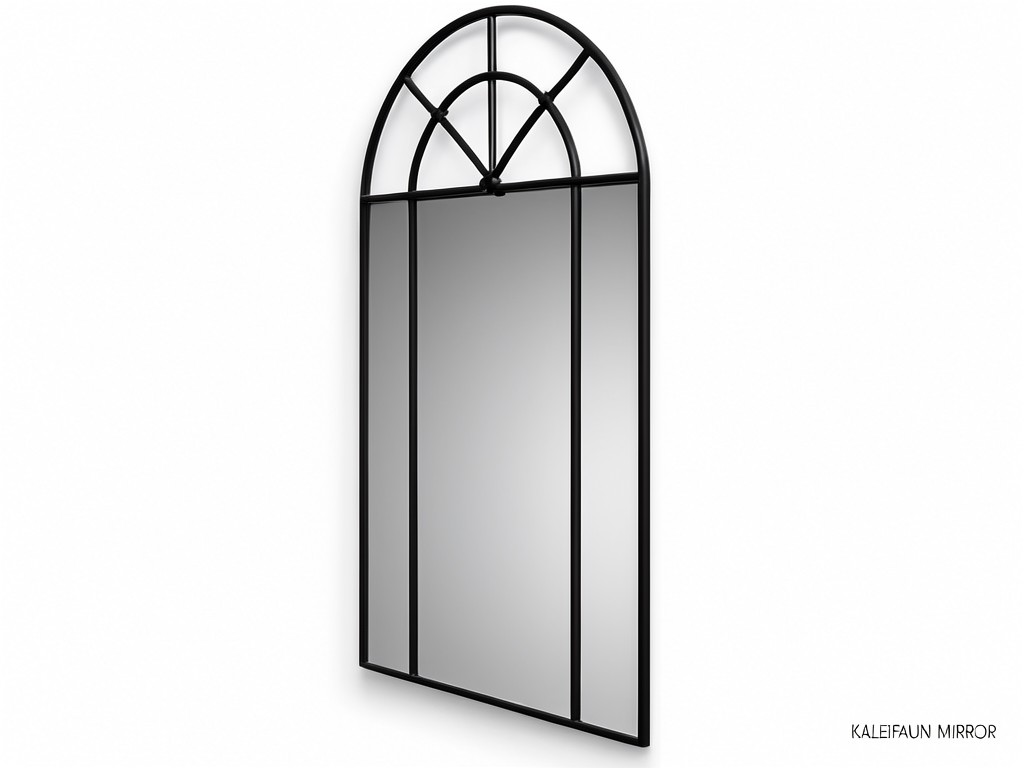
On a club programme that reorders twice a season, an arched mirror may sit in a changing area, studio or member-facing corridor where appearance and repeatability both matter. A black frame can unify a room scheme, but the commercial result depends on more than its colour: the arch profile, glass dimensions, frame depth, hanging points and carton protection must match across batches. In humid indoor areas, the frame coating and the treatment of exposed metal edges also affect how well the mirror holds its appearance.
Moving from sample orders to container loads changes the cost calculation. A sample can use hand-set forming and one-off glass cutting; repeat production benefits from fixed arch templates, frame jigs and planned glass layouts that reduce setup time and offcut. Those savings only improve cost per unit sold if the approved dimensions, black finish and packing method stay controlled. A lower unit purchase price can be offset by finish variation, breakage in transit or returns from a mirror that does not fit its intended wall position.
Customisation Options and Their Limits
| Finish or colour choice | Production consideration | Buyer trade-off |
|---|---|---|
| Matte black powder coat | The steel frame requires consistent surface preparation and coating coverage, especially around welds and the curved crown. | A practical choice for repeat programmes; approve sheen and texture against a physical sample. |
| Satin black powder coat | A smoother appearance makes handling marks and surface defects easier to see under strong light. | Can suit coordinated room fittings, with closer finish inspection at final packing. |
| Custom black shade or gloss level | A non-stock coating may require a separate colour approval and a production minimum from the coating supplier. | Specify a retained reference sample if later replenishment must match the original range. |
| Alternate frame colour | Changing colour does not change the frame-forming method, but each colour adds a separate finish-control requirement. | Useful for a coordinated range; multiple low-volume colours can raise unit cost. |
Glass size and frame geometry should be frozen together. A wider frame lip can conceal more of the mirror edge, but it changes the visible glass area; a tighter fit leaves less allowance for dimensional variation during assembly. For a damp indoor location, specify the expected exposure and ask how the steel is pretreated and how cut edges, joints and the rear of the frame are protected. An indoor powder coat is not, by itself, a promise of outdoor weather resistance.
Configuration limit: confirm whether the mirror is intended for dry indoor use, humid interior use or a covered exterior position before approving the coating and rear protection. Direct rain and prolonged moisture exposure need a separately reviewed construction; do not infer an exterior rating from a black finish.
Requirements by Buyer Segment
A product manager extending a room collection usually prioritises a stable arch profile, finish match and packaging that protects the mirror through retail handling. A distributor may put more weight on carton dimensions, clear model identification and a configuration that can serve several customer types without carrying too many slow-moving variants.
Brand Product Manager
For a coordinated collection, lock the overall height, width, arch rise, frame depth and approved black reference. The supplier can retain the frame-forming jig and glass cutting file for later runs; that reduces variation, but only if revisions are recorded rather than mixed into an existing item code.
If the mirror will be merchandised in a humid club changing area, define the actual location and cleaning routine. That gives the factory a basis to review coating and rear-edge protection without pricing for an unnecessary exterior specification.
Distributor or OEM Buyer
A distributor benefits from limiting frame colours and carton formats while offering a few useful mirror sizes. Fewer variants can improve coating batch economics and stock turns, provided the size range still fits common installation spaces.
- Check the packed dimensions against warehouse racking and outbound parcel or pallet limits.
- Request model and batch identification that links cartons to the approved specification.
- Set the acceptable inspection points for finish shade, glass size and hanging hardware before a full order.
OEM and ODM Programme Structure
When a brand extends an existing range, an OEM programme can retain its approved drawing, frame jig and finish reference while changing the label and carton presentation. ODM development starts with the buyer’s target dimensions and appearance, then confirms the frame profile, glass cut and hanging arrangement in a sample. A formed arch may use a dedicated bending fixture; a repeatable fixture has an initial setup cost, while higher order volume spreads that cost across more units and can reduce handling per mirror.
| Specification | Typical order definition | Cost or consistency point |
|---|---|---|
| Overall size and arch | Buyer drawing defines overall width, height, arch rise and corner transitions. | A fixed drawing and forming jig support repeat batches; late profile changes can require new setup and sample approval. |
| Mirror glass | Common choices include 3 mm or 4 mm glass, subject to mirror size, support and handling needs. | Thicker glass adds weight and material cost; confirm the hanger and carton design against the selected build. |
| Frame construction | Formed steel perimeter with welded or joined straight sections, based on the approved profile. | Frame depth and section affect rigidity, visible border and material use. |
| Hanging hardware and pack | Define hanger position, included hardware, edge protection, inner supports and outer carton. | A pack validated for the actual glass size can reduce transit damage and the cost of replacement shipments. |
Larger orders typically improve unit economics through fixture amortisation, coating setup and more efficient glass nesting. They do not remove the need to confirm packing or inspection; they increase the cost of carrying an unnoticed defect across a batch. Bespoke glass and non-stock coatings can also affect production scheduling, so buyers should approve the sample and order specification before committing to the required delivery window.
Inspection Items and Test Methods
Inspection should compare production pieces with the approved sample and drawing, not rely on a general appearance check. The arch can look uneven if the frame is distorted during welding or if the glass cut does not sit consistently within the frame. Black finish variation is most noticeable across mirrors displayed side by side, while small chips at the edge can become a breakage point during handling.
- Measure overall width, height, arch rise and frame depth at the agreed inspection points.
- Check glass edges, mirror surface, backing condition and fit within the frame under consistent lighting.
- Compare coating shade, sheen, coverage and visible defects with the retained finish reference; inspect welds and corners closely.
- Review hanger position, hardware fit and frame stability before the mirror enters its carton.
- Assess the packed unit with a handling or transit simulation agreed for the export route, then inspect the glass and frame for movement or impact damage.
Weather resistance needs a separate, use-specific review. For a humid interior, inspect coating coverage at joints and exposed edges and confirm the rear materials tolerate the stated cleaning and moisture conditions. For an exposed exterior location, request a construction review and relevant validation before the order; visual inspection alone cannot establish resistance to prolonged weather exposure.
Keeping Repeat Orders Supplied
Finished bespoke mirrors are not always suitable for open-ended stock because glass size, frame profile and coating colour are tied to the approved specification. A more controlled arrangement is to retain the drawing, sample reference, forming jig details and carton specification, then agree which standard components or packaging materials can be held against a repeat forecast.
For repeat supply, keep one item code per approved configuration and record any revision to glass thickness, arch dimensions, coating or hardware. That record helps the factory compare incoming material and finished goods with the last accepted batch. Before replenishment, confirm whether the order uses the same finish reference and pack; a change in either can affect appearance, damage rates and the cost per unit sold.
For quotation review: provide target dimensions, expected order quantities, installation environment, finish reference, branding and export-pack requirements. These details let the factory separate one-time setup cost from repeat unit cost and identify where a common specification can support better stock turns.
Send drawings, sample photos or a target specification for a quotation review.