Cost-Effective Arched Bathroom Mirror Factory: Specification, Ordering and Quality Notes
The build method decides whether a second source can repeat the arch, edge finish and mirror backing without pushing returns onto the buyer. For importers and brand product managers, a low unit quote matters only if the approved dimensions and appearance hold across replenishment lots.
How It Performs in Use
Process choice shows up later as a crooked top curve, a visible edge flaw or backing damage after a humid bathroom season. Buyers notice these faults across a wall display: even a small outline or colour difference can make same-SKU units look like separate products.
Specification rule: Approve the overall width and height, arch radius or template, glass thickness, edge treatment and backing system together. A change to one can alter weight, reflection at the edge, mounting clearance or the finished appearance.
For routine residential use, mirror glass with a protective backing and a polished perimeter is a common cost-conscious build. Bathroom humidity makes coating and backing condition relevant; chipped edges, scratches through the backing or poor carton support can become claims even when the glass arrives intact.
Construction Method and Its Effect on Consistency
Consistency is set at the forming stage: the factory cuts the mirror blank to a controlled arch profile, then grinds and polishes the perimeter before applying or checking the protective backing and fitting the mounting hardware. A retained cutting program and approved physical sample help keep the curve and overall dimensions aligned between runs.
| Overall envelope (W × H) | Glass thickness option | Planning weight per mirror |
|---|---|---|
| 400 × 600 mm | 4 mm or 5 mm | About 2.0–2.4 kg at 4 mm; 2.5–3.0 kg at 5 mm |
| 500 × 700 mm | 4 mm or 5 mm | About 2.9–3.5 kg at 4 mm; 3.6–4.4 kg at 5 mm |
| 600 × 800 mm | 4 mm or 5 mm | About 4.0–4.8 kg at 4 mm; 5.0–6.0 kg at 5 mm |
| 600 × 900 mm | 4 mm or 5 mm | About 4.5–5.4 kg at 4 mm; 5.6–6.8 kg at 5 mm |
Weights are planning estimates for the glass panel; the arch removes area from the rectangular envelope, and backing, brackets and packaging add weight. A 5 mm panel costs more and adds load, while 4 mm can reduce freight cost if the selected size, mounting method and packing design suit it. Confirm final weights from the approved drawing and production sample.
Assumptions Buyers Should Stop Making
A familiar product photo is not a production specification. Use this decision path to settle the build before comparing unit prices:
- If the mirror must match a current SKU, supply the approved drawing or a measured sample; otherwise, agree the overall dimensions and arch profile before requesting samples.
- If the top curve is the visual identifier, record its radius or provide a full-size template rather than relying on “arched” as the description.
- If the curve is flexible, approve a defined profile and document the permitted dimensional variation before mass production.
- If the mirror is intended for a humid bathroom, specify the mirror backing and edge finish; do not assume every silvered mirror has the same resistance to moisture at exposed edges.
- If installation uses adhesive, clips or a hanging rail, provide the fixing method and wall-side clearance. Confirm bracket position against the finished mirror, not only the glass outline.
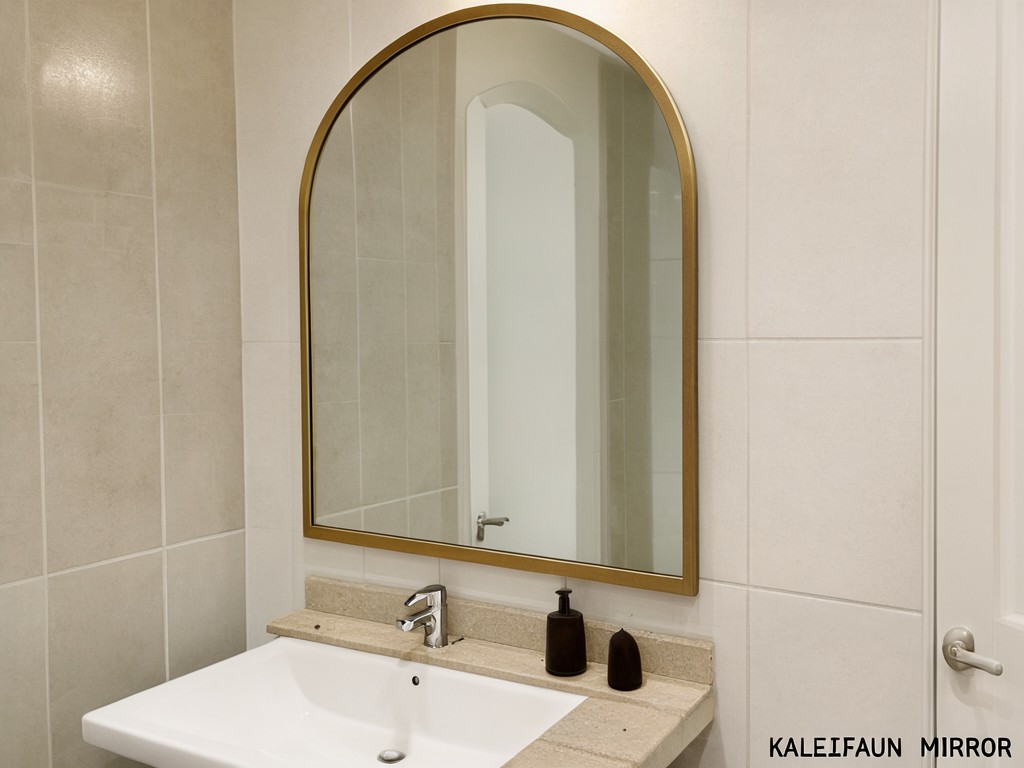
Unrecorded substitutions are a common source of lot drift. A small change in arch geometry or hardware position can make cartons harder to mix on a retail display and can trigger avoidable replacement orders.
Working as a Production Partner, Not a Catalogue Supplier
A second source needs to reproduce the buyer’s specification, not merely offer a similar stock shape. The factory should review the sample, drawing, mounting plan and export pack before pricing a repeatable run.
Lower-Cost Standard Build
A standard glass thickness, existing arch program and common mounting hardware can reduce setup and purchasing cost. This route fits buyers who accept a defined outline and need fewer custom details.
Buyer-Specific OEM Build
A custom profile, branded carton, revised backing or dedicated hardware can improve SKU fit but adds approval steps and may require separate material planning. Confirm artwork, fixing positions and pack-out before the production sample is signed off.
How Consistency Is Held Across Batches
Batch control starts with a fixed reference sample and revision-controlled dimensions. At incoming inspection, the factory checks glass thickness and visible surface condition; after cutting, it compares width, height and arch profile to the agreed drawing or template. Edge chips, uneven polishing, mirror spots, backing scratches and hardware position should be recorded against the same acceptance criteria for each lot.
Finish colour can appear different under changing room light, so compare samples side by side under consistent viewing conditions. Keep a retained sample or signed visual reference for later runs. Packing checks matter too: carton partitions and corner protection must prevent glass-to-glass contact and edge impact in transit; an agreed shipment trial can expose weak points before a larger order ships.
- Record the drawing revision, glass thickness, backing choice and hardware layout by order lot.
- Check outline dimensions, arch symmetry, edge finish and surface appearance against the approved reference.
- Inspect finished packing for movement, exposed edges and carton damage risk before dispatch.
Volume Planning and Lead Time
A repeat order is easier to schedule when its drawing, approved sample, hardware and carton are already settled. Initial orders take longer if the arch profile, backing or retail pack still needs approval; the factory should quote the production window after it confirms those inputs and current material availability.
For a second-source qualification, plan a sample review before committing the full volume. Staggered releases may limit warehouse pressure, but only if the supplier can reserve matching materials and preserve the approved specification across each release. Ask how the factory handles schedule changes and whether a revised order requires a new sample sign-off.
Stock Availability and Reorder Planning
Finished arched mirrors are fragile and take substantial warehouse space, so holding every custom size as finished stock may not be cost-effective. Standard glass, backing materials and common hardware may be easier to plan than a finished mirror with a buyer-specific profile and label.
For regular replenishment, agree which components can be reserved, the forecast horizon and the point at which a reorder must be released. Keep packaging artwork and carton specifications available to the supplier; changes to either can affect pack-out and dispatch timing even when the mirror itself is unchanged.
Ordering, Tooling and Lead-Time Questions
Does a custom arch require a mould?
For a cut mirror outline, the factory typically uses a cutting program and profile reference rather than a mould. A new shape may involve programming or setup charges; ask the supplier to confirm any charge and retain the approved drawing for repeat orders.
What should be approved before bulk production?
Approve the mirror sample and drawing together, including overall size, arch profile, thickness, edge finish, backing, mounting hardware and carton details. This gives both sources the same reference for later inspection and reduces disputes over acceptable variation.
How do MOQ and lead time change for a private-label order?
MOQ and schedule depend on the mirror size, material purchase, custom hardware and printed packaging. Share the forecast and branding requirements at quotation stage so the factory can separate sample approval, material preparation and production timing in its offer.
Request a Specification Review
Send the drawing or reference sample, target order volume, preferred glass thickness, mounting method and export-pack requirements. A factory review can identify specification gaps before sample approval and compare the cost of a standard build against a buyer-specific version.