Custom Arched Bathroom Mirror China Supplier - Bulk Supply and Specification Guide
The limiting factor is rarely the headline specification. For an importer matching an approved private-label mirror, small changes to arch radius, edge finish, or backing can affect fit, appearance, and reorder consistency. Locking those details before production usually costs less than correcting a mixed shipment or revising the product after launch.
Bulk programs can be made to a supplied drawing, approved sample, or dimension schedule. The practical starting point is the mirror’s finished outline and installation method, followed by glass thickness, coating, safety backing, and export packing.
Materials and Construction Trade-offs
Bathrooms expose mirror edges and backing to repeated humidity, so coating choice and edge coverage matter as much as the reflective surface. Standard silvered float glass is a cost-conscious option for dry or well-ventilated rooms. A copper-free silver mirror with a protective paint system is often specified for projects where moisture exposure and edge appearance carry more weight.
Thickness also affects the delivered product. A 4 mm mirror reduces weight and freight cost; 5–6 mm glass can suit larger formats where buyers want a more substantial feel and reduced flex during handling. The heavier choice adds material and packing cost, so it should follow the mounting design rather than serve as a default upgrade. A safety backing film can help retain fragments if glass breaks, but it does not replace suitable wall fixings or careful installation.
Specification rule: confirm whether the drawing measures the glass edge or the outer frame. The two references produce different finished dimensions, especially around the arch and side returns.
Construction Method and Its Effect on Consistency
When an arched mirror arrives with a visibly uneven crown or inconsistent edge, the cause is often the shape process rather than the silver coating. A repeatable production route starts with glass cutting to the approved outline, followed by edge grinding and polishing, glass washing, reflective coating, and protective backing coats. The arch profile and polishing allowance must stay consistent before coating begins.
A controlled template or CNC cutting program helps hold the crown, shoulder transitions, and overall width across a batch. For repeat orders, the factory can retain the approved drawing and cutting data; the buyer should also keep a signed sample or dimensioned master for comparison. This reduces variation without requiring a new product design.
Edge inspection, outline measurement, surface checks, and backing review are useful checkpoints. A sharp arris, coating void, or paint defect near the perimeter can become more noticeable after installation, so acceptance criteria should identify which face and edge areas are visible in the intended mounting position.
Specification Range and Customisation Limits
Room layout, mounting clearance, and carton dimensions set the useful size range. Many custom programs fall around 400–1,200 mm wide and 600–1,800 mm high, with 4–6 mm glass as a common selection. Feasibility depends on the arch profile, glass thickness, edge treatment, and packing method; confirm unusually narrow shoulders or tight curves against a production drawing before confirming a purchase order.
| Bathroom Use Condition | Common Complaint | Specification to Confirm |
|---|---|---|
| Frequent shower use with limited ventilation | Dark spots or coating deterioration that begins near the edge | Mirror coating system, edge finish, and backing paint coverage suited to the exposure |
| Large mirror mounted with limited support points | Flex, vibration, or breakage during handling and installation | Glass thickness, backing option, mounting layout, and protective carton design |
| Multi-room project with mirrors installed side by side | Crown height or outside dimensions vary across units | Dimensioned arch profile, agreed measurement points, and batch inspection limits |
| Retail sale with a defined frame and wall clearance | Mirror does not fit the display or specified mounting position | Finished outline, frame overlap, hanging hardware position, and carton dimensions |
Available custom details can include overall dimensions, arch radius or profile, edge polish, glass thickness, backing, frame finish, hardware position, and carton or label requirements. Each additional finish or size can add a separate setup or inspection step. A stable specification across a larger order generally makes production planning and unit costing more predictable.
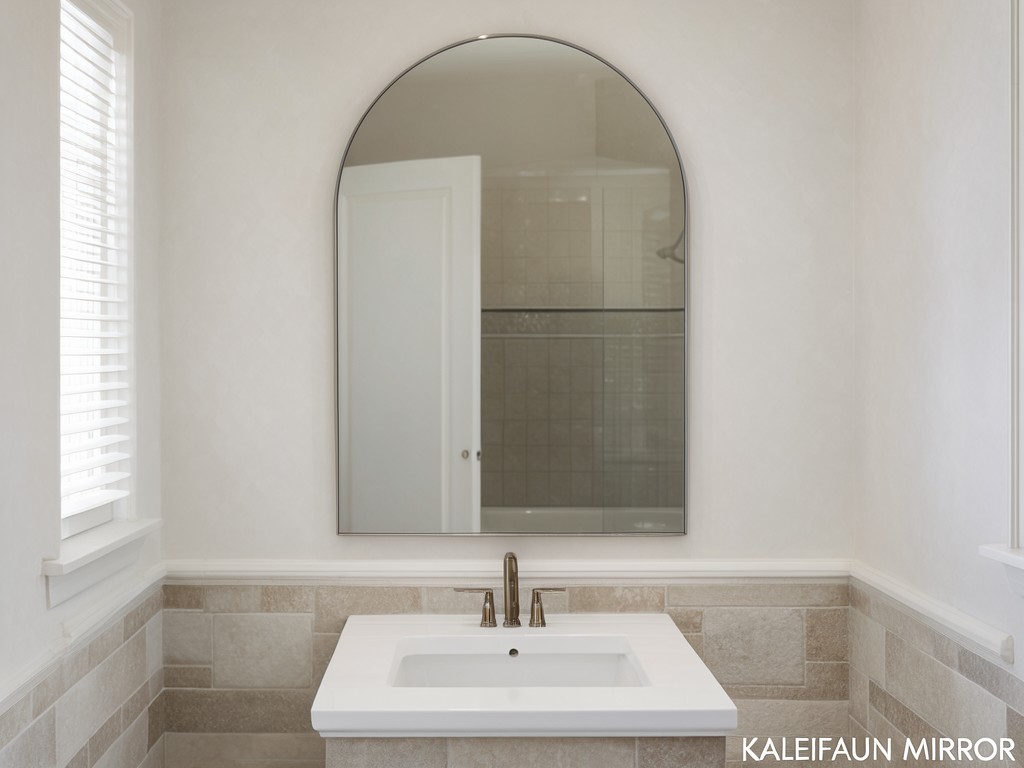
How to Choose Before Requesting a Quote
For a private-label match, send the approved dimensions and profile first. A photograph alone rarely captures the crown radius, glass-to-frame relationship, or mounting position closely enough for repeat production.
- Share a dimensioned drawing or physical sample, and mark the finished outline measurement points.
- State the room type, expected humidity, mounting method, and whether the mirror will sit in a frame.
- Specify glass thickness, coating preference, backing film, edge polish, and acceptable visual limits.
- Provide order quantity by size and finish, destination market, carton requirements, and target shipment window.
Combining several sizes under one order can improve material planning, but each distinct outline may require its own cutting setup and inspection reference. If unit cost is the priority, reducing size and finish variants often has a clearer effect than changing a coating specification that the application still requires.
Segment-Specific Requirements
Hotel and serviced-apartment buyers typically need a consistent outline across guest rooms, with packaging that protects polished edges during multi-stop delivery. Confirm the mounting hardware and wall clearance before placing the order; a mirror that matches the room’s visual standard can still cause installation delays if the fixing position differs from the project drawing.
Fitness clubs, academies, and shared changing facilities may see frequent use and regular cleaning. Buyers should specify the intended installation zone, expected humidity, edge exposure, and backing requirements. For residential retail programs, carton appearance, barcode placement, and clear size identification can matter as much as the mirror finish because mixed or damaged cartons create avoidable returns.
Capacity, Tooling and Scheduling
A repeat arched profile supports steadier output when the cutting file, edge specification, and inspection reference remain unchanged. Simple arch shapes usually need less setup than profiles with tight transitions or several outline changes. Tooling and setup costs are spread across the order quantity, so a larger run can lower setup cost per unit; that advantage depends on keeping the approved configuration intact.
Multiple sizes or frame finishes add changeovers and can extend the production window, even when the total unit count is similar. Quote timing should account for sample approval, glass and backing material availability, production sequence, inspection, and export packing. A firm schedule is best set after the final drawing and packing specification are approved.
One Profile, Larger Run
Fewer setup changes help spread cutting and approval costs across more units. This route suits buyers with a stable retail or project specification.
Several Profiles, Smaller Runs
More changeovers can raise the per-unit setup share and complicate scheduling. Grouping production by size or finish may help control the sequence.
Keeping Repeat Orders Supplied
Raw glass, coating materials, and packing components may be planned against forecast demand, but finished arched mirrors are less suited to generic stock. Their dimensions, edge finish, and packaging are often order-specific. A retained drawing, sample reference, and clear revision record help prevent a repeat order from drifting when the original buyer or production contact changes.
For ongoing supply, share an expected reorder quantity and timing rather than relying on finished-goods availability. Larger forecast batches can support material allocation, while smaller releases may reduce warehouse needs but require more frequent production scheduling. Confirm carton marks, batch identification, and the approved specification revision on each purchase order.
Ordering, Tooling and Lead-Time Questions
Can an existing private-label mirror be matched without redesign?
Usually, if the buyer can provide a dimensioned drawing or an approved physical sample. Confirm the glass outline, arch profile, edge finish, backing, hardware position, and frame reference before production approval.
Does a new arch size require new tooling?
A new cutting program or setup may be needed for a changed outline. The cost and schedule depend on profile complexity, quantity, and whether the new size can share production planning with existing sizes.
What determines the minimum order and production lead time?
The number of sizes and finishes, setup requirements, material availability, sample approval, and packing plan all affect the quote. A single repeat profile is generally easier to schedule than several small runs with different outlines; confirm the current minimum and timing against the finished specification.
Request a quotation review
Send the drawing or sample details, order mix, destination, and packing requirements. A specification review can identify missing dimensions and setup factors before pricing and scheduling are confirmed.
Discuss your arched mirror specification