Specifying Custom arched black bathroom vanity wall mirror Factory for Wholesale and OEM Orders
A low unit price stops looking economical when a mirror comes back because the black frame has chipped or moisture has reached the reflective backing. For a second-source programme, compare the expected replacement rate, finish consistency and freight damage exposure alongside the quoted price.
The Problem Buyers Keep Paying For
In bathrooms with daily use, the first complaints tend to cluster around the mirror edge and the frame corners. Condensation that remains on an exposed edge can mark the reflective layer; repeated cleaning can reveal weak points in a black coating, especially where the frame has sharp corners or thin coverage.
A second source should match the approved mirror dimensions, arch profile, frame depth and black finish closely enough to keep replacement stock compatible with the original installation. Minor differences can force a retailer or contractor to replace mounting hardware, conceal a gap or hold a usable unit as an odd-size return. Compare samples side by side under the same lighting before approving a production reference.
Cost check: Confirm how the supplier protects glass edges and controls the frame finish. Those details affect breakage, returns and the cost of stocking replacement units more directly than a small difference in the glass specification alone.
Material Options and Their Trade-offs
| Option | Cost and construction effect | Buyer trade-off |
|---|---|---|
| Aluminum frame with a black powder-coated finish | Typically lighter than a steel frame and suited to larger wall-mounted formats. Profile shape and coating coverage affect the final price. | A practical choice where lower handling weight and humidity exposure matter. Check coating coverage at joints and corners. |
| Steel frame with a black powder-coated finish | Can provide a slimmer, rigid frame profile, but frame weight and corrosion protection need review together. | May suit a defined visual profile or price point. Damaged coating at exposed edges can become a return cause in damp rooms. |
| 4–5 mm mirror glass with silver-backed reflective coating | Glass thickness changes weight, handling requirements and the fit within the frame. Backing and edge protection influence the finished cost. | Select the thickness against mirror size and mounting design; specify sealed edges for bathroom use and avoid standing water or direct shower spray unless the product is designed for that exposure. |
A copper-free backing is available for programmes that prioritize improved resistance to edge corrosion, though the cost depends on the supplier’s glass specification. A thicker glass panel adds weight and may need revised wall fixings; it does not correct poor edge sealing or a frame that traps moisture. Confirm the full mirror build, not only the face glass, in the approved specification.
Specification Range and Customisation Limits
Overall size
Common project briefs fall around 400–900 mm wide and 600–1,200 mm high. Confirm the exact arch rise, overall dimensions and tolerance against the installation drawing.
Glass and frame
Glass is commonly specified at 4 or 5 mm. Frame face width, projection, corner construction and black shade require a signed sample or controlled finish reference.
Mounting and branding
Mounting points, hanging direction, rear labels and branded cartons can be customized. Wall-fixing selection remains dependent on the substrate and installed mirror weight.
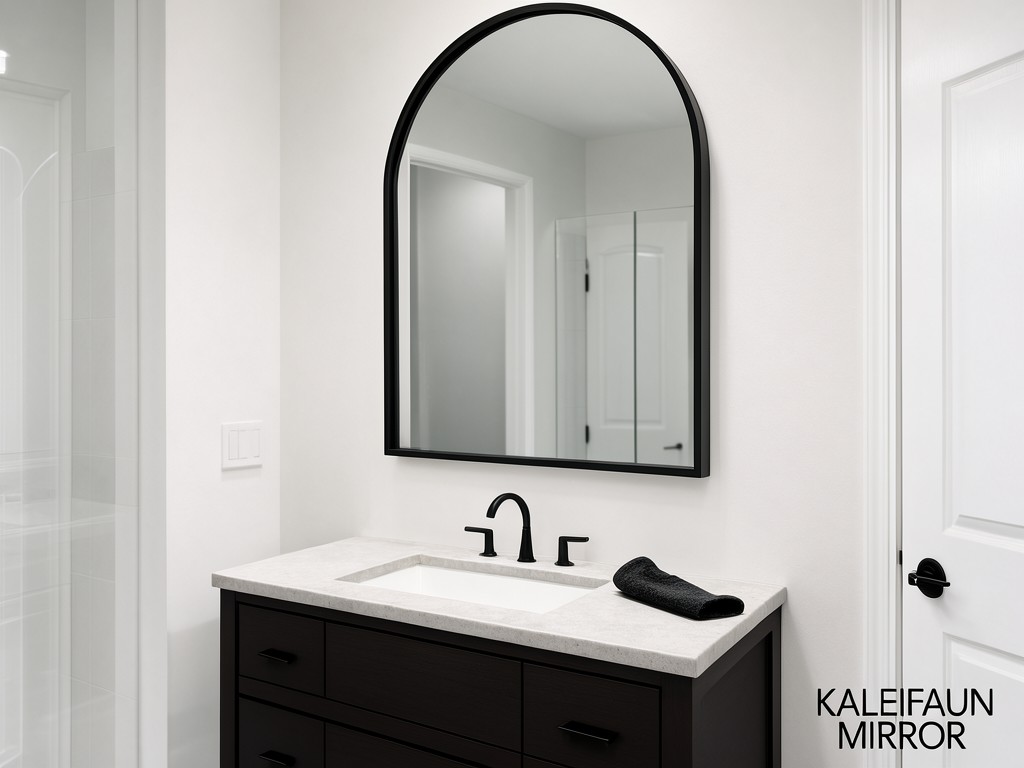
Custom arch geometry is possible, but very wide formats or narrow frame sections can change tooling, assembly control and freight exposure. Freeze a dimensioned drawing before sample approval; a visual reference alone does not define the arch radius, frame projection or mounting position.
Buying Mistakes That Lead to Returns
- A black finish is approved from a digital image rather than a physical sample. Screens do not show coating texture or shade consistently, so specify a signed sample or agreed colour reference.
- The purchase order lists overall height and width but omits the arch profile and mounting-point locations. A replacement can then fail to cover the old fixing holes or align with the vanity.
- Mirror edges are left exposed to repeated condensation or cleaning liquid. Ask how the backing and edges are protected, and give end users care instructions that prevent pooled water at the frame.
- A large mirror is ordered with the same wall hardware as a smaller model. Confirm installed weight and the intended wall substrate before listing or supplying fixings.
- The approved sample differs from the production reference for glass, frame profile or coating. Keep one signed sample and a controlled drawing for repeat orders.
For incoming checks, compare overall dimensions, arch symmetry, frame finish and mounting positions against the approved reference. Inspect edges and corners for chips or exposed backing before units enter resale stock.
Segment-Specific Requirements
Retail and private label
Retail buyers need a repeatable black finish, clear size identification and a display-ready product specification. For assortment continuity, keep arch shape, frame width and carton labelling consistent across size variants.
Hotels and multi-unit projects
Hospitality procurement prioritizes replacement compatibility across guest bathrooms and practical cleaning access. Specify the same mounting pattern across the project, and confirm the finish’s suitability for the room’s humidity and cleaning routine.
Bathroom distributors
Distributors often hold several sizes for contractor orders. Clear model coding and a stable dimensional drawing help avoid dispatch errors when a damaged unit needs replacement mid-project.
For any segment, clarify whether the mirror is intended for a humid vanity area or a zone exposed to direct water. That use condition informs the backing, edge protection, care guidance and any limits stated on the product page.
OEM and ODM Programme Structure
Lock the reference before splitting volume
For second-source qualification, start with the current supplier’s approved drawing, sample and inspection points. Record the glass thickness, outer dimensions, arch profile, frame material, black finish reference and hanger positions. If those records are incomplete, use a measured sample as the baseline and approve any differences before the first order.
An OEM programme can retain the buyer’s existing specification and add private-label labelling or retail documentation. An ODM brief can revise the arch proportions, frame shape or mounting arrangement, but new geometry may require additional sample rounds and a separate approval window. MOQ and lead time depend on size mix, material choices, finish setup and whether parts are shared across models.
Request a pre-production sample when the frame finish or arch profile is a major selling point. Approve the physical finish under consistent lighting, then keep the signed sample as the reference for batch checks and future reorders.
Stock Availability and Reorder Planning
- Separate stock sizes from made-to-order dimensions. Standard sizes may be available for repeat purchasing, while a non-standard arch or frame profile needs confirmation against current material and production capacity.
- Keep the approved drawing, finish reference and carton label version with the reorder file. This reduces the risk of receiving a visually similar mirror with different mounting points or dimensions.
- Allow time for sample review and any finish approval before scheduling replenishment. Peak renovation periods can tighten availability for less common sizes, so confirm stock status and lead time when placing the order.
A second source is most useful when it can repeat the specification, not just quote the same nominal size. Share the current requirement for a quotation review covering dimensions, frame and glass options, finish reference, MOQ, sample timing and reorder availability.
Send your drawing, reference sample details and expected order mix for a quotation review. Discuss your OEM or wholesale requirement.