Specifying Custom budget friendly arched bathroom mirror for Wholesale and OEM Orders
Cheaper stock options fail at the worst point in the season: an edge chips in transit, a backing defect appears after installation, or a mounting detail does not match the buyer’s wall system. For distributors and importers, a budget-friendly mirror earns its place through fewer replacements and warranty claims, not simply a lower unit price.
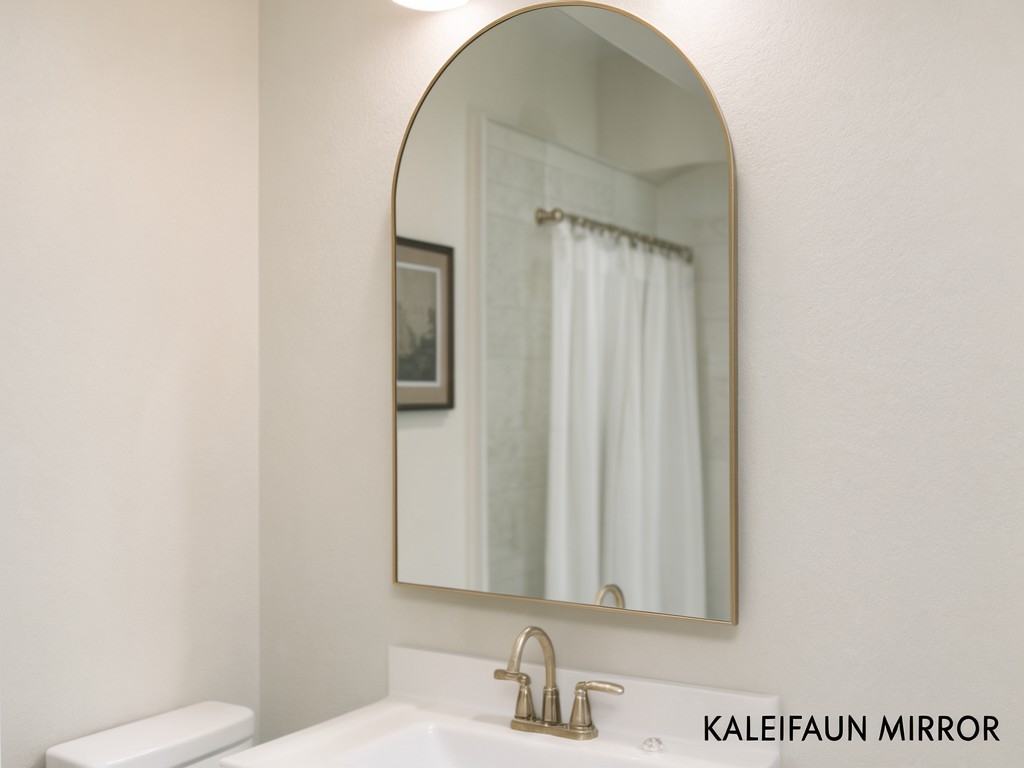
Arched mirrors use standard float glass cut to a curved profile, then receive a reflective coating and protective backing. For private-label runs, agreeing on dimensions, edge treatment, backing, and mounting hardware before production helps keep each reorder aligned with the approved sample.
What Actually Determines Performance
| Use setting | Practical configuration | Buyer trade-off |
|---|---|---|
| Occasional-use guest bathroom | 3 mm mirror glass, protected backing, simple wall hardware | Lower glass and freight cost; specify careful handling for the thinner panel. |
| Daily-use home bathroom | 4 mm glass, polished exposed edge, mounting hardware matched to the installation | Higher material and shipping weight; the thicker panel is less prone to flex during handling. |
| Rental or hospitality refresh | Repeatable size, specified backing, and replaceable or readily sourced mounting parts | A fixed specification reduces variation across rooms and simplifies replacement orders. |
The mirror works by reflecting light from a thin metallic coating deposited on the rear of the glass. A protective backing covers that coating, while the cut edge remains the main route for moisture or handling damage. In a bathroom, standing water at the lower edge and repeated contact with cleaning products can expose weak backing or edge protection before the reflective face shows wear.
For wholesale programs, specify the inspection points that affect returns: overall width and height, arch symmetry against the approved drawing, visible face defects, edge finish, backing coverage, and hardware position. A sample approval sets the reference; batch checks should use the same measurement points and viewing conditions.
Material Options and Their Trade-offs
Tooling amortisation decides whether a custom arch profile makes commercial sense. A straight-sided blank with a simple radius at the top is usually easier to produce than a tight or asymmetric curve; unusual profiles can increase cutting setup, edge-finishing time, and the chance of rejects. Set the profile from a dimensioned drawing before artwork or packaging is final.
Standard silver mirror
A cost-conscious choice for broad retail ranges. Confirm the backing system and edge coverage for the intended bathroom exposure; a low purchase price has little value if backing damage drives repeat claims.
Copper-free mirror option
A potential fit where the buyer prioritises corrosion resistance at the mirror edge. Compare its added material cost with expected replacement exposure, and approve the actual backing and edge specification rather than relying on the label alone.
Cost rule: choose glass thickness and backing as a matched package. Thinner glass reduces material and freight weight, but it does not compensate for exposed edges, unsuitable mounting, or weak protective packaging.
Construction Method and Its Effect on Consistency
Production typically starts with float glass cut to a blank, followed by CNC or template-guided cutting of the arch. The exposed perimeter is ground and polished to the agreed finish; the glass is then cleaned before the reflective coating and protective backing are applied. If the order includes a frame, frame fabrication and fitting follow the mirror process, with the profile and fixing method set in the approved specification.
Variation often starts before coating. A shifted cutting datum changes the arch rise, while inconsistent edge polishing changes the visible outline and can leave local chips. On private-label orders, compare samples and production pieces against one drawing for overall dimensions, arch height, corner transitions, and hardware locations. Keep glass thickness, backing description, and packing orientation fixed across repeat batches unless the buyer approves a revision.
Packaging is part of the construction decision. A large unsupported panel can crack under concentrated pressure in transit, even when the mirror itself meets the drawing. Dividers, corner protection, and a carton that limits movement add packing cost, but can lower the landed cost per sellable unit when breakage and replacement freight are included.
Specification Range and Customisation Limits
Common wholesale sizes can be made from stock glass thicknesses, but the curved cut, edge finish, frame, and packing all affect the delivered cost. The figures below are indicative glass mass only; frame, fittings, and packaging add weight. Actual mass varies with the final outline and supplier glass tolerance.
| Nominal width × height | Typical glass choice | Estimated glass mass | Ordering note |
|---|---|---|---|
| 400 × 600 mm | 3–4 mm | About 1.8–2.4 kg | Confirm the arch rise and mounting points on the drawing. |
| 500 × 700 mm | 3–4 mm | About 2.6–3.5 kg | Assess carton protection against the full packed weight. |
| 600 × 900 mm | 3–4 mm | About 4.1–5.4 kg | Review handling, wall fixing, and shipment configuration before confirming. |
Arched profiles are not interchangeable by width and height alone. Specify the straight side length, arch rise, top radius or curve description, and the locations of holes or brackets. Very narrow borders, tight curves, and cut-outs near the edge may limit the available polishing route or increase breakage risk; confirm feasibility with a production drawing before the buyer locks retail packaging.
Matching the Product to the Buyer's Need
Replacement rate, not unit price, is the useful comparison for a wholesale line. A low-cost specification can work for a protected, occasional-use installation; a daily-use bathroom or multi-property program may justify thicker glass, a more suitable backing, or stronger packing if those choices reduce damage and warranty handling.
Compare landed cost per sellable mirror: unit cost plus packing, freight, breakage, replacement freight, and claim administration, divided by units accepted for sale. For a new arch profile, first-order setup and sample costs matter; later batches benefit only if the drawing, approved sample, and process settings remain stable. Request a quotation against the intended annual volume rather than selecting solely from a one-time order price.
Customisation Options and Their Limits
- Set overall dimensions, arch rise, and profile from a dimensioned drawing; a profile change after sample approval can require new setup and another approval round.
- Choose exposed polished edges or a frame that covers the perimeter. Frame colour and finish should be agreed using a physical reference where shade consistency matters.
- Specify backing, mounting hardware, and any safety film as separate line items. Adhesive mounting depends on the wall surface and installation method; confirm compatibility rather than assuming the mirror can be fitted with any adhesive.
- Provide the logo file, label text, carton artwork, and barcode requirements before packaging approval. Artwork changes late in production can delay print approval or create mixed packaging within a batch.
Each added option has a cost and consistency consequence. Extra frame finishes, hardware variants, or individual retail cartons can split order quantities across more components, so confirm the sales mix before setting the SKU plan.
Requirements by Buyer Segment
Distributors usually need a small set of repeatable sizes, clear carton identification, and spare hardware that is easy to source. Their main exposure is mixed specifications across replenishment orders, so the purchase file should identify the approved profile, glass thickness, backing, edge finish, and packed configuration.
Importers supplying private-label ranges often need a controlled sample, retail-ready packaging, and traceable batch details. Ask the factory to identify production lots on cartons or shipping documents and agree how any approved material substitution will be communicated. For hospitality buyers, repeated dimensions and available replacement parts can matter more than decorative variants because maintenance teams need to replace one damaged unit without changing the room specification.
Ordering, Tooling and Lead-Time Questions
Custom shapes need a confirmed drawing and sample approval before a repeat order can be measured against the same reference. Tooling or cutting setup charges depend on profile complexity and batch quantity; spreading setup cost over a larger run lowers its share per unit, but only if the buyer can sell the inventory without carrying excess stock. Lead time depends on glass availability, finishing, packaging approval, and order volume, so confirm the production schedule with the final specification.
Can the next order match the approved sample?
Yes, if the approved drawing and material specification stay unchanged. Record the glass thickness, arch dimensions, edge finish, backing, hardware locations, and packaging details in the purchase specification, then check production samples against those references.
What information helps price a new arch profile?
Send a dimensioned drawing that shows overall width and height, arch rise, side lengths, edge finish, mounting locations, and frame details if applicable. Include target order quantity, packaging format, and destination market so the quotation reflects the complete configuration.
Can the MOQ be reduced for a private-label test order?
A smaller run may be possible, but setup, sample, and packaging costs are divided across fewer units. Ask for pricing at the test quantity and the intended reorder quantity; that comparison shows whether a lower initial commitment creates a meaningful cost difference later.
For a quotation review, send the target size, glass thickness, profile drawing, finish and mounting requirements, expected order quantity, packaging needs, and destination. Share your specification for a quotation review before committing to artwork or retail packaging.