Custom full length gold arch floor mirror Factory: Specification, Ordering and Quality Notes
Most quality disputes start with a consistency gap. Across repeat orders, a slightly different arch radius, gold tone or support angle can turn a showroom match into a return, even when each mirror is usable on its own.
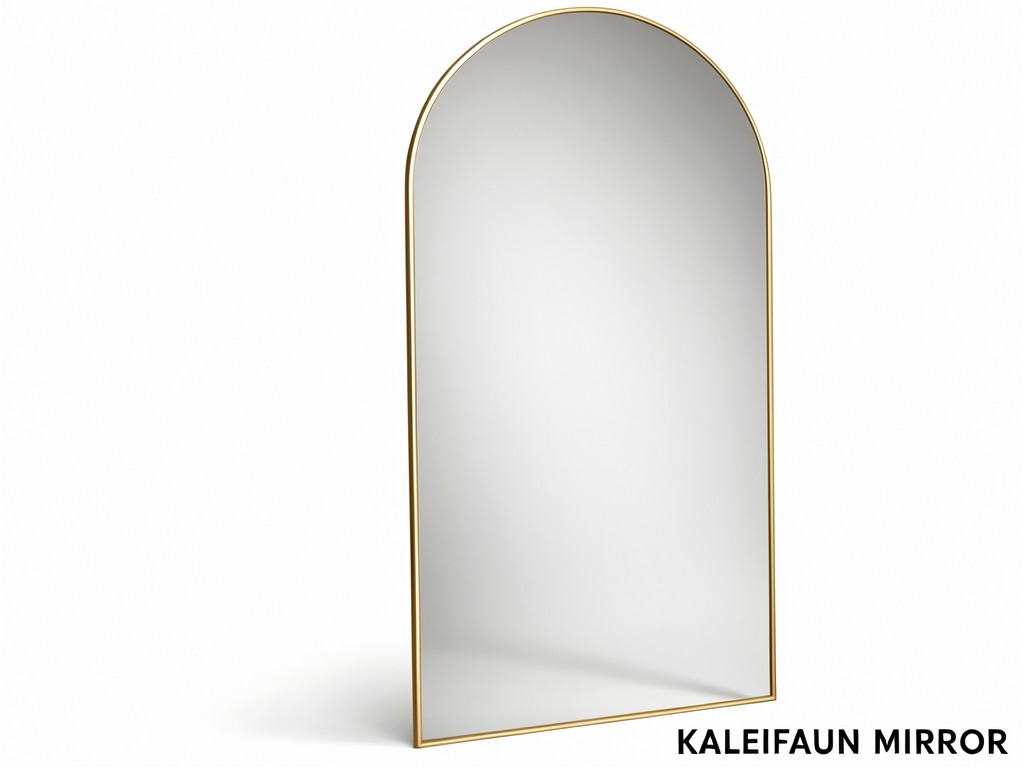
For an OEM buyer, the useful control point is agreement before production: dimensioned drawings, a physical sample, finish references and written approval criteria. A custom full length gold arch floor mirror is typically built from shaped metal framing, mirror glass, rear support components and a floor stand or leaner arrangement. The specification has to define how those parts meet, not just the overall height.
How It Is Built and What That Changes
A typical production route starts with a cut and bent steel or aluminum profile for the arch, followed by joining, surface preparation and a gold-tone coating. Mirror glass is cut to the approved outline, its exposed edges are finished, and the glass is secured to the frame with compatible retainers or adhesive. A rear panel, wall-leaning support or hinged floor stand completes the assembly, depending on the approved design.
The arch radius and frame section affect both appearance and stability. A narrow frame preserves more reflective area but leaves less room to conceal edge variation; a deeper section can stiffen the perimeter while adding weight and changing the visual proportion. The stand angle, hinge position and foot contact points also need to be shown on the drawing, since a small shift can change how the mirror sits on a hard floor.
Typical overall height
1500–1800 mm
Common glass thickness
3–5 mm
Frame finish reference
Approved gold sample
Approval rule: lock the overall dimensions, arch profile, glass thickness, stand geometry and finish reference in one revision-controlled drawing. A finish chip alone cannot approve the frame shape or the assembled mirror.
Where This Product Beats Standard Alternatives
A custom arch mirror earns its place where a retailer or hospitality buyer needs a specific silhouette, branded finish or fixed floor footprint. Compared with a standard rectangular mirror, the curved top gives the range a distinct profile; compared with a wall-mounted unit, a floor stand avoids installation work and suits spaces where wall fixing is not permitted.
That flexibility has a cost. A custom radius or non-standard frame depth can require dedicated forming setup and a longer sample-approval loop. For buyers focused on reducing returns, the trade is worthwhile when the approved sample captures the actual reflection, frame reveal, assembled stance and gold shade—not only the product outline.
Performance Comparison
| Configuration | Buyer benefit | Trade-off to confirm |
|---|---|---|
| Custom arch and frame profile | Matches a defined retail range or room scheme. | Non-standard forming can add setup and sample time. |
| Floor stand or leaner support | Allows placement without fixed wall installation. | Stand footprint and opening angle affect placement and stability. |
| Gold-tone coated frame | Coordinates with a specified finish palette. | Shade and sheen can vary by coating process and batch; approve a physical reference. |
Option Comparison by Usage Level
A low-traffic bedroom assortment and a mirror handled repeatedly on a retail floor do not need the same stand, edge protection or packing specification. Compare the whole assembled unit against its expected handling, rather than selecting by frame appearance alone.
Residential and Occasional Use
A standard frame section and rear support may suit a mirror that stays in one room and is repositioned infrequently. Keep the finish and glass choices aligned with the target price; specify floor-contact pads if the unit may sit on wood, tile or laminate.
Retail Display and Frequent Repositioning
Repeated movement puts more demand on stand joints, hinge attachments and coating at contact points. Confirm the stand hardware and rear reinforcement on the sample, then assess whether extra edge and corner protection is justified by the store replenishment route.
Assumptions Buyers Should Stop Making
“Full length” does not define a usable reflection area. Buyers should agree the visible glass height and width after the frame covers the perimeter, especially if the mirror is intended for dressing use. Likewise, a gold reference image does not set an exact finish: lighting, screen display and coating sheen can change how the shade reads.
- Do not treat the overall outer size as the glass size; approve both dimensions on the drawing.
- Do not assume a floor stand and a wall-leaning back are interchangeable. They use different supports and occupy different floor space.
- Do not accept a finish by digital artwork alone; approve a physical sample under representative lighting.
- Do not rely on “mirror glass” as a complete specification. State thickness, edge treatment and any requested backing film or rear protection.
These details reduce interpretation gaps between the buyer’s artwork, the factory drawing and the delivered unit. Record any approved deviation against the sample revision before a reorder is released.
Customisation Options and Their Limits
Custom work can cover overall dimensions, arch radius, frame width, gold tone, sheen, stand style, rear treatment and retail branding. Each requested change should be marked on a drawing or finish schedule. If the customer changes the frame depth after the glass outline has been approved, the glass and packaging dimensions may need a new sample review.
Finish options depend on the base metal and coating route. A brighter metallic appearance may show handling marks more readily than a softer satin shade; coating build and edge coverage also depend on the frame geometry. Branding is usually easier to control on the rear label, protective film or carton than on the reflective face, where placement can interfere with retail presentation.
Set a change cutoff for each order: approved drawing, approved finish sample, approved branding artwork and approved packing layout. Any revision after these sign-offs should be priced and scheduled as a specification change, not treated as a production note.
Segment-Specific Requirements
Furniture and home décor importers usually need stable outer dimensions, a consistent gold finish and cartons that fit their warehouse handling plan. Retail buyers may place more weight on shelf-ready presentation, barcode location and a stand that opens without forcing the hinge. Hospitality procurement teams should specify the intended room use, cleaning routine and whether the mirror will be moved by staff during room turnover.
For online sellers, the risk point is the gap between the photographed product and the delivered mirror. The listing should use the approved finish and show the actual support configuration, while the carton should protect the glass edges and arch during parcel or pallet movement. Buyers with repeat programs benefit from retaining the approved sample reference and packing specification alongside the purchase order revision.
Export Packaging and Handling Protection
Glass damage often begins at the perimeter, where a carton impact transfers force into an exposed edge or corner. Packaging should restrain the mirror against movement, separate it from other units and protect the frame finish from rubbing. The final design depends on whether the shipment moves as parcel freight, mixed cartons or a palletized load.
Size, Weight and Durability Guide
| Parameter | Typical planning range or option | Agreement point |
|---|---|---|
| Overall size | Often 1500–1800 mm high; width varies by design. | Specify outer frame dimensions and visible glass area separately. |
| Glass thickness | Commonly 3–5 mm, subject to size and support design. | Confirm edge finish, rear protection and fit within the frame. |
| Frame material and finish | Formed steel or aluminum with a specified gold-tone coating. | Approve the physical shade, sheen and visible frame section. |
| Finished unit weight | Depends on glass area, frame section and support hardware. | Set a target range after the production sample is weighed. |
| Packing protection | Edge and corner cushioning, surface separation and immobilization. | Match the pack to the route and handling method; review a packed sample where needed. |
A finished-unit weight should be recorded against the approved sample rather than estimated from glass thickness alone. For export orders, confirm carton dimensions, stacking orientation and whether the stand is secured in place or packed separately; those choices affect freight volume and the chance of frame-to-glass contact.
Ordering, Tooling and Lead-Time Questions
Can an existing arch radius avoid new tooling?
Possibly. A profile close to an existing forming setup may reduce setup work, but the factory still needs to compare the requested radius, frame section and finished dimensions with the available process. Confirm the drawing before pricing any tooling charge.
What should be approved before the order is released?
Approve the dimensioned drawing, assembled sample, gold finish reference, branding artwork and packing arrangement. The purchase order should identify the approved revision so that a later artwork or dimension change does not become an informal production substitution.
How do MOQ and lead time change for a custom design?
A standard frame profile and existing finish route may keep the order simpler. A new arch shape, special coating or custom carton can add sampling and setup steps. Ask for the quoted MOQ and schedule after the drawing and branding files are reviewed; timing should start from the agreed approval point, not from an incomplete inquiry.
Can branding artwork be changed after sample approval?
It can be revised, but the change may require a new artwork proof or sample and can move the order schedule. Supply vector artwork where available, state label size and placement, and approve the final proof before the production release.
Start With an Artwork and Branding Review
Send the target dimensions, finish reference, logo files and intended sales channel for a specification review before sampling. That gives both sides a clear basis for the drawing, sample sign-off and repeat-order record.
Request an artwork and branding review