custom large gold arched floor mirror wholesale: Specification, Ordering and Quality Notes
First-article tooling determines whether the arched crown, frame profile and glass opening match the approved sample. For a private-label reorder, lock the finished outside dimensions, frame depth and gold finish before production; changing any of these after the first article can affect the glass pattern and frame fit.
Specification checkpoint: approve one reference sample for the arch radius, frame colour and mirror appearance. Keep the same reference for later production lots so visual differences can be judged against an agreed product, not a screen image.
Materials and Construction Trade-offs
| Construction point | Common selection range | Factory inspection focus |
|---|---|---|
| Mirror glass | Typically 3–5 mm, selected against overall size, frame support and target price | Thickness, edge condition, reflective appearance and fit in the frame |
| Frame material | Formed steel or aluminum, subject to profile, weight and finish requirements | Profile dimensions, joint alignment, crown symmetry and surface defects |
| Gold surface finish | Powder-coated or plated finish, depending on colour target, appearance and cost | Colour match, coverage at corners and edges, adhesion and visible marks |
| Rear support | Backing board and optional safety film; mounting or leaning arrangement by specification | Secure retention, backing coverage and hardware placement |
A large pane exposes small frame errors: an uneven arch gap or a twisted profile becomes easy to see across the reflective surface. Steel can suit a slim, firm profile at a lower material cost, but it adds weight and needs sound coating coverage at cut edges. Aluminum reduces frame weight, though the section design must provide enough stiffness for the selected mirror size.
The first complaints are often finish inconsistency, glass distortion or a frame that shifts under handling. A thicker glass selection may improve the feel of a larger mirror, but it also raises total weight and the demand on frame retention. Safety film can help hold fragments together if glass breaks; it does not make the mirror unbreakable.
Specification Range and Customisation Limits
For full-length retail and home use, buyers commonly review overall heights around 1500–1800 mm and widths around 500–800 mm. These are planning ranges rather than fixed sizes. A larger span may require a revised frame section, glass thickness or support arrangement, so confirm the intended wall-leaning or freestanding use before approving dimensions.
- Specify outside height and width, frame face width, frame depth and the arch profile as separate drawing dimensions.
- Set the gold colour from a physical finish sample or agreed colour reference; warm gold, champagne and brushed effects can look different under retail lighting.
- Confirm glass thickness, backing, safety film, hanging points and any floor stand before the sample is made.
- Treat changes to the arch radius or frame profile as drawing revisions. They can require new forming fixtures and a fresh fit check.
Customisation is simplest when the buyer retains the existing frame concept and changes only dimensions, finish or rear hardware. A new profile or substantially different arch shape affects forming and glass cutting, so it takes more approval time than a colour change.
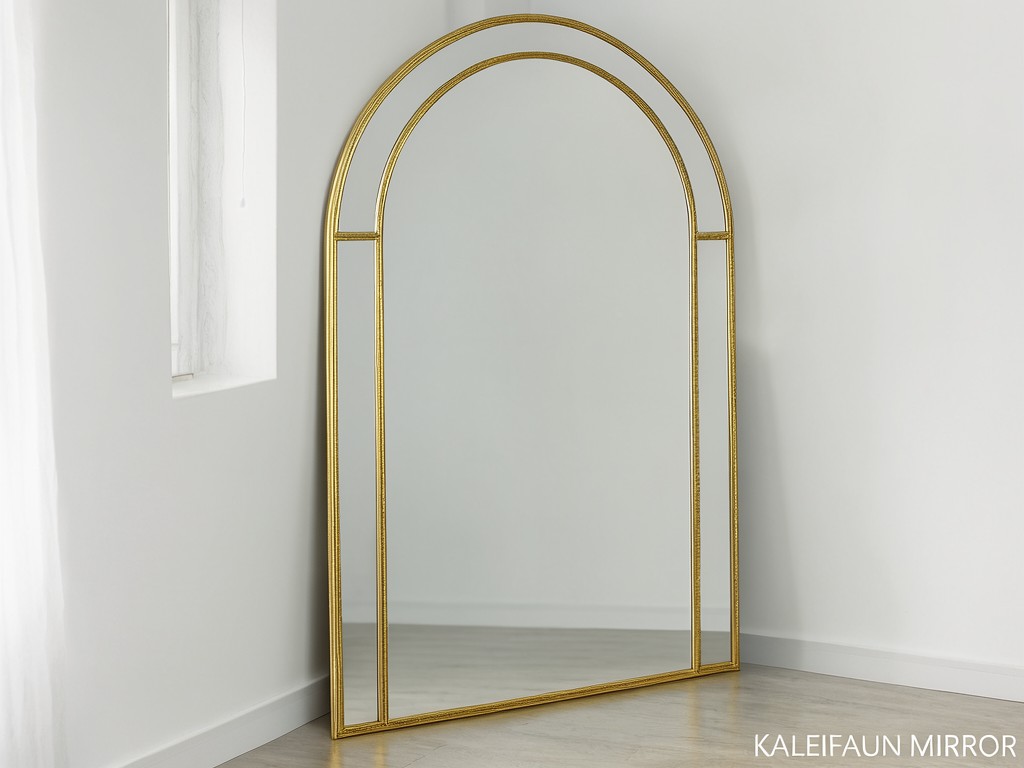
Comparing Two Standard Configurations
Choose by the cost of transport and the expected handling pattern, not by frame material alone. A lighter frame can lower shipped weight, while a heavier section may suit buyers who want a more substantial edge feel.
Formed Steel Frame
A practical choice where frame cost and a firm edge profile take priority. Confirm coating coverage at joins and corners; exposed or thinly coated edges are common points for finish complaints.
The trade-off is more weight. Check the selected mirror size against the intended support method and the buyer’s handling expectations.
Formed Aluminum Frame
A lighter frame can help control finished weight, especially on a tall mirror. Profile stiffness and joint fit need attention so the frame does not feel loose or show uneven lines around the glass.
The trade-off is typically higher material or forming cost. Confirm the exact gold finish separately; the same colour name does not guarantee the same appearance across different finish processes.
For either configuration, changing from a satin gold appearance to a brighter metallic effect can alter the visual match between batches. A signed finish sample gives production and incoming inspection a usable comparison point.
Matching the Product to the Buyer's Need
For a furniture retailer selling a full-length dressing mirror, prioritize a consistent arch, neutral reflection and a finish that matches the approved sample across replenishment lots. A customer usually notices a distorted reflection or visible colour shift before a minor difference in frame weight.
For interior-design distributors supplying bedroom or dressing-room projects, repeat dimensions and hardware positions matter because the mirror may need to fit a planned layout. Keep the glass opening, frame depth and mounting arrangement fixed where possible; changing them can affect both installation clearance and the visual proportion of the arch.
For online sellers, weigh the lower unit cost of a lighter configuration against the increased sensitivity of a tall glass product to handling. A frame that loosens, a chipped edge or a finish mark can drive replacement costs beyond the initial material saving. Set the support method and acceptable appearance points in the approved sample record.
Inspection Items and Test Methods
A receiving check should compare the delivered mirror with the approved drawing and sample. Measure overall dimensions and frame depth at repeatable points, then inspect the arch from the front for symmetry. A small dimensional drift can alter the visual balance of a tall mirror even when the glass still fits.
View the reflection across the center and near the edges under even lighting. Look for visible waviness, dark spots, scratches and edge damage. Inspect gold coverage at corners, joints and cut edges, then check that the backing and retention points sit securely without movement. Adhesion checks should follow the agreed factory procedure and finish sample; do not treat a visual check as proof of a specified coating life.
Lot consistency: record the measured dimensions, finish comparison and inspection disposition by production lot. Retain a reference sample where practical, particularly if the gold tone or mirror supplier may change between orders.
Care, Storage and Service Life
Moisture trapped at the mirror edge can damage the reflective backing, while abrasive pads can scratch the glass or gold finish. Clean the mirror with a soft cloth and a suitable glass cleaner applied to the cloth rather than poured along the frame. Wipe spills from frame joints and edges promptly.
Keep the mirror upright and supported during handling; do not lift it by the arch or a movable stand. Before placing a leaning model in service, check that the floor is level and the support points sit firmly. A safety film may retain fragments after breakage, but it does not remove the need for careful handling or secure placement.
Service life depends on glass quality, edge protection, finish adhesion and how the mirror is stored and used. Report recurring edge blackening, frame movement or coating wear with lot details and photographs; those records help separate a material issue from damage during handling.
Ordering, Tooling and Lead-Time Questions
For repeat orders that match an existing private-label specification, send the dimensioned drawing, finish reference, rear-hardware details and any approved sample record. State which dimensions may vary and which must remain fixed. Tooling requirements depend on whether the request uses an existing frame profile or changes the arch and forming geometry.
Can an existing mirror be matched without changing its design?
Usually, if the buyer can provide a sample or complete drawing with the frame profile, dimensions, finish and hardware positions. A sample review identifies any differences before a production order is confirmed.
What changes can add tooling or approval time?
A new arch radius, frame section or joining method can require forming changes and a new fit check. A finish adjustment generally needs a colour sample approval, while a dimensional or profile change may also affect the glass pattern.
How are MOQ and lead time confirmed?
They depend on the selected size, frame material, finish process, order quantity and whether existing tooling is suitable. Request a quotation against the final specification so sample approval, production scheduling and any tooling charge are stated for the same configuration.
What should the buyer send for a sample request?
Provide target height and width, arch shape, frame profile, gold finish reference, glass and backing requirements, support method and destination market. Include clear photographs or a physical reference if the goal is to match an existing product.
Request a pre-production sample against your current private-label specification. Send the drawing and finish reference to confirm the match, sample scope and order terms before production.