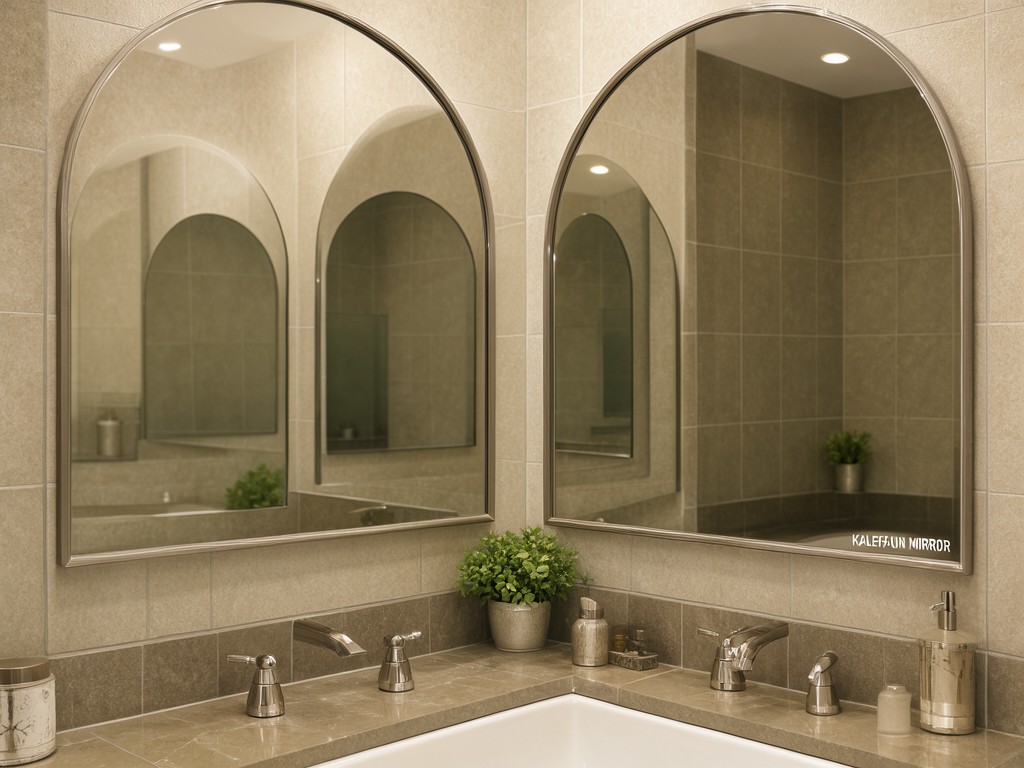
Custom new designs arched bathroom mirror factory - Bulk Supply and Specification Guide
Replacement rate, not unit price, is the useful starting point for a second-source review. A low quote loses its advantage when edge corrosion, glass breakage, or a finish mismatch leads to returns and warranty claims across a retail batch.
For an arched bathroom mirror, the main cost variables are the glass dimensions and thickness, edge finish, reflective coating system, backing, frame construction, and packing method. A controlled production route starts with approved drawings, cuts and finishes the glass, applies the mirror coating and protective layers, then assembles and checks the selected configuration. A second source should match the approved sample and packaging specification, not just the quoted unit price.
Design Constraints Behind the Specification
An arch that looks balanced on a screen can expose small production differences once several units hang side by side. Width, total height, shoulder position, crown radius, and the straight lower section need fixed drawing references. Without them, a supplier may interpret the curve by eye, which can create visible variation even when the overall dimensions appear close.
Drawing rule: define the arch profile with a radius or a dimensioned template, then identify the measurement points used for inspection. The glass thickness and mounting method should be confirmed against mirror size and expected handling loads.
Edge work is a functional choice as well as a visual one. A polished exposed edge suits a frameless design but requires careful handling and protective packing; an aluminium frame can cover the perimeter, though the frame joint and drainage details still need review for a humid room. A backing safety film can help retain fragments after breakage, but it is not a substitute for a separately specified safety-glazing construction.
- Confirm whether the drawing dimension refers to the glass, the frame, or the finished outside size.
- Specify hole positions, hanger locations, and hardware separately from the arch outline.
- Approve the backing, edge appearance, and any brand mark on a production-representative sample.
Measured Performance in Real Use
Bathroom service puts the mirror through repeated humidity and temperature changes. Moisture that reaches an exposed edge or an unsealed backing can contribute to dark spots or coating deterioration; standing water at the lower edge raises the risk. A suitable coating system and finished edge reduce that exposure, but the room’s ventilation and installation details still affect service life.
For a buyer, “weather resistance” should mean performance in the stated indoor bathroom conditions, not outdoor exposure unless outdoor use is specifically designed and validated. Dimensional checks should cover overall width and height, arch profile, hole position, and finished thickness. Visual review should also look for coating pinholes, scratches, edge chips, and reflection distortion at the viewing distance expected in use.
Set acceptance limits from the approved sample and drawing. Where the mirror is frameless, place particular attention on polished edges and corner handling; where it has a frame, verify the frame fit and finish as well as the glass. No coating claim should replace a defined inspection plan or a stated installation environment.
Option Comparison by Usage Level
Entry-Level Retail Range
A standard glass thickness, established coating system, and repeatable stock hardware can keep the initial price down for basic, lower-volume ranges. This route works best when the design is stable and the buyer accepts fewer frame and finish choices. Packing still needs to protect the arch shoulders and lower corners, where impact can damage otherwise saleable units.
Contract and Premium Retail
A thicker glass option, upgraded edge finish, specified frame profile, or branded hardware raises material and handling costs. Those choices can better suit larger mirrors, higher-touch interiors, or a private-label line with stricter appearance requirements. The value depends on approved drawings, installation needs, and a matching inspection plan rather than the finish name alone.
The right cost comparison includes protective packaging, freight damage exposure, replacement logistics, and the buyer’s return process. A lower specification may still be commercially sound for a compact mirror shipped in a well-protected carton; it is less attractive if the design has a long exposed edge or a demanding presentation standard.
Matching the Product to the Buyer's Need
A procurement officer qualifying a second source should compare the same revision of the technical drawing, finish reference, accessory list, and packing plan with both factories. Small differences in arch radius, frame colour, or hanger position can become costly after labels and retail cartons are printed.
A retail buyer may prioritize shelf-ready packaging and low breakage in distribution. A brand product manager may need a distinct arch profile, coordinated frame finish, and stable appearance across repeat orders. In each case, separate the fixed requirements from options that can change without a new drawing approval; that makes quotations easier to compare and reorders easier to control.
Usage Scenarios and Buyer Segments
Bathroom furniture brands commonly specify an arched mirror as part of a coordinated vanity range. Their recurring orders depend on a stable outline, frame finish, and mounting arrangement, since a replacement mirror must match the original assortment.
Retail importers serving renovation and home-improvement channels need packaging that protects glass through warehouse handling and mixed freight. Hotel and multi-unit project buyers tend to value repeatable dimensions and accessible replacement supply; installation teams also need predictable hanger locations and clear hardware identification.
Private-label buyers have an additional batch-control concern: artwork, carton labels, and product identifiers must correspond to the approved revision. A change to the curve or a hardware substitution should trigger buyer review before production, not appear as an undocumented factory adjustment.
Segment-Specific Requirements
The same arched silhouette can serve very different sales conditions. Use the intended channel to set finish tolerances, packing protection, and accessory requirements before the first purchase order.
| Buyer Use Condition | Complaint to Prevent | Specification and Check |
|---|---|---|
| Humid bathroom with frequent shower use | Dark spotting or coating deterioration near an exposed edge | Define coating and backing construction; review edge finish and inspect for coating defects against the approved sample. |
| Multi-unit project with repeat installation | Hangers or holes do not align with the installation plan | Dimension mounting points from fixed drawing datums; check hole and hanger positions on production pieces. |
| Retail shipment with repeated warehouse handling | Chipped arch shoulders, cracked glass, or freight-related returns | Protect corners and edges with a defined internal pack; conduct a documented pack review before shipment. |
| Private-label reorder using the same retail presentation | Visible frame-colour or arch-profile drift between batches | Retain an approved colour and shape reference; compare each batch with the current revision before release. |
How Consistency Is Held Across Batches
Repeatability begins with revision control. The factory should work from one released drawing that identifies the arch profile, glass dimensions, thickness, edge treatment, backing, frame, hardware, and carton artwork. Retained samples and documented finish references help keep visual judgments consistent when production staff or material lots change.
A practical batch check combines dimensional measurement with visual inspection of the mirror face, edge, coating, frame joints, and assembled hardware. Packing checks matter too: a sound mirror can still become a returned unit if the carton allows movement or concentrates impact at the arch. Buyers qualifying a second source can request the factory’s inspection record format and compare it with their own release criteria.
| Customization Choice | Buyer Input | Batch-Control Point |
|---|---|---|
| Overall dimensions and arch profile | Dimensioned drawing or approved profile template | Record drawing revision and check profile against the agreed measurement points. |
| Glass thickness and edge finish | Required thickness and exposed or concealed edge treatment | Check thickness, edge appearance, and compatibility with the frame or mounting method. |
| Frame and finish | Profile, finish reference, corner detail, and brand positioning | Approve a physical finish sample and retain the approved reference for reorders. |
| Hardware and retail packaging | Mounting hardware, inserts, labels, carton print, and pack count | Verify component identity, artwork revision, and pack configuration against the purchase order. |
Ordering, Tooling and Lead-Time Questions
Does a new arch design require dedicated tooling?
A one-off or revised profile may require a cutting template, fixture, or updated production setup, depending on the factory’s process and the design. Confirm any setup charge, ownership of the approved drawing, and whether a later reorder uses the same profile reference.
What affects MOQ and production lead time?
Glass size, special frame finishes, hardware sourcing, retail packaging, and the number of approved variants all affect batch planning. Lead time should be confirmed after drawing approval and sample sign-off; a range quoted before material and packaging details are fixed may change.
What should be approved before a private-label run?
Release the final drawing, finish reference, hardware list, label files, carton artwork, and packing arrangement together. If a change occurs after sample approval, ask for a revised sample or documented approval before the factory applies it to the full batch.
For a second-source review, send the current specification and known return issues for a drawing-and-process comparison. Request a specification review before sample approval so the quote, inspection points, and export packing plan refer to the same product revision.