custom small gold arched wall mirror factory: What Buyers Should Check Before Ordering
Replacement rate, not unit price, is the useful starting point for a private-label small arched wall mirror. A low-cost frame can become expensive if the gold tone shifts between orders, the mirror sits unevenly, or transit damage drives returns. Agreeing the drawing, finish sample and packing method before production helps keep a repeat order close to the approved version without redesigning the product.
Where Cheaper Alternatives Fall Short
In vanity areas, hallways and guest bathrooms, buyers tend to hear about the same problems: a frame that looks more yellow or orange than the approved sample, a mirror panel that shifts in its surround, or a chipped edge after delivery. These issues often begin with an incomplete specification rather than an unusual use condition. Put the dimensions, finish reference, assembly details and pack-out requirements in the approval record.
| Use Condition | Complaint to Avoid | Specification to Agree |
|---|---|---|
| Display beside warm or cool lighting, where gold-tone differences are easy to see. | Frame colour varies between the sample and production, or between replenishment lots. | Approve a physical finish sample under agreed lighting and retain its reference for future orders. |
| Wall mounting in a frequently used bathroom or dressing area. | Mirror panel movement, uneven gaps or a loose hanging point. | Set the panel retention method, hanging hardware position and finished dimensions on the approved drawing. |
| Long-distance export with several handling stages. | Chipped glass edges, a bent frame or crushed retail cartons. | Approve edge protection, internal restraint and carton configuration against the final product size. |
A drawing with only the overall height and width leaves too much room for interpretation. Include the arch radius or profile, frame face width, mirror opening, hardware location and acceptable dimensional variation. That record gives the factory and buyer one reference when samples or production differ.
Material Options and Their Trade-offs
Tooling amortisation decides whether a custom frame profile makes sense at the planned order volume. A standard profile adapted to the requested dimensions can reduce setup cost; a dedicated profile gives the brand more control over frame proportions but can add tooling expense and approval time.
Steel Frame with Gold-Tone Powder Coat
A practical route for a defined frame shape and a controlled retail finish. The coating colour and sheen need approval against a physical sample; a screen image alone cannot settle the appearance. Confirm how exposed edges and joints are finished, since those areas can reveal uneven coverage.
This option suits buyers prioritising a repeatable gold appearance and a familiar metal-frame construction.
Aluminium Frame with Applied Finish
Aluminium can reduce frame weight, which may help with handling and wall mounting. Its profile and finish route affect the forming cost, and the approved sample should show the intended colour, sheen and surface texture. Compare the finished profile rather than material names alone.
Either frame choice can be paired with mirror glass and a rear support arrangement; agree glass thickness and edge treatment for the specific size.
Sample approval rule: Record the frame material, gold-tone reference, sheen, mirror glass specification and backing construction together. If one changes after approval, review the complete assembly sample before releasing the order.
How It Is Built and What That Changes
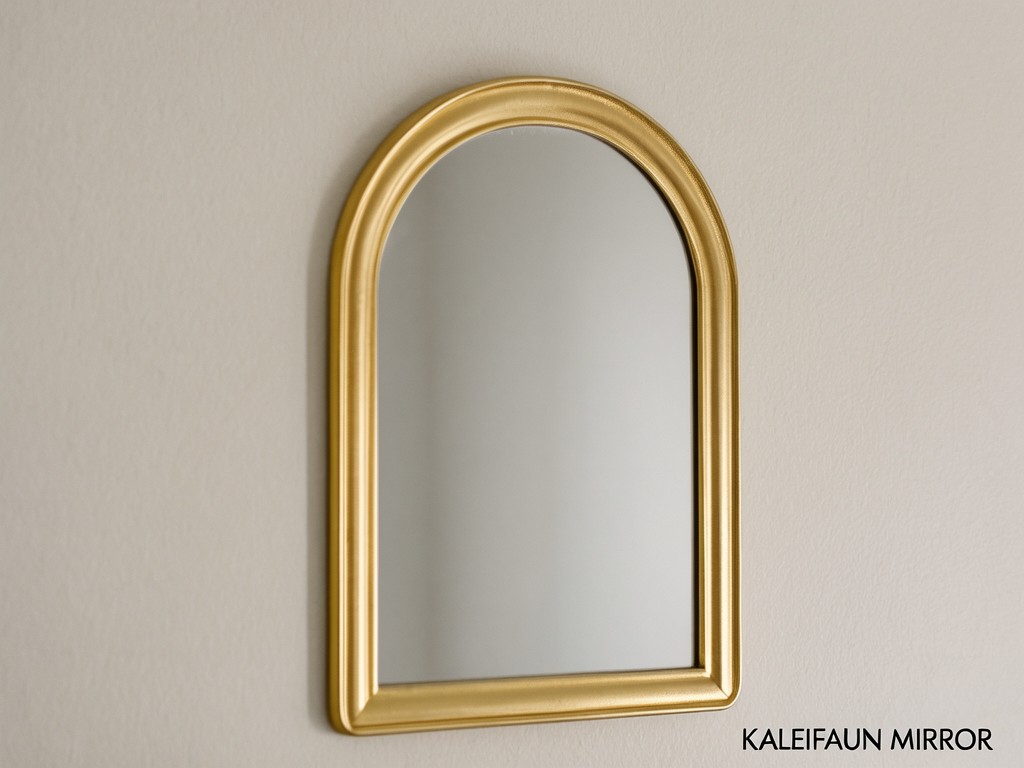
For a metal-frame model, production typically begins with the selected profile, which is formed to the arched outline and joined into a frame. The mirror glass is cut to the approved opening, its edges are finished, and the panel is secured with the specified retention method. A backing board and hanging hardware complete the assembly.
A tighter arch or narrow frame face leaves less room to hide variation in forming and assembly. The drawing should therefore show the arch profile, frame width, glass clearance and rear fixing points—not just a front-view silhouette. Confirm whether the factory will use a standard forming setup or make dedicated tooling; the latter may suit repeat volume but adds a cost that must be spread across the order plan.
If the mirror carries a private-label mark, specify its location and method separately from the frame finish. A rear label or carton artwork can be updated without changing the mirror assembly, while a permanent mark on the product may require a separate sample approval.
How Consistency Is Held Across Batches
Repeat orders stay closer when the approved sample is treated as a production reference, not just a sign-off photo. Keep the dimensioned drawing, finish sample reference, glass and backing details, hardware position, artwork files and packaging specification under the same revision control. That prevents a later order from using an old carton file or a changed frame measurement.
- Set the finished height, width, frame face and arch shape on the drawing, with tolerances agreed before sample production.
- Approve a complete assembled sample so the glass-to-frame fit, backing and hanging points are checked together.
- Use one retained finish reference for colour and sheen comparisons across replenishment lots.
- Keep change approval in writing; a material substitution can affect weight, fit, finish appearance and packing dimensions.
For a new private-label programme, align the carton artwork and product specification before mass production. Sample approval after production has started can lead to rework or a split shipment.
Stock Availability and Reorder Planning
A standard frame profile or commonly used mirror size may shorten replenishment planning, but the gold finish, private-label packaging and final assembly can still be order-specific. Ask which components are held as stock and which are made after order confirmation. “Available” can refer to raw material or an unfinished frame rather than a packed, shippable mirror.
For repeat programmes, share a forecast and confirm the reorder trigger with the factory before the first shipment. Dedicated tooling and custom packaging justify their cost only when expected volume and repeat timing support them. Confirm current minimum order quantity and lead time against the exact frame, finish, artwork and pack-out specification; those terms can change when any of these inputs changes.
Packing, Marking and Freight Configuration
Glass edges and projecting frame sections need restraint inside the carton; loose packing can allow the mirror to move even when the outer box appears intact. Confirm corner and edge protection, separation between units, carton orientation and the packed dimensions using the approved finished product. A pack-out sample is useful when a buyer needs to approve shelf presentation or a distributor needs fixed pallet dimensions.
Provide the final barcode, country-of-origin text, handling marks and retail artwork before packaging production. If the product ships in a display-ready carton, approve both the printed file and the assembled carton sample. Ask the supplier to confirm carton count and loading configuration for the shipment rather than estimating freight from the mirror alone.
Keep packaging approval tied to the final frame dimensions and hardware. A small change to the arch or hanging fixture can affect internal clearance and carton fit.
Care, Storage and Service Life
In bathrooms, repeated moisture exposure makes the frame finish, mirror backing and edge protection more important. The product is intended for normal indoor wall use, not direct water contact or prolonged damp storage. Agree care wording that matches the selected materials and finish rather than applying a generic cleaner instruction.
- Wipe the glass with a soft cloth and a suitable glass cleaner; keep liquid away from exposed mirror edges and rear joints.
- Avoid abrasive pads and harsh chemicals on the gold-tone frame, since they can mark or dull the finish.
- Store cartons dry and upright as marked, with no load placed on the mirror face.
- Follow the supplied wall-fixing instructions and match the fixing method to the wall surface and mirror weight.
Discuss your target dimensions, frame finish, order volume and retail pack-out before requesting a quotation. A drawing, finish reference or existing sample helps the factory confirm what can be matched without changing the product design.
Share your specification for a project discussion covering sample approval, batch consistency and reorder planning.