Custom very large arched mirror Top Factory: Specification, Ordering and Quality Notes
Selection rule: confirm the finished width, height, arch profile, glass thickness and mounting method as one approved specification. Thicker glass and reinforced backing add weight and freight cost; a lighter build is suitable only when the size, support and installation conditions allow it.
Scope of Supply and Physical Form
The build method decides how the arch is cut, finished and supported: mirror glass is shaped to the approved profile, its exposed edges are polished, and a safety backing film can be applied before the mirror is fitted with the specified frame or mounting hardware. The quotation should state whether the supply includes the glass alone, a framed mirror, backing, wall fittings or export packaging.
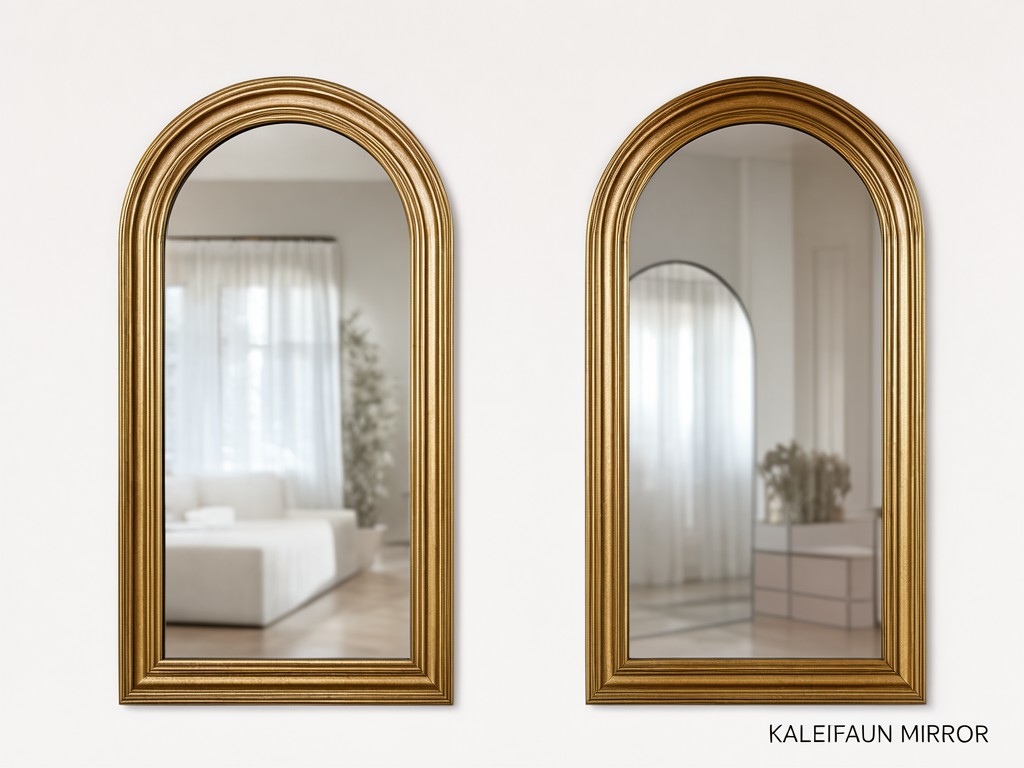
A drawing needs more than an overall height and width. Specify the arch rise or curve radius, straight-side length, corner transitions, frame depth, glass thickness, finish colour and position of mounting points. Those details determine whether the finished unit matches a retail display plan and whether it can be packed in the proposed carton or crate.
| Indicative finished size (W × H) | Typical glass option | Indicative unit weight | Specification note |
|---|---|---|---|
| 1200 × 1800 mm | 4–5 mm mirror glass | Approximately 22–32 kg | Confirm frame and backing before freight costing. |
| 1500 × 2000 mm | 4–6 mm mirror glass | Approximately 30–45 kg | Mounting and packaging need to suit the finished mass. |
| 1800 × 2400 mm | 5–6 mm mirror glass | Approximately 43–65 kg | Confirm handling, crate dimensions and delivery access. |
The ranges are planning estimates for the finished mirror, not packed shipping weights. Actual weight changes with glass thickness, frame material and backing; final dimensions, tolerance and weight should be recorded on the approved drawing before the order is released.
What the Design Has to Balance
Process choice shows up later as a trade-off between glass weight, edge protection, frame depth and packed dimensions. A frameless polished edge keeps the outline visually light, but requires careful edge protection in transit. A framed build covers the perimeter and can simplify the finish specification, while adding material cost and weight.
For a very large panel, the mounting design must match the mirror’s finished mass and the intended wall installation. Confirm whether the buyer expects D-rings, a rail, another fixing arrangement or no hardware. Wall anchors depend on the substrate and are usually a separate installation decision.
Agree the glass thickness and backing as a set rather than selecting each in isolation. A thicker panel raises material and freight cost; the decision rule is to select the lightest configuration that fits the agreed dimensions, support plan and handling requirements.
How It Performs in Use
A flat mirror gives a clear reflection when its backing stays protected and the unit sits on a suitable support. At large sizes, poor wall support or uneven fixing can place stress on the glass and frame. The installation drawing should show the mirror orientation, fixing locations and any required gap from the wall.
The polished arch edge is exposed during handling, so edge protection matters from factory packing through final installation. Safety backing helps retain fragments if glass breaks, but it does not prevent breakage or replace correct mounting. Specify the backing type and coverage in the purchase documents if it is part of the order.
Freight planning is part of the product specification at this scale. Carton or crate dimensions, corner protection, separation between units and pallet orientation affect handling and shipment cost; approve the packing configuration before the launch schedule is fixed.
Buying Mistakes That Lead to Returns
First-article tooling determines whether the arch follows the intended profile, but only if the drawing defines that profile clearly. “Arched top” alone can describe a semicircle, a shallow curve or a taller rise. Approve a dimensioned drawing that marks the curve, straight sides and frame outline before production.
Another common source of returns is a mismatch between the quoted overall size and the visible mirror area. State whether dimensions refer to the outer frame or exposed glass, and identify the measurement points. A colour chip or finish sample should also be approved where frame colour is tied to a retail fixture or room set.
Do not leave packaging, labels or carton marks until the goods are ready to ship. Finalise unit count per crate, handling marks, barcode or private-label artwork, destination details and shipping method early enough for buyer approval. That step reduces late changes to the packing plan and helps protect the agreed dispatch date.
Who Uses It and Where It Matters
Furniture and home-decor distributors specify large arched mirrors for retail floor sets where the shape, frame finish and carton dimensions must match a planned assortment. Their priority is a repeatable approved specification across the purchase quantity, with packaging that suits warehouse storage and onward delivery.
Hotel procurement teams may select them for guest rooms, corridors or dressing areas, where the mirror must fit a defined wall position and arrive in a condition suitable for installation. For multi-site orders, fixing positions and finish approvals should be settled before the first production release so replacement units can follow the same specification.
Interior fit-out contractors need the finished size, wall clearance and mounting arrangement early in the programme. Where access routes or lifts limit unit dimensions, confirm those constraints before choosing the largest panel; a design that cannot pass through the building delays installation regardless of its factory dispatch date.
OEM and ODM Programme Structure
An OEM order can follow the buyer’s approved drawing, glass specification, frame finish, mounting plan and packaging artwork. For ODM development, provide a reference image plus target dimensions, intended installation and price point; the factory can then propose a build for review before quotation confirmation.
The approval sequence should cover the dimensioned drawing, material and finish samples where needed, first-article appearance, packing method and final artwork. Record approved revisions and tolerance requirements in the purchase specification. Any change to the arch profile, frame, glass thickness or hardware after approval can affect material use, unit weight and production timing.
For launch-date planning, align the sample sign-off, order quantity, packaging approval and shipment booking before setting the required dispatch window. MOQ and lead time depend on the size mix, frame finish, special tooling and packing method; request the schedule against the complete specification rather than a product name alone.
Request a quotation review. Send the target size, arch drawing or reference, glass and frame preference, required mounting hardware, order quantity, destination and launch date. A complete brief allows the team to review the build, packing assumptions and approval steps before confirming the quotation.