Specifying Custom Wholesale Arched Bathroom Mirror Factory for Wholesale and OEM Orders
Deflection under load governs the reflected image on a large arched mirror: an uneven wall, poorly placed hanging points or a flexible frame can introduce visible distortion even when the glass itself meets its drawing dimensions. A thicker glass option adds weight and freight cost, while a frame or rear support can control installation movement; select the assembly against the wall construction and mirror span, not appearance alone.
The interface between parts determines whether repeat orders look and install alike. Glass thickness, arch radius, edge finish, backing, frame depth and hanger position all affect the finished outline and installed weight, so a change in any one can shift the product from an approved sample. Lock those characteristics in a controlled drawing and sample before production; otherwise, small lot-to-lot differences can become mismatched retail stock, installation complaints and avoidable returns.
The Problem Buyers Keep Paying For
Arch height and shoulder radius are easy to overlook when a buyer checks only overall width and height. A small profile change alters the visible curve across a room set, while variation in glass thickness, backing paint or frame finish can make units from different lots appear inconsistent. The practical control is to approve a full-size profile or dimensioned drawing and define which dimensions are critical for inspection.
| Inspection point | Factory check | Buyer decision rule |
|---|---|---|
| Overall size and arch profile | Measure width, height and agreed profile points against the approved drawing or template. | Set allowable variation by dimension and confirm the same reference points for samples and production. |
| Glass surface and reflected image | Inspect under consistent lighting for scratches, spots, coating marks and visible image distortion. | Approve viewing distance, light conditions and defect limits before bulk inspection. |
| Edge, backing and frame finish | Check edge treatment, backing coverage, frame joints and colour against the retained approval sample. | Keep the same finish reference and inspection method across repeat lots. |
| Packed unit and hanging hardware | Check unit weight, hardware position and protective packaging for the approved configuration. | Confirm the package protects corners and face surfaces through the planned shipping route. |
Control the reference before the run. An approved sample alone may not capture critical arch coordinates, hanger locations or finish limits. Pair it with a signed drawing and a written inspection plan so a replacement lot can be checked against the same criteria.
Comparing Two Standard Configurations
A frameless polished-edge mirror reduces visible borders and suits buyers who need a clean profile at a lower component count. A framed mirror adds a defined perimeter and can conceal the glass edge, but frame material, corner joints, finish and hanger design add cost and additional points for colour or assembly variation. Match the construction to the retail positioning and installation conditions; do not compare unit price without comparing the complete hanging system and packing format.
Polished-Edge, Frameless
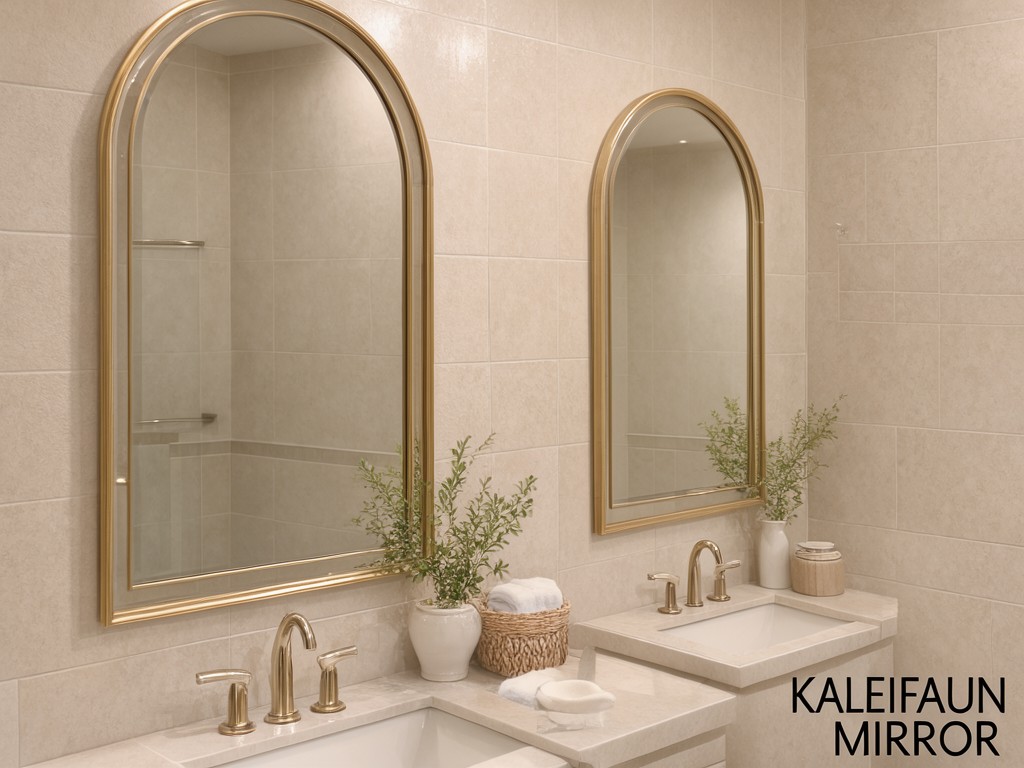
The glass outline carries the design, so edge polish and arch consistency are especially visible. This configuration uses fewer components and can reduce assembly complexity; specify the safety backing, hanger attachment and edge protection for the intended bathroom and shipping conditions.
Framed, Arched
A perimeter frame provides a finished border and changes the installed depth and overall weight. It carries a higher materials and assembly cost, and finish matching becomes a repeat-order control point; approve frame colour, joint appearance and glass-to-frame clearance as one assembly.
Segment-Specific Requirements
Wholesale importers supplying multi-store bathroom ranges need dimensions, finish and carton configuration stable enough to replenish matching displays. Private-label buyers usually place greater weight on controlling a fixed specification: the arch shape, logo or label placement, frame finish and included hardware must remain tied to the approved SKU. For hospitality procurement, frequent room turnover and cleaning exposure make edge protection, backing condition, mounting instructions and replacement availability practical purchase criteria.
Balance and load analysis shows where a specification change affects more than appearance: thicker glass or a heavier frame increases the load carried by the wall fixings, while a changed hanger position can alter installation stability. Confirm finished unit weight and mounting method for each size, especially when one product family includes several widths. Avoid treating a single hardware set as interchangeable across sizes unless its capacity and attachment points have been reviewed for every configuration.
Setup, Use and Replacement Parts
A level, load-appropriate wall installation limits movement that can stress the glass or loosen hardware. Bathroom humidity makes exposed edges, damaged backing and incompatible frame finishes more consequential over time, so care instructions should be clear about cleaning products and moisture exposure. Keep replacements tied to the original drawing and hardware configuration rather than ordering by nominal size alone.
- Install on a flat wall with fixings suited to the wall type and the mirror's actual packed and unpacked weight; use the supplied mounting instructions for the chosen hardware.
- Use a soft cloth and a cleaner suitable for mirror glass. Keep liquid away from exposed edges, backing damage and frame joints.
- For a replacement, match overall dimensions, arch profile, glass thickness, hanger position, frame finish and carton protection to the approved SKU record.
Ordering, Tooling and Lead-Time Questions
A repeatable order starts with a dimensioned profile, target glass construction, edge and backing requirements, finish reference, hardware layout and export pack details. Custom arch geometry may require a template or dedicated cutting setup; confirm whether the requested profile can share existing production tooling before comparing its price with a standard radius. Lead time depends on sample approval, material availability, order quantity and any new tooling or packaging work.
| Customization item | Options to confirm | Specification record |
|---|---|---|
| Size and profile | Overall width and height, arch rise, curve geometry and corner or shoulder transitions. | Dimensioned drawing or approved profile template with tolerances for critical points. |
| Glass and edge | Glass thickness, mirror coating construction, safety backing and polished or otherwise specified edge treatment. | Approved sample and written construction details; identify any tempered-glass requirement before production. |
| Frame and mounting | Framed or frameless build, frame material and colour, hanger type, location and included fixings. | Assembly drawing that records installed depth, hardware position and finished unit weight. |
| Branding and export pack | Private-label carton, product label, inserts, corner protection and packing quantity. | Approved artwork, barcode or label data, carton dimensions and agreed pack-out configuration. |
Can an existing arch profile avoid new tooling?
Possibly. Provide the required width, height and curve reference for comparison with current production setups. A close visual match is not enough if the critical profile points differ; confirm the drawing and sample before using an existing setup for a private-label order.
What information is needed to quote an OEM order accurately?
Send target quantities by size, drawing or reference sample, glass and edge details, frame and hardware choices, branding files and destination packaging requirements. If some details are open, identify the fixed requirements and the items available for substitution so the quotation does not assume a different construction.
How are MOQ and lead time affected by custom finishes?
A custom frame colour, carton or glass profile can add setup, sourcing and sample-approval steps. MOQ depends on the selected materials and production setup, while the confirmed schedule depends on the approved sample, quantity and packaging readiness; request those terms against the complete specification rather than the mirror size alone.
Request a Specification Review
Send your drawing, target order quantity and private-label requirements for a review of profile control, construction, mounting, inspection points and export packing. Contact the factory team to review your specification before sample approval and production planning.