Specifying Customized Arched Wall Mirror Price List for Wholesale and OEM Orders
Unit price settles the question only after the quote states glass thickness, reflective coating, edge finish, backing and export packing. An arched mirror can arrive intact yet draw complaints if the reflection distorts near the curve, moisture reaches an unsealed edge, or the hanging hardware does not match the wall-installation plan. For distributors and retail buyers working toward a launch date, compare the complete build and approval schedule rather than the glass area alone.
Two suppliers quoting the same outside dimensions may be pricing different products: one may use aluminum coating and standard backing, while the other uses a silver reflective layer, a protective backing system and a polished perimeter. Those choices affect purchase cost, appearance under indoor lighting, resistance to edge deterioration and the packaging needed for long-distance freight. The decision rule is to lock the use environment and mounting method before comparing unit prices.
How It Performs in Use
A mirror returns light through its reflective coating, while the glass face and backing protect that layer from contact and moisture. In a dry bedroom or dressing area, edge appearance and a clear reflection usually set the purchase decision. In a bathroom, frequent condensation and cleaning put more pressure on the coating edge, backing paint and perimeter seal; abrasive pads or harsh cleaners can mark the face or expose vulnerable edges.
| Use level | Typical conditions | Build decision | Price and schedule effect |
|---|---|---|---|
| Occasional decorative use | Dry interior, light handling and infrequent cleaning | Standard mirror glass and a defined edge finish may suit the brief. | Fewer finish requirements can lower the quoted build cost. |
| Daily household use | Regular wiping, repeated contact and routine relocation during room setup | Specify polished edges, backing protection and hardware that suits the mirror dimensions. | Added finishing and protective packing can increase unit and freight cost. |
| Humid-room placement | Frequent condensation and cleaning around the perimeter | Confirm coating system, backing paint and edge-sealing requirements for the intended room. | A more protective specification may add processing steps and approval time. |
Direct sun and high heat can affect backing materials over time, while rough storage or unprotected glass-to-glass contact can cause scratches and edge chips before installation. Use a non-abrasive cloth and a cleaner suited to mirror glass; do not allow liquid to pool along the lower edge. For bathroom ranges, specify the cleaning and humidity conditions in the quotation request so the proposed coating and backing match actual use.
Material Options and Their Trade-offs
Reflective coating is a main cost variable. Silver-coated mirror glass is commonly selected when the buyer prioritizes a bright, neutral reflection; aluminum-coated glass can offer a lower-cost route for price-led ranges, subject to the specified appearance and environment. Backing paint and any safety film add material and processing cost, but they can protect the coated surface during handling and reduce the chance of loose fragments if the glass breaks. Glass thickness also changes weight, freight handling and the hardware requirement.
Silver-Coated Mirror
Often chosen for a brighter, more neutral reflection in retail and residential interiors. The coating and backing specification may carry a higher price, so confirm whether the target market and room conditions justify the upgrade.
Aluminum-Coated Mirror
A cost-conscious option for ranges where the buyer approves the reflected tone and expected placement. Request a representative sample when appearance must match other mirrors in the assortment.
For either coating, buyers should define the permitted edge treatment, backing colour and safety-film requirement before sample approval. A backing film does not make a mirror unbreakable; it is a retention feature, not a substitute for suitable mounting or careful handling.
Construction Method and Its Effect on Consistency
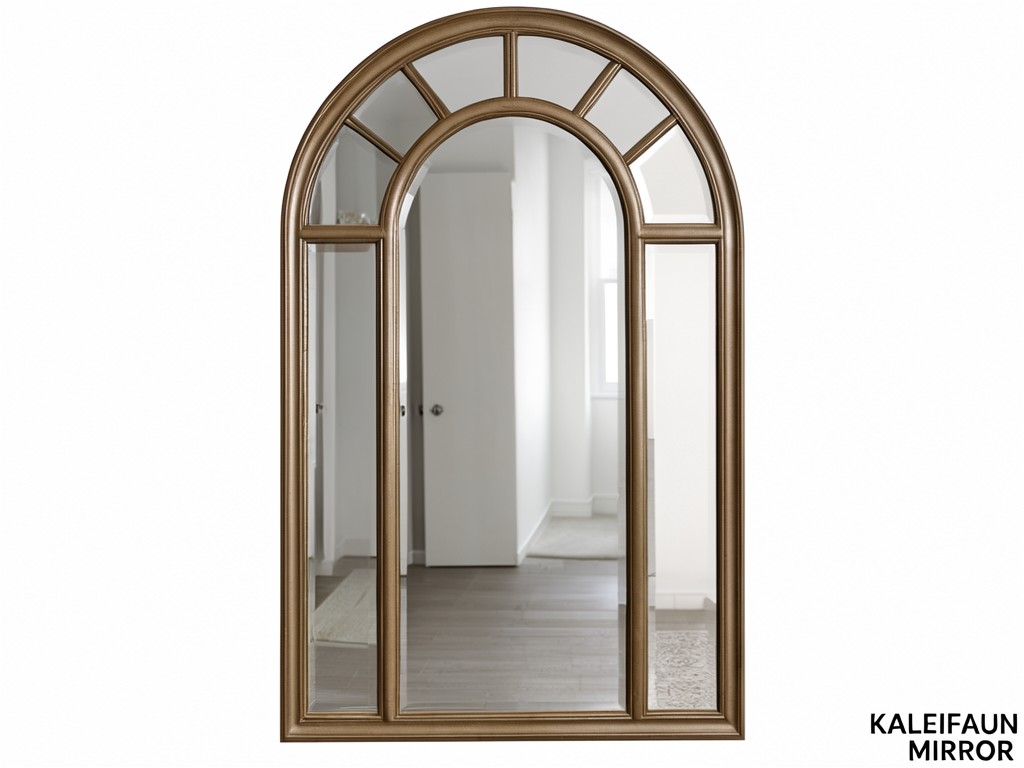
A typical custom build starts with a dimensioned arch drawing, followed by glass cutting, perimeter grinding and polishing, washing, reflective coating and backing application. If the order calls for tempered glass, tempering normally takes place before the reflective coating; the buyer should approve the resulting appearance and edge profile for the chosen shape. The arch radius, shoulder transition and straight-side length need clear drawing references, or small interpretation differences can change the silhouette across a production batch.
A change to the outer dimensions can affect the cutting template, packing insert and wall hardware, so late artwork or size revisions put the ship date at risk. Release the signed drawing, finish, mounting layout and carton specification together. For a repeat order, retain the approved reference drawing and packing configuration as the basis for the next quotation.
Drawing control: State overall height and width, arch radius or profile drawing, glass thickness, edge finish, coating, backing, mounting points and carton orientation. These details reduce quote revisions and help keep sample approval aligned with the order build.
Size, Weight and Specification Range
Custom dimensions are usually quoted from the approved drawing rather than a universal size list. The ranges below are discussion points for supplier quotation, not fixed catalogue limits; available dimensions depend on the cutting layout, glass source, packaging and destination handling requirements.
| Glass thickness | Approximate glass weight per area | Typical selection context | Commercial trade-off |
|---|---|---|---|
| 3 mm | About 7.5 kg/m² before backing and hardware | Smaller formats where low weight is a priority | Lower glass weight; confirm handling and mounting suitability for the finished size. |
| 4 mm | About 10 kg/m² before backing and hardware | Common starting point for general interior formats | Balances weight and handling needs for many standard retail designs. |
| 5–6 mm | About 12.5–15 kg/m² before backing and hardware | Larger formats or briefs that call for a heavier glass build | Higher glass and freight weight; review carton protection and wall attachment capacity. |
Approximate glass weight uses a nominal glass density calculation and excludes coatings, film, hardware and packing. Finished weight depends on the exact outline and added components. A larger or heavier mirror may require a different carton structure and mounting arrangement, which should be included in the landed-cost comparison.
OEM and ODM Programme Structure
OEM orders typically begin with the buyer’s finalized dimensions, coating choice, edge detail, backing, hardware and packaging brief. ODM work can start from a reference image or concept, but the factory needs a dimensioned profile and installation requirements before it can confirm a sample route and quotation. A price list should separate the mirror build, optional hardware, branding, carton configuration and any tooling or setup charges that apply to the design.
For launch planning, agree on the approval sequence before placing the order: drawing sign-off, sample review, artwork approval, packing confirmation and production release. Lead time depends on material availability, sample changes, order quantity and packaging detail; no ship date is firm until those inputs are settled. Retail labels, carton marks and barcode placement should be supplied in usable artwork files and checked against the buyer’s market requirements.
Send the target dimensions, destination market, intended room, mounting method, coating preference, order quantity and required arrival window for an itemized quotation. Add logo files and label artwork for review before sample approval; this helps identify layout or packaging changes while there is still time to protect the shipment schedule. Request an artwork and branding review with your mirror specification and target launch date.