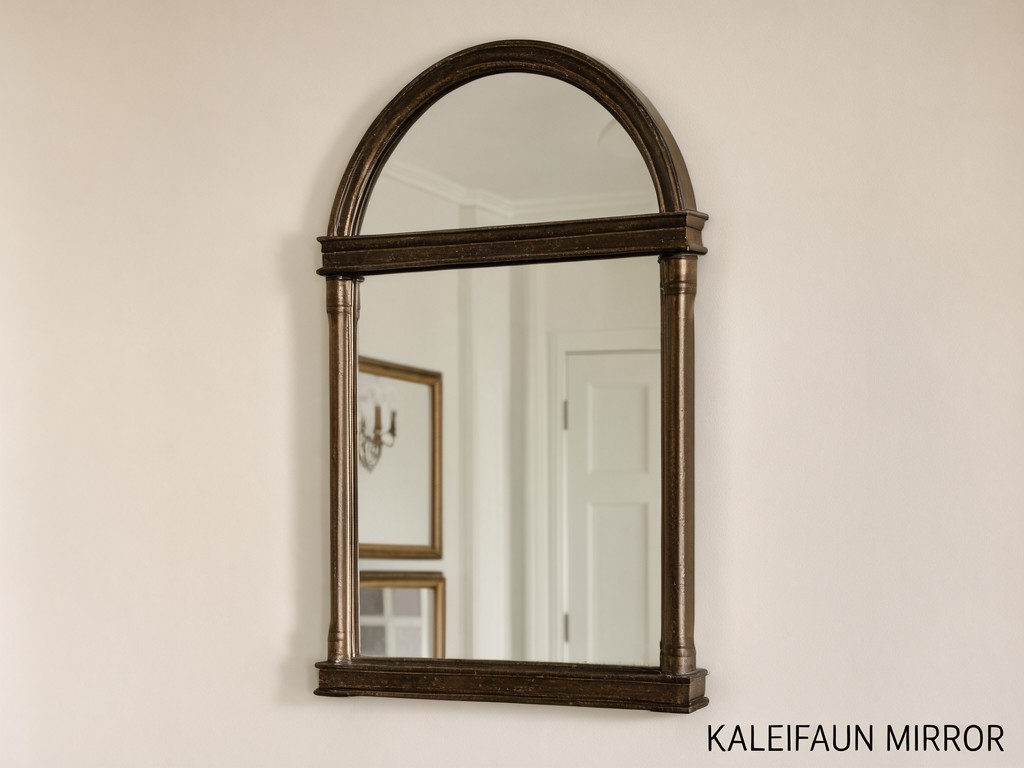
Specifying Discount vintage arched wall mirror supplier for Wholesale and OEM Orders
Design Constraints Behind the Specification
Balance and load analysis shows why the arch, glass, frame and hanging points need approval as one assembly. A slim vintage-style frame can reduce material cost, but the glass still needs support across its full perimeter and the finished mirror needs mounting hardware suited to its weight.
Agree the overall width and height, arch radius, frame profile and finish on a dimensioned drawing before tooling or repeat production. A signed sample then confirms the visual details that drawings cannot settle alone, including frame colour, edge appearance and the position of keyhole slots or other hanging fittings.
Measured Performance in Real Use
Deflection under load governs whether a wall mirror sits flat and whether its glass remains supported. Set the mounting method and intended wall type before confirming hardware; the wall anchor, substrate and installation quality affect the safe load as much as the mirror assembly.
For retail buyers, performance is also a sellable-unit issue. A chipped edge, distorted reflection or scuffed frame can turn a low purchase price into a return or markdown. During sample approval, review the mirror face under normal room lighting, inspect the perimeter and confirm the frame finish against the approved colour reference.
| Usage level | Specification emphasis | Buyer check at approval |
|---|---|---|
| Occasional home use | Retail appearance, stable hanging points and protected glass edges. | Compare the production sample with the approved drawing and finish reference. |
| Frequent use in guest rooms or rental properties | Repeatable frame alignment, secure hardware attachment and packaging that limits transit damage. | Check a packed sample and confirm the installation instructions match the supplied fittings. |
| Retail display or multi-unit project orders | Batch-to-batch dimensions, finish control and carton identification for receiving. | Approve the inspection points and carton marks before the first production run. |
Size, Weight and Specification Range
Compact retail formats
A planning range around 400–600 mm wide and 900–1,300 mm high suits many smaller rooms and narrow wall sections. Confirm the arch geometry from a full-size or dimensioned drawing; changing the width without revising the radius can alter the intended profile.
Full-length formats
Widths around 600–900 mm and heights around 1,500–1,800 mm are common project starting points, not fixed limits. Larger glass areas add weight and place greater demands on frame support, hanging hardware and protective packaging.
Glass thickness is commonly specified within a 3–5 mm range, subject to mirror size, frame design and the intended mounting arrangement. Finished weight depends on the glass area, frame material and fittings, so confirm it on the pre-production sample rather than estimating from the nominal dimensions. Record width, height, glass thickness, frame depth and hanging-point positions on the approved specification.
Customisation Options and Their Limits
| Option | Specification to approve | Cost or production consideration |
|---|---|---|
| Overall size and arch profile | Dimensioned front view, arch radius and frame depth. | New dimensions can affect frame tooling, glass yield and carton design. |
| Frame material and finish | Material, profile, colour reference and finish sample. | Formed metal can support a slim profile; finish and profile choices affect unit cost and appearance consistency. |
| Glass and backing | Glass thickness, edge treatment and backing-film requirement. | Backing film adds material and processing steps; it does not make the mirror impact-proof. |
| Branding and retail pack | Label artwork, barcode data, carton text and placement. | Approved artwork before print avoids relabelling and reduces order-release delays. |
A cost-down revision should be evaluated against the sellable unit, not only the factory unit price. For example, a simpler profile may lower fabrication cost, while a weaker carton or less controlled finish can increase breakage, returns or retail markdowns. Freeze the drawing, sample, colour reference and packing method together before production approval.
Usage Scenarios and Buyer Segments
Furniture and home décor retailers usually select arched mirrors to coordinate with bedroom, entryway or dressing-area ranges. Their buying teams need repeatable frame colour and dimensions so replenishment stock matches pieces already on display.
- Hotel and serviced-apartment procurement teams often order multiple units for guest rooms. Confirm mounting hardware, installation guidance and carton protection for delivery to a receiving area before room installation.
- Online homewares sellers depend on a pack that limits edge chips and frame abrasion through parcel handling. Validate the packed product with the intended shipping route and handling pattern.
- Private-label buyers should approve retail labels, carton identification and any insert artwork alongside the mirror sample, not after bulk production starts.
How Consistency Is Held Across Batches
The interface between parts determines whether the mirror stays square: glass dimensions, frame opening, corner joints and hanging points must follow the same approved drawing. A frame that varies in opening size can pinch the glass or leave an uneven border, even when each individual part looks acceptable.
A practical control plan checks incoming glass and frame materials, then verifies overall dimensions, arch symmetry, finish appearance and fitting position during assembly. Final inspection should also cover the mirror face, edge condition and carton contents. Keep an approved reference sample and record batch identification with inspection records so a reorder can be compared with the original release.
Set acceptable dimensional tolerances and finish limits on the drawing or purchase specification before the first order. If colour is judged by a physical sample, retain the approved sample as the reference for later batches; screen or printed colour values alone may not match a coated frame.
Packing, Marking and Freight Configuration
Glass edges and frame corners need protection from movement inside the carton. Specify edge guards, a face separator and immobilisation of the mirror so the product cannot shift during handling. The pack design should reflect the shipping mode, carton stacking plan and whether units travel by parcel, pallet or mixed container load.
Approve a packed sample before the order is released. Confirm carton dimensions, gross weight, handling marks, product identification and the placement of retail labels. For mixed-size orders, distinguish each size clearly on outer cartons to speed receiving and reduce picking errors.
Care, Storage and Service Life
Store cartons upright only where the pack is designed for that orientation, on a dry, level surface and away from impacts. Do not stack beyond the carton limit agreed for the shipment. Excess load or uneven support can stress the glass and distort the frame before installation.
For routine cleaning, use a soft cloth and a glass cleaner applied to the cloth rather than poured onto the mirror. Keep moisture away from frame joints and the rear backing, especially on models with coated metal frames. Service life depends on installation, room humidity, cleaning practice and the condition of the wall fixings; give end users mounting instructions suited to the supplied hardware.
Review the Specification Before Costing
Send the target dimensions, arch drawing, frame finish reference, packing requirements and expected order quantity for a specification review. An agreed sample and inspection plan help compare offers on sellable-unit cost, not just the quoted unit price.