durable large arched garden outdoor mirror exporter: What Buyers Should Check Before Ordering
A large outdoor mirror has to keep its arch profile, reflective area and mounting points consistent across cartons and repeat orders. Small shifts in overall width, frame depth or surface finish can change how a retail range looks on display; variation in glass weight also affects handling and the fixing specification. Before comparing quotations, confirm the finished dimensions, face material, frame construction and packing method as one matched specification.
The lower-cost configuration may reduce initial unit price, but the trade-off can be more visible surface wear, a heavier parcel or greater sensitivity to edge damage. For a private-label program, the decision rule is straightforward: select the construction that suits the intended exposure and freight route, then hold the same drawing, finish reference and protective-pack design for each reorder.
What This Product Is and Where It Fits
A large arched garden mirror is an exterior-facing decorative mirror assembled with a protective frame, backing and mounting arrangement. Buyers typically specify it by overall height and width, arch radius or profile, reflective-face material, frame finish and installation method. It suits garden retailers, landscape suppliers and hospitality projects where a reflective feature must remain presentable through outdoor placement.
Specification rule: approve one controlled master drawing for the arch outline, overall dimensions, frame depth and fixing locations. A finish name alone does not control colour appearance between production lots; retain a physical finish reference for repeat orders.
| Configuration | Typical buyer priority | Trade-off to price |
|---|---|---|
| Mirror glass with a sealed back and framed perimeter | Clear reflection and a rigid face for a fixed outdoor installation | Higher parcel weight and more careful edge protection during export packing |
| Acrylic mirror face in a framed assembly | Lower handling weight for projects where lighter installation is preferred | Greater care is needed to limit scratches and face distortion, especially on a broad panel |
Construction Method and Its Effect on Consistency
For a framed glass model, production typically starts with glass cutting to the approved outline, followed by edge finishing and application of the reflective coating system. A protective backing and sealed perimeter help limit moisture access at the rear and edges; the frame then holds the face and provides the planned fixing points. If the edge seal, backing coverage or frame fit changes between runs, moisture marks, loose components or uneven gaps can become visible after installation.
Frame material and finish also affect repeatability. Powder-coated metal can provide a consistent colour reference when coating preparation and application remain controlled, while timber introduces natural grain and colour variation that buyers should accept in the product standard. For either route, fixing-hole position, frame depth and the arch-to-side transitions should follow the approved drawing; changes in those details can complicate installation and make a replenishment lot look different beside earlier stock.
Acrylic avoids the mass of a glass face, but a large sheet can show more optical distortion and surface marking if the panel is flexed or handled against abrasive packaging. The material choice therefore needs to match both the expected viewing distance and the handling conditions at the destination. Neither face material removes the need for a protected perimeter and a packing design that supports the mirror without loading the arch.
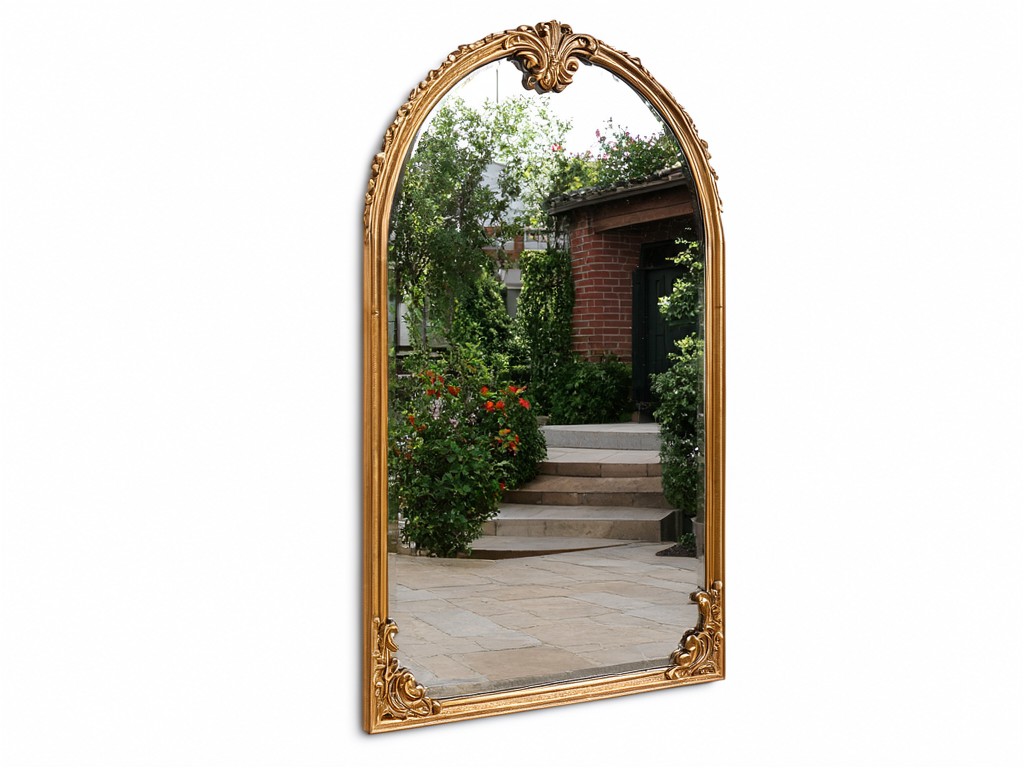
Comparing Two Standard Configurations
Two suppliers quoting the same specification may use different face materials or frame builds. Compare the finished assembly rather than the material line alone: a thinner or lighter face can alter support needs, while a heavier construction can raise freight and handling costs.
Framed Mirror Glass
Choose this route when reflection clarity and a firm face matter more than low shipment weight. Specify edge protection, back coverage, frame finish and the mounting arrangement together; each affects how the assembled unit travels and performs outdoors.
The cost premium is mainly tied to glass handling, protective packing and the need to prevent impact at the perimeter. It is a practical fit for fixed garden or hospitality installations with controlled installation procedures.
Framed Acrylic Mirror
Choose acrylic where lower unit mass supports easier handling or a lighter mounting system. The face needs a protective film or equivalent packing separation until installation, since rubbing against the frame or carton can mark the surface.
Check the viewing effect at the intended distance and confirm that the frame supports the panel without bowing. A lighter shipment can reduce handling burden, but the buyer should weigh that benefit against the appearance standard required for the range.
Who Uses It and Where It Matters
Garden and landscape retailers select large arched mirrors as statement pieces for outdoor living ranges. Their concern is repeatable presentation: a replacement unit should match the display model in arch shape, frame colour and visible dimensions, while cartons protect the face through distribution and store handling.
Hospitality buyers may specify them for sheltered courtyards, garden rooms or covered seating areas, where guests see the mirror at close range and cleaning is frequent. Club or academy purchasing managers may use them in landscaped grounds or covered outdoor amenity spaces. In each case, exposure matters: a fully exposed position brings more rain, direct sun and temperature change than a protected wall, so the buyer should define the installation conditions before selecting the backing and frame finish.
For outdoor placement, the product should not be treated as maintenance-free. Buyers need installation guidance that keeps the rear ventilated where appropriate, avoids standing water at the frame and identifies suitable cleaning materials for the reflective face. Those details can reduce premature finish complaints and avoidable returns.
Requirements by Buyer Segment
- Wholesale buyers benefit from a fixed size and finish matrix. Keep each SKU tied to a drawing revision, carton configuration and agreed colour reference so mixed lots do not create visible differences in a single shipment.
- Retail buyers should settle the shelf or floor display dimensions, packaging artwork and handling marks before production. If the mirror is sold with fixings, state the fixing type and quantity in the approved specification.
- Private-label buyers should define logo placement, label language, barcode ownership and carton branding without changing the approved product geometry. Artwork changes can usually be managed separately from tooling, but they still need sign-off before packing materials enter production.
- Club or academy purchasing teams should confirm the mounting surface and exposure level at the installation site. The fixing arrangement and mirror mass must suit that site; a large face needs secure support rather than a generic hanging assumption.
Across all segments, repeat-order control starts with an agreed tolerance for overall size, a retained finish sample and an unchanged bill of materials. Without those controls, colour drift or a different frame profile may pass unnoticed at order stage and surface later as a display mismatch or return.
Capacity, Tooling and Scheduling
A standard arch profile can use established cutting and frame processes, while a new outline, unusual frame depth or revised fixing position may require dedicated templates or production aids. Tooling needs depend on the chosen material and whether the frame is formed, assembled from stock sections or made to a custom profile. Keeping the design within an existing process family can reduce setup work and shorten approval cycles without changing the approved appearance.
Scheduling depends on face-material availability, finish preparation, packaging procurement and the time required to approve samples and artwork. Large mirrors also occupy more carton and pallet space than small decorative goods, so export packing dimensions can affect the order quantity per shipment. Share the target order mix, destination and delivery window early; a fixed specification and prompt sample approval give the factory a firmer basis for production planning.
For a specification review, send the target dimensions, face material, frame finish, mounting requirement, annual order estimate and private-label artwork status. Contact us to review the specification and export packing plan before confirming the purchase order.