OEM arched gold bathroom mirror suppliers: What Buyers Should Check Before Ordering
What This Product Is and Where It Fits
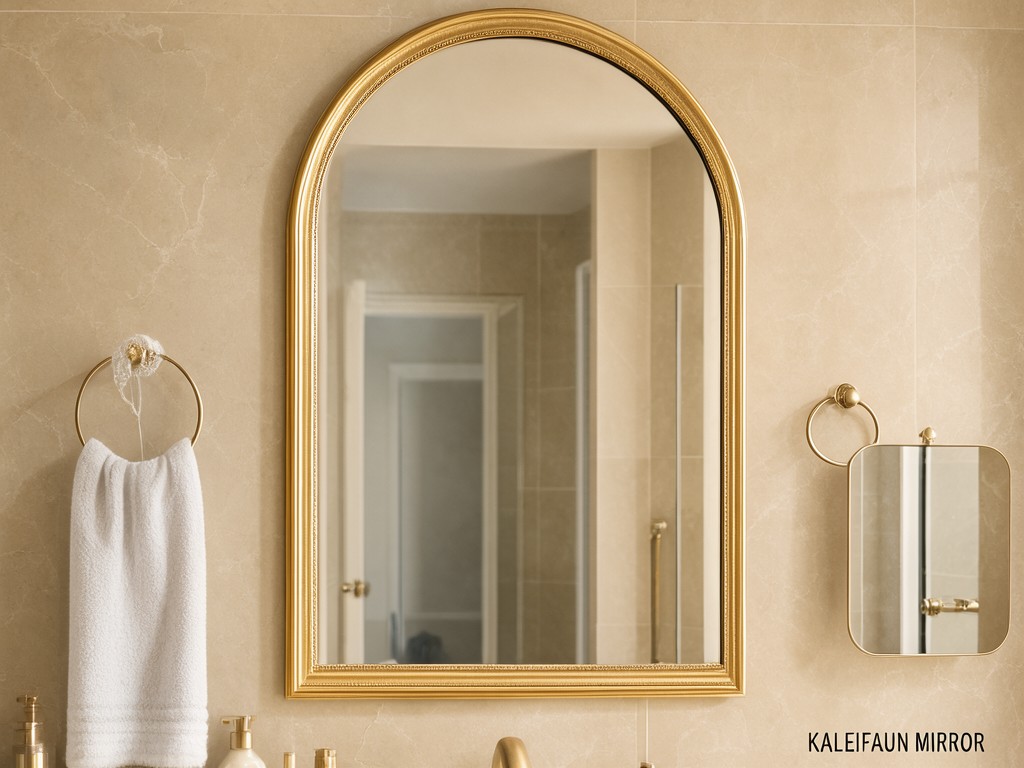
The interface between parts determines whether an arched gold mirror looks like a finished fixture or a glass panel set loosely inside a frame. The product is typically a wall-mounted mirror with a curved crown, a straight lower edge, and a gold-tone metal frame; buyers use it in private-label bathroom collections and coordinated hospitality interiors.
For a like-for-like OEM order, lock the arch profile, outside dimensions, frame sightline, glass specification, and mounting position before pricing. A small change to the crown radius can alter the visual proportion, while a deeper frame can change both the wall stand-off and the hanging hardware required.
Construction Method and Its Effect on Consistency
Production usually starts with a dimensioned arch template: the glass is cut to the agreed outline, its exposed edges are ground and polished, then the reflective coating and protective backing are applied. The frame is fabricated and finished as a separate component before final assembly. Keeping those operations separate allows the buyer to approve the mirror shape and gold tone without treating either as a substitute for the other.
A metal frame can hide the glass edge and reduce the chance of edge damage during handling, but its profile, corner joints, and finish add cost. A thinner frame may lower material use and freight weight; it also leaves less room to cover outline variation. In bathroom use, specify how the frame finish and exposed mirror edges are protected from routine moisture and cleaning.
Approve the assembled sample, not only a loose frame chip or glass drawing. The sample should confirm the arch contour, frame-to-glass fit, gold appearance under normal indoor light, rear backing, and hanger position. Record any accepted visual variation before the production lot begins.
How to Choose Before Requesting a Quote
A quote is comparable only when suppliers price the same geometry, materials, finish reference, and packing method. Use this decision path to settle the specification before asking for unit cost and lead time.
- Start with the approved outside dimensions and arch drawing.
- If the shape must match an existing range, send a dimensioned drawing or a physical reference and identify which one controls if they differ.
- If the design is still open, agree the crown radius, overall height and width, and frame sightline before requesting a tooling or sampling estimate.
- Set the glass and frame requirements next. State the glass thickness and edge treatment on the drawing; name the frame material and finish type, then provide a physical gold-tone reference or an approved finish sample.
- Confirm the mounting and service conditions.
- For a wall-mounted unit, show hanger locations, rear clearance, and the intended orientation. Confirm that the fixing method suits the installation surface; wall anchors are not interchangeable across wall types.
- For frequent cleaning or humid rooms, ask how the mirror edge, backing, frame joints, and finish are protected, and what care limits apply.
- Close the approval loop before the order is released: sign off the drawing, review the assembled sample, record any dimensional and finish tolerances, approve packaging and labels, then freeze the production version. Request a revised quotation if any approved input changes.
What Can Be Customised and What Cannot
Most private-label changes are practical when they are fixed before sampling. Changes to a formed arch, frame section, or mounting layout can affect setup cost and sample timing; packaging artwork is usually simpler, provided the carton still protects the glass and corners in transit.
| Item | Typical OEM choice | Buyer approval point |
|---|---|---|
| Outline and dimensions | Overall width and height, arch profile, frame width, and corner transitions | Dimensioned drawing and agreed tolerances; confirm whether the glass edge or frame defines the finished outside size. |
| Glass and backing | Glass thickness, polished or concealed edges, reflective coating, and protective backing | Approved construction detail and intended bathroom use; verify that edge coverage matches the frame design. |
| Frame and gold tone | Frame material, profile, joint style, and available gold-tone finish | Finish sample viewed in the intended lighting; confirm the approved finish process and care guidance. |
| Mounting and retail presentation | Hanger position, rear hardware, protective packaging, carton labels, and private-label artwork | Installation drawing, packaging sample, and final artwork proof before bulk release. |
A supplier can match a reference finish more consistently when the approved physical sample stays with the order record. A photograph alone may shift with camera white balance and display settings, so use it as a guide rather than the final colour approval.
Who Uses It and Where It Matters
Bathroom retailers and private-label brands select arched gold mirrors to anchor a coordinated vanity range. For importers, the practical concern is repeatability: the next shipment must retain the approved outline, finish appearance, mounting layout, and carton protection without reopening the design.
Hospitality project buyers may specify the same model across guest bathrooms, where installation crews need predictable hanger positions and replacement units need to fit the original wall layout. In either channel, a clear drawing revision and retained sample reduce avoidable rework when replenishment orders follow months later.
Review the Quotation Against the Approved Specification
Send the dimensioned drawing, finish reference, mounting detail, packaging request, and target order quantity for a quotation review. Ask the supplier to identify exclusions, sample charges, production lead time, and any specification that needs confirmation before the order is placed.
Request a quotation review with the current drawing and approval documents.