Specifying oem large arched bathroom vanity mirror top factory for Wholesale and OEM Orders
The complaint that repeats across reorders is a reflection that looks subtly different from one mirror to the next. On a large arched vanity mirror, slight glass distortion or a changed arch radius stands out across a bathroom wall, even when the carton label and nominal size match. Glass thickness, reflective coating, backing protection and the profile reference all affect the finished piece; buyers need to lock those details before comparing unit prices.
A private-label order usually needs a close match to an approved sample, not a new design. Reusing the same profile template and inspection references can reduce setup variation on repeat runs; the initial template and checking work add cost to a small order, while larger order volumes spread that setup across more units. The practical decision is to balance the cost of a fixed profile against the expense of correcting inconsistent sizes, edge finishes or reflective appearance after delivery.
What Actually Determines Performance
A bathroom mirror forms its image at a reflective layer applied to the back of the glass, with protective coatings over that layer. Glass flatness and coating consistency affect image clarity; edge grinding removes sharpness, but the exposed edge still needs protection from standing water and cleaning chemicals. For a large panel, the substrate and mounting support also matter: uneven contact against the wall can put stress into the glass and create visible distortion.
Selection rule: Where the mirror will sit near a sink or in a humid bathroom, specify protected backing and sealed edges. Confirm the mounting method against the mirror’s size and weight rather than relying on adhesive alone.
A thicker glass option can provide a more substantial panel, but it adds weight and freight cost. A thinner option can suit smaller formats, provided the support and handling plan match the panel dimensions. Approve the reflection, arch outline and edge finish together: a profile can be dimensionally correct yet still look wrong beside the buyer’s existing vanity range.
Comparing Two Standard Configurations
Framed and frameless versions can share the same glass shape, but they differ in edge exposure, visual weight and packing needs. Confirm frame depth and finish against the vanity hardware; for a frameless mirror, the edge treatment and wall mounting become more visible parts of the specification.
| Configuration | Construction and buyer trade-off | Best fit |
|---|---|---|
| Framed arch | A metal or other specified frame covers the glass perimeter. Frame material, finish and corner assembly add cost but protect the edge and create a more defined outline. | Retail ranges that coordinate the mirror with cabinet pulls, taps or other room hardware. |
| Frameless arch | The shaped glass and finished perimeter remain exposed. This reduces visual bulk, but makes edge quality, backing protection and mounting hardware more apparent. | Minimal vanity designs where the buyer wants the arch outline without a border. |
The reflective glass remains the main cost driver in either version. A frame changes material, assembly and carton dimensions, so compare landed cost rather than glass price alone.
What Can Be Customised and What Cannot
A repeatable profile starts with an agreed drawing or approved physical sample. Width, overall height, arch radius, glass thickness, edge finish, backing protection, frame finish and mounting arrangement can usually be set to a private-label specification, subject to the factory’s available glass and frame materials.
Options to Lock in the Sample
Specify the outer dimensions, arch shape, glass thickness, perimeter treatment, frame colour and mounting points. A profile template or dedicated checking fixture has an upfront setup cost; at higher volumes, that cost is shared across more pieces and helps hold the same outline on repeat orders.
Limits to Set Before Ordering
A drawing cannot remove the practical limits of glass size, weight, wall support or export carton dimensions. Changing the arch after sample approval can require a revised template and renewed checks, so late artwork or size changes may add setup expense and move the production schedule.
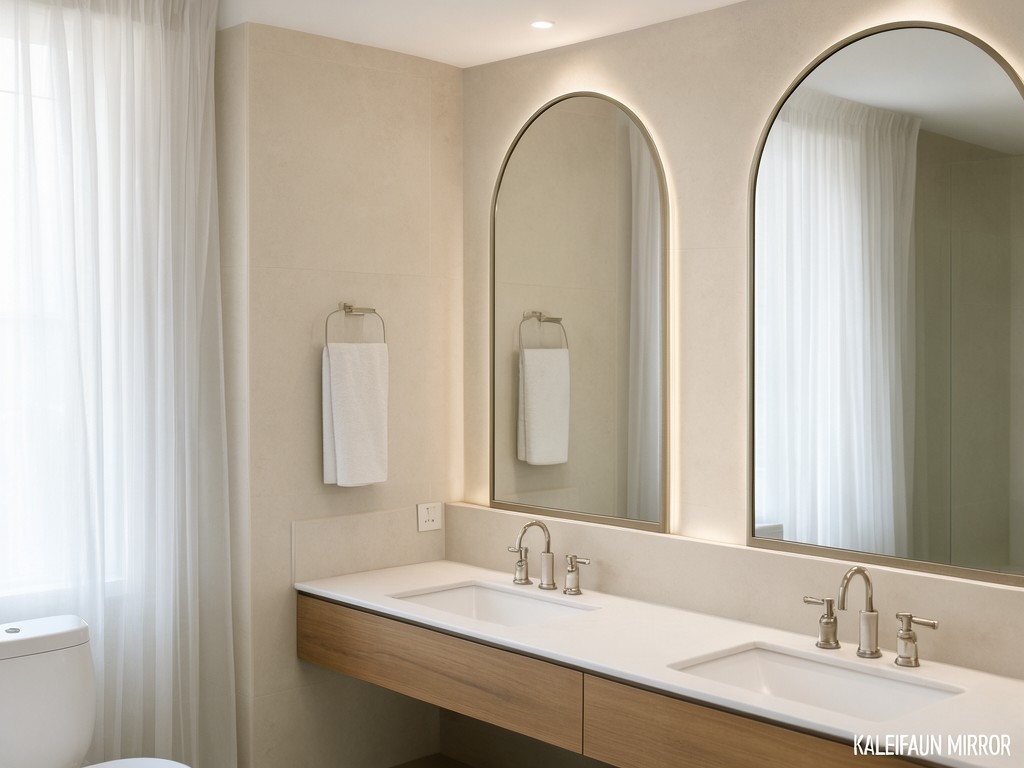
How Consistency Is Held Across Batches
A retained approved sample gives the production and inspection teams a common reference for arch shape, appearance and finish. Batch checks should cover overall dimensions, profile against the agreed template, glass condition, edge finish, backing coverage and frame colour where applicable. A visual reflection check also helps flag waviness or coating marks before packing.
Record the approved drawing revision, sample date and packaging details with the order specification. When a buyer changes glass thickness, frame finish or mounting hardware, treat it as a controlled revision rather than a verbal substitution. That discipline costs little beside a repeat run, while an unapproved material change can create mismatched retail stock and avoidable returns.
Packing, Marking and Freight Configuration
Large arched mirrors need protection at the curved top, perimeter and face. The packing plan should match the final frame depth, mounting parts and shipment route; a sample packed to the approved configuration can expose movement or contact points before a full order ships.
| Packing item | Order detail to confirm | Why it matters |
|---|---|---|
| Face and edge protection | Protective facing, corner or perimeter guards, and separation between units. | Reduces abrasion and impact risk at the glass edge during handling and transit. |
| Carton and pallet plan | Carton orientation, unit count, pallet footprint and any handling marks required by the importer. | Controls how the tall, curved item is supported and handled through export distribution. |
| Retail and batch identification | Private-label carton artwork, product code, quantity and batch reference. | Keeps incoming inspection, warehouse allocation and reorder matching aligned. |
If a private-label carton or insert is required, submit final artwork and marking details before the packing sample is approved. Consolidated orders can reduce per-unit freight expense, but only when carton dimensions and pallet loading suit the buyer’s receiving operation.
Review the Tooling Before You Place the Order
Send the target dimensions, arch drawing or approved sample, glass and frame preferences, mounting details, order volume and packing requirements for a tooling review. The review can identify which profile references are reusable, what setup work applies to the first run and which specifications should remain fixed for repeat orders.
Request an OEM tooling review before artwork and sample approval so the cost and specification are aligned before production planning.