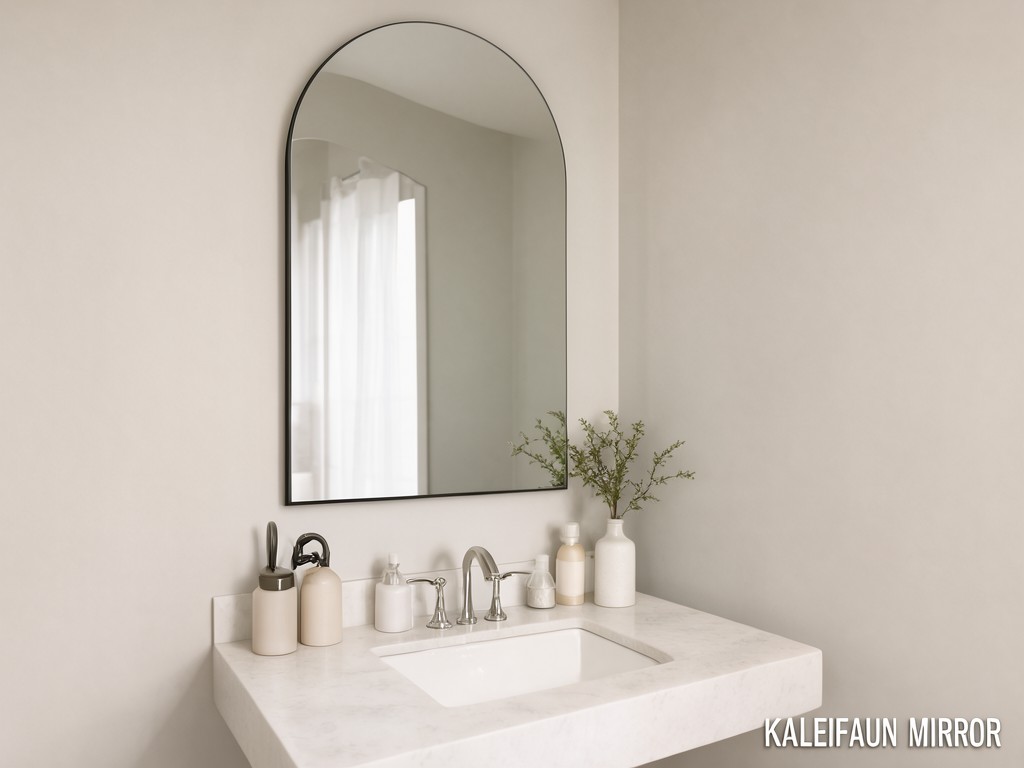
private label arched bathroom mirror china supplier: What Buyers Should Check Before Ordering
A second source only reduces supplier risk if its mirrors match the approved product from batch to batch. Small changes in arch profile, overall dimensions, glass thickness or coating appearance can create mixed-looking displays, installation issues and avoidable returns. Set the reference sample and inspection limits before comparing quotations.
Where Cheaper Alternatives Fall Short
| Inspection point | What can drift between lots | Buyer’s acceptance basis |
|---|---|---|
| Overall size and arch profile | Width, height or curve can vary after cutting or finishing. | Compare measured samples with the approved drawing and agreed tolerances. |
| Glass and finished unit mass | A change in thickness or frame construction affects mass and mounting requirements. | Record thickness and finished mass against the approved specification. |
| Reflective surface and backing | Coating tone, edge coverage or backing condition may differ by production run. | Inspect under consistent lighting and compare with the signed-off sample. |
| Mounting points and frame alignment | Hole position or hanger placement can shift and complicate installation. | Check position from the same drawing datum on each sampled unit. |
A low quotation may reflect thinner glass, a simpler backing system or less time spent on edge finishing. Those choices can reduce initial unit cost, but they also change the installed weight, appearance and resistance to humid bathroom conditions. If the second source cannot hold the agreed dimensions and finish across production lots, a small price difference can be outweighed by sorting, replacement and return costs.
Ask how the supplier controls the sequence from glass cutting and edge work through reflective coating and backing. A clear inspection basis matters more than a broad claim of consistency: use a retained approved sample, a controlled drawing revision and written limits for measurable features.
How to Choose Before Requesting a Quote
Start with the installation, not the catalogue image. Confirm the finished width and height, the arch geometry, glass thickness, edge treatment, backing arrangement and hanging method. If the mirror is for a humid changing room or bathroom, specify the expected exposure and cleaning routine; indoor bathroom use does not automatically make a mirror suitable for exterior weather.
For a second-source review, send the same drawing and reference sample to each factory. Request the proposed material stack, production process, inspection points and sample-approval route alongside the price. Quotes based on different glass thicknesses or mounting details are not directly comparable.
Decision rule: do not approve a cost comparison until the quoted mirror matches the reference on dimensions, glass build, finish, backing and mounting interface. Any proposed substitution should be shown on a revised sample or drawing before production.
What Can Be Customised and What Cannot
An arched mirror can be specified around the room layout and retail range, but changes to shape, frame and mounting affect tooling, finishing steps and finished mass. Keep the drawing revision and sample approval tied to the purchase specification so a later reorder does not rely on a visual reference alone.
Frameless, polished edge
This option keeps the perimeter visually light and makes the glass outline prominent. Specify edge polish quality and corner transitions; the arch profile is exposed, so small shape differences are easy to see across a display or room installation.
Metal-framed construction
A frame can protect the glass perimeter and set the product’s finish direction, but it adds mass and another visible finish surface. Confirm frame material, colour reference, corner joins and hanger position on the approved sample.
Width, height, arch radius, glass thickness, edge finish, frame colour and hanging hardware are commonly defined by the buyer. The exact curvature and mounting details must be confirmed against manufacturing capability; artwork or a product photo alone does not define a repeatable profile. Treat coating and backing choices as construction changes, not just appearance options, because they affect performance in humid rooms.
Requirements by Buyer Segment
Club and academy purchasing managers usually need mirrors for locker rooms, washrooms or changing areas where many units share one installation. Repeated dimensions and hanger positions matter because installers work across multiple rooms, while frequent cleaning and prolonged humidity make edge and backing condition important.
Importers and private-label buyers typically need a controlled assortment that can be reordered with the same outline, finish and brand presentation. Request a retained sample and drawing revision for each SKU. If a supplier changes glass thickness, frame finish or backing during a reorder, the visible and mounting differences can surface as customer complaints even when the nominal model name stays the same.
For an OEM buyer qualifying a second source, compare process control rather than only sample appearance. Ask who approves material substitutions, how production lots are identified and what records accompany inspection. A strong first sample does not establish that subsequent batches will match it.
What Gets Checked Before Shipment
Pre-shipment checks should compare production units with the buyer-approved sample and current drawing. Measure width, height, glass thickness and mounting-point location using suitable gauges; record finished mass where weight affects the installation specification. Use consistent lighting for a visual review of reflective appearance, edge finish, backing coverage, frame colour and surface marks.
For mirrors assigned to humid bathrooms, review the declared coating and backing construction and agree any moisture-exposure assessment with the supplier before ordering. There is no single buyer acceptance limit that applies to every mirror design, so define the method, sample quantity and pass/fail criteria in the purchase specification. Keep the inspection record linked to the production lot and approved revision.
Care, Storage and Service Life
Bathroom humidity and standing water near the mirror edge can put stress on the reflective coating and backing. Recommend normal room ventilation, prompt removal of water from the perimeter and a soft cloth with a mild cleaner. Abrasive pads, strong chemicals and liquid that sits on the edge can mark finishes or reach vulnerable areas.
Store mirrors in a dry indoor area and avoid placing pressure on the arch or polished edge. Before installation, inspect the glass and backing for visible damage and use mounting hardware suited to the finished unit mass and wall construction. Service life depends on the coating system, edge protection, room moisture and cleaning practice; do not present an indoor bathroom mirror as weatherproof for outdoor exposure unless that use has been specifically assessed.
Questions Buyers Ask Before Ordering
How do we keep the arch profile consistent on repeat orders?
Approve a dimensioned drawing that defines the overall size and curve, then retain a signed-off sample as a visual reference. Record the drawing revision and agreed tolerances on each purchase order, and require approval before any process or material substitution.
Which details should be fixed before the supplier quotes?
Set the dimensions, glass thickness, edge treatment, frame or frameless construction, reflective finish, backing and mounting arrangement. If any item is still open, ask the supplier to quote it as a separate option rather than silently choosing a substitute.
Can a sample confirm performance in a humid bathroom?
A sample confirms construction and appearance, but it does not by itself establish long-term service life. Ask the supplier to identify the coating and backing system, then agree any moisture-exposure evaluation, inspection method and acceptance criteria before production.
Send the current drawing, reference sample details and inspection requirements for a quotation review. Request a quotation review before you qualify the second source.