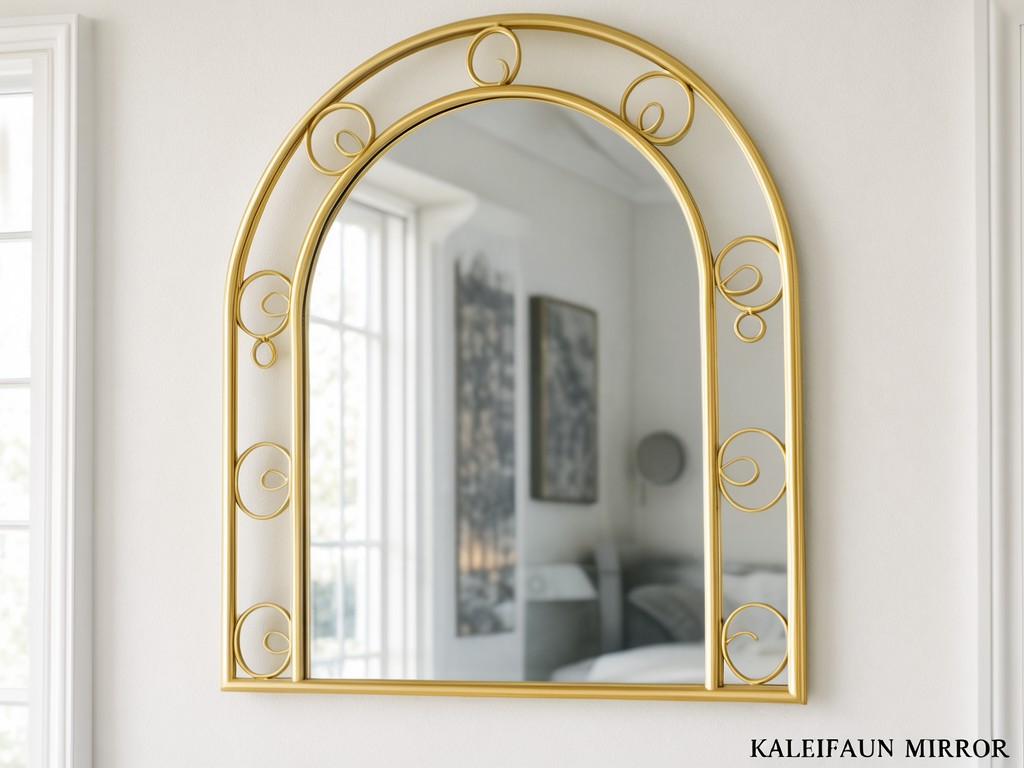
private label gold arched wall mirror vendor: Specification, Ordering and Quality Notes
Material choice starts with the conditions the mirror will meet. A gold-tone powder-coated frame usually controls colour and cost across repeat orders; an anodized aluminum frame gives a more metallic surface but limits some colour adjustments. Glass thickness, edge finish and protective packaging then determine whether the mirror reaches retail shelves without costly replacements.
The Problem Buyers Keep Paying For
Cost and durability pull in opposite directions once glass, frame and freight damage are counted together. A thin frame can reduce unit cost, but a loose joint or bent top curve becomes visible on the wall; a lighter glass specification can also increase flex and the chance of breakage during handling. Buyers pay twice when the first shipment generates claims and the replacement order needs a different specification.
- Gold finish scratches or chips first at frame edges and hanging points, especially where the coating wraps over a sharp corner. Specify rounded edges and review a finished sample under retail lighting.
- Image waviness usually points to glass distortion, uneven support or frame pressure rather than a colour issue. Check the mirror face before assembly and avoid a frame fit that forces the glass into the arch.
- Corner and edge breaks often begin in transit. Foam clearance, edge guards and a rigid outer carton matter more than adding loose fill around the centre of the mirror.
Compare landed cost per sellable unit, not the factory price alone. For fragile décor, one avoided breakage claim can outweigh a small increase in frame or carton cost.
How to Choose Before Requesting a Quote
Start with the display size, mounting method and intended price point. Those decisions set the glass area, frame section and carton dimensions; changing the arch after a profile or packaging sample is approved can add both tooling work and schedule time.
Glass and Safety
Decorative mirrors commonly use 3–4 mm silvered glass, depending on size and frame support. A safety backing film can help retain fragments after breakage; it does not make the mirror unbreakable or replace market-specific safety review.
Frame and Gold Finish
Formed aluminum keeps frame mass down; steel can suit a different profile or price target but adds weight. Gold-tone powder coat offers repeatable colour matching, while anodized aluminum has a metallic appearance with a narrower adjustment range.
Mounting and Freight
Choose hanging hardware for the intended orientation and wall type. Confirm the hardware and carton with the finished mirror; a load claim should not be made until the complete assembly has been checked for the buyer’s installation conditions.
Approval rule: Keep one signed-off sample for glass tone, arch profile, frame colour and hardware position. Use that sample as the visual reference for production and reorder checks.
Who Uses It and Where It Matters
Home décor retailers tend to favour a manageable carton and a price point that supports frequent replenishment. Hospitality buyers may choose a larger format for guest rooms or changing areas, where wall clearance, secure hanging and replacement availability carry more weight. The ranges below are planning examples; confirm final dimensions and mass against the approved frame and hardware.
| Usage level | Typical size | Glass and frame options | Indicative net mass |
|---|---|---|---|
| Compact retail and smaller bedrooms | 400 × 600 mm | 3 mm glass; formed aluminum or light steel frame | About 3–4 kg |
| Core home décor assortment | 500 × 700 mm | 4 mm glass; aluminum frame with gold-tone finish | About 4.5–6 kg |
| Larger rooms and hospitality fit-outs | 600 × 900 mm | 4 mm glass; frame and wall fixings sized for the finished assembly | About 7–9 kg |
Mass varies with the frame section, backing and hanging hardware. Larger mirrors need a carton designed around the glass edges, not just the overall product dimensions.
OEM and ODM Programme Structure
OEM orders can use an existing arch profile with a private-label carton, care insert and approved finish. ODM work may change the arch radius, frame section, hanging points or packaging, which can require profile tooling and another sample round. Combining sizes under one finish can reduce setup work, but each size still needs its own fit and packing check.
| Order stage | Planning quantity or timing | What changes the estimate |
|---|---|---|
| Prototype or finish sample | Usually 1–3 units; allow roughly 10–20 working days after drawing and finish approval | New profile, custom colour match, glass sourcing and sample freight |
| Production order | A planning band of 100–300 units per size and finish; roughly 30–45 days after sample sign-off | Profile tooling, finish batch size, carton print and peak factory loading |
These are quoting assumptions, not fixed commitments. A repeat order with an unchanged specification can avoid fresh profile development; a new colour or carton layout may still need approval before production release.
How Consistency Is Held Across Batches
A stable reorder begins with controlled references: approved drawing, glass thickness, arch dimensions, frame profile, finish sample and packing specification. Record finish colour against a physical reference rather than relying on a screen image, since metallic gold can shift in appearance with lighting and viewing angle.
Keep the same glass supplier and frame process where possible. If a material source changes, compare the replacement against the approved sample for reflected image, edge quality, colour and fit before releasing the full batch. Private-label carton artwork should also carry a revision reference so an old label does not return on a later shipment.
For repeatability, lock measurable dimensions and construction on the order sheet; use the signed sample for finish and appearance. That split makes disputes easier to resolve when a new production lot differs in colour perception but remains within its agreed physical specification.
What Gets Checked Before Shipment
Inspection should catch faults that trigger returns: a distorted reflection, chipped glass edges, uneven gold coverage, a frame that does not sit flat, or hardware placed off-centre. Checks should cover the assembled item and its export pack, since a mirror that passes factory inspection can still fail if the carton leaves the edges exposed.
- Measure overall width, height, arch symmetry and mounting-point position against the approved drawing.
- Inspect the reflective face under consistent lighting for visible spots, scratches and image distortion; check glass edges before frame assembly.
- Review finish coverage at joints and corners, then check frame alignment, backing fit and hardware attachment on assembled units.
- Pack a sample in the production carton and assess whether edge guards, corner protection and internal clearance keep the glass away from hard contact points.
Share the target dimensions, annual volume, finish reference and destination market for a tooling review. The review can identify profile changes, sample needs and carton constraints before you commit to a production quantity.
Request a Tooling Review
Send your preferred size, glass thickness, frame material, gold finish reference, order mix and packaging needs. Discuss the mirror specification and tooling scope before sample approval.