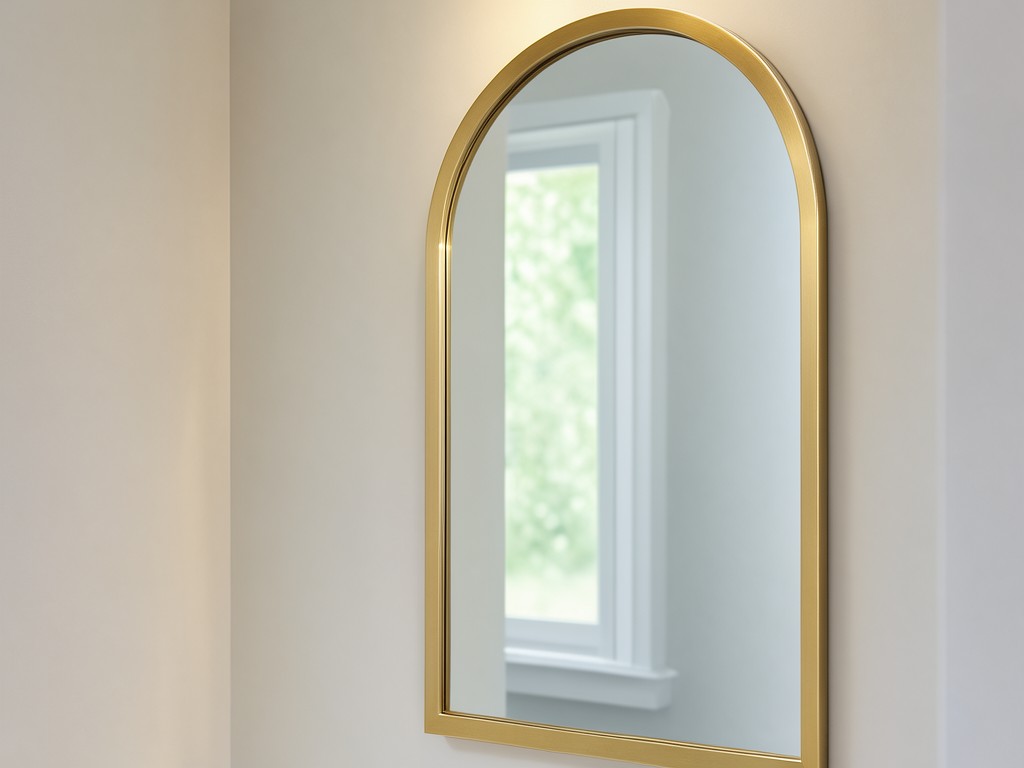
For a brushed gold arched mirror, the frame finish and the protection of the glass edges set the practical limits in a humid bathroom. Keep the approved frame material and finish aligned with the buyer’s cleaning conditions; confirm glass dimensions, backing protection and export packaging before locking the private-label specification.
Wholesale brushed gold arched bathroom mirror - Bulk Supply and Specification Guide
Repeated wiping exposes weak points first: moisture can reach an unprotected glass edge, while abrasive pads or harsh cleaners can dull a brushed gold surface. A heavier frame does not correct either issue. Match the finish system and edge protection to the cleaning routine, then hold the arch dimensions and mounting details to the approved sample.
Material Options and Their Trade-offs
The glass carries the reflection; its edge and rear coating determine how well it tolerates bathroom humidity. The frame supplies the arched outline and mounting support, but material choice changes weight, finish cost and corrosion exposure. Specify the complete build rather than asking for “brushed gold” alone.
| Construction choice | Buyer gains | Trade-off to confirm |
|---|---|---|
| Float mirror glass with a protected rear coating and sealed edges | A standard mirror construction that can suit routine indoor bathroom use. | Confirm coating and edge-seal details; standing water or persistent damp at exposed edges can damage the backing. |
| Aluminum frame with a brushed gold anodized finish | Lower frame weight and a finish that can be specified with the frame profile. | Color and brush direction need sample approval; abrasive cleaning can mark the surface. |
| Stainless steel frame with a brushed gold PVD surface | A metal frame option for buyers prioritizing a substantial feel and a defined surface treatment. | It adds material and finishing cost; approve the actual shade and surface appearance before bulk production. |
For bathrooms with frequent spray or slow ventilation, prioritize sealed glass edges and a frame finish approved for the intended cleaning products. Do not treat the brushed appearance as proof of exterior or poolside suitability; prolonged weather exposure and chlorine-based products require separate review.
Matching the Product to the Buyer's Need
The limiting factor is rarely the headline specification. Importers and distributors usually need a repeatable match to an existing retail range: arch radius, overall size, frame width, gold tone, mounting position and carton dimensions must stay aligned with the reference sample. A change to one of these can affect shelf fit, installation or the visual match beside other bathroom hardware.
Weight and stiffness trade off against each other. A larger mirror or heavier frame can call for different mounting hardware and stronger packing support, while a lighter assembly can reduce freight burden but still needs adequate rigidity through handling. Set the buyer’s target dimensions and mounting method first; then confirm the glass and frame build without changing the established design.
Match the Approved Sample
Use a signed-off reference for the arch profile, visible frame width, finish shade and mounting details. Record the glass size separately from the overall frame dimensions.
Match the Cleaning Conditions
For routine wipe-downs, specify care guidance that excludes abrasive pads and unapproved chemicals. If buyers expect frequent use of strong bathroom cleaners, review finish compatibility before confirming the order.
Buying Mistakes That Lead to Returns
A frequent return starts with a dimension mismatch: the buyer approves the glass width but the retailer lists the outside frame width, or the arch is judged by a photograph rather than a controlled sample. Specify height, width, frame projection, arch shape and mounting points on one drawing. Confirm the measurement reference for each value.
Finish complaints often follow cleaning rather than normal bathroom use. Bleach or other strong chemicals can affect a finish, and abrasive cloths can alter the brushed grain. Glass damage has a different cause: inadequate edge protection or impact during freight may expose the backing or crack the pane. Separate care-related complaints from transit damage in the inspection and claims records.
A final avoidable error is treating a finish sample as interchangeable with a production lot. Approve the gold tone and brush direction under agreed viewing conditions, then retain the approved reference for incoming checks and reorders.
OEM and ODM Programme Structure
For a private-label match without redesign, the buyer supplies the current drawing, approved sample or measured specification. The factory confirms whether the existing frame profile and production tooling support the requested dimensions and finish. A tooling review can identify a mismatch before the buyer commits to packaging artwork or a production quantity.
OEM scope can cover the established mirror build, private-label carton, product label and agreed hardware pack. ODM changes may involve a revised arch, frame profile or mounting arrangement; those changes can require new tooling review, sample approval and a different cost basis. Keep each approved change tied to a drawing revision so the reorder does not drift from the retail specification.
How Consistency Is Held Across Batches
Batch checks should compare overall dimensions, arch symmetry, frame fit, finish shade, mounting position and carton identification against the approved specification. Glass inspection should cover visible marks, edge condition and reflection appearance under a consistent viewing setup. The frame and glass should also be checked as an assembled unit, since fit can vary even when individual parts appear acceptable.
For humidity-related durability, confirm the backing protection and edge-seal construction on the sample before production. Any exposure test or acceptance limit should be agreed with the buyer and recorded for the order; do not infer long-term bathroom performance from a visual finish check alone. Retained samples and batch records help distinguish a finish shift from a packing or handling issue.
Confirm the approved gold reference, glass dimensions, edge protection, mounting hardware and carton specification in the same order file. A finish-only approval does not control the finished mirror.
Volume Planning and Lead Time
Lead time depends on whether the selected size, frame profile and gold finish are already in the production range, and whether the buyer needs custom packaging. A change to the arch or frame profile can add sample review and tooling work; a label update usually follows a different approval path. Confirm the schedule after the specification, sample and packaging artwork are approved.
For a volume order, plan around the carton quantity and freight method as well as the unit count. Mirrors need protective separation and stable outer packing, so mixed sizes or late quantity changes can affect carton planning and container loading. Keep a buffer for sample approval and pre-shipment inspection rather than treating production completion as the dispatch date.
Stock Availability and Reorder Planning
Stock status must be confirmed by size, frame material, finish and packing configuration; a similar-looking gold mirror may not match the approved reference. For repeat orders, retain the item code, drawing revision, finish reference and carton details so purchasing does not reopen settled decisions. If the initial order uses a non-stock size or finish, confirm future availability before presenting it as a replenishment item.
| Packing element | Purpose in transit | Confirm for the order |
|---|---|---|
| Corner and edge protection | Reduces direct impact on vulnerable glass corners and edges. | Check the protection against the mirror outline and frame projection. |
| Foam or other non-abrasive separation | Prevents glass-to-frame contact and surface scuffing during movement. | Review contact points so the packing material does not mark the finish or leave residue. |
| Individual carton with suitable outer case or pallet arrangement | Supports handling, stacking and identification through export distribution. | Approve carton marks, orientation, stacking plan and any retailer label requirements. |
Questions Buyers Ask Before Ordering
Can the existing mirror be matched without changing the frame tooling?
That depends on whether the current profile and tooling cover the required outside dimensions, arch and mounting details. Send the drawing or reference sample for review before confirming a bulk specification.
How should the brushed gold shade be approved?
Approve a physical finish sample under agreed viewing conditions, including the brush direction and visible frame area. Keep that sample as the comparison reference for production and reorders.
Can the mirror be cleaned with bleach or abrasive bathroom pads?
Do not assume those products are compatible with the frame finish or mirror edges. The buyer should approve care guidance for the specified finish; mild cleaner and a soft cloth are the safer default unless the finish supplier confirms otherwise.
What packing details should be fixed before a reorder?
Keep the approved corner protection, separation material, carton dimensions, shipping marks and pallet arrangement on the order record. A packing change can alter both transit protection and the number of units per shipment.
Request a tooling review before approving a private-label run. Share the current drawing, reference sample details, finish target and carton requirements to check the match without unnecessary redesign.
Send your specification for review