Specifying wholesale extra large arched floor mirror suppliers for Wholesale and OEM Orders
A mirror that arrives with a chipped edge or develops backing damage after routine cleaning can cost more than the unit-price saving on a cheaper stock option. For repeat orders, compare the glass, edge protection, backing, frame finish, and export packing as one return-risk decision; choose the specification against the room conditions and handling route it must withstand.
What This Product Is and Where It Fits
| Specification | Typical order choices | Buyer check |
|---|---|---|
| Overall size | Common full-length formats are approximately 1600–2000 mm high and 600–900 mm wide; confirm the finished dimensions on the approved drawing. | Check doorway, lift, carton, and retail display dimensions before fixing the size. |
| Mirror glass | Thickness and mirror coating depend on the size, intended installation, and supplier's available glass specification. | Approve reflection, edge finish, and backing details on a production-representative sample. |
| Frame and support | Options may include a wood-based frame or metal frame, with wall-mount hardware, floor support, or both where designed. | Confirm the chosen support suits the installation method and packed product weight. |
| Safety and packing | Backing film and protective corner, face, and carton systems can be specified to suit the sales channel and shipment route. | A safety backing can help retain fragments if glass breaks; it does not make the glass unbreakable. |
Wholesale extra large arched floor mirrors are full-length mirrors supplied for furniture retailers, home-furnishing brands, hospitality projects, and other buyers placing repeat or OEM orders. Their arched profile makes the top edge and frame fit especially visible at retail, while the height and glass area make handling and freight protection central to landed cost.
A floor mirror is generally intended for indoor use, not prolonged exposure to rain or exterior humidity. Strong sunlight can fade some frame finishes over time, and standing water or repeated wet cleaning can damage vulnerable frame edges or backing. Specify the room conditions honestly rather than treating a surface finish as an outdoor rating.
Comparing Two Standard Configurations
The frame choice changes purchase cost, appearance, packed weight, and exposure tolerance. Compare complete finished samples: a lower frame price does not offset a finish that scuffs in transit or a construction that is poorly suited to a humid room.
Wood-Based Frame
This route suits painted or wrapped furniture ranges where the buyer wants a substantial profile and a coordinated room finish. It can be cost-effective in stable indoor conditions, but exposed edges and joints need protection from moisture; repeated wet wiping can cause swelling or finish damage if water reaches the substrate.
Check coating adhesion, corner joins, and finish consistency across the arch. Specify a dry-cloth or lightly damp-cloth care direction for end users rather than implying wash-down suitability.
Metal Frame
A metal surround can suit a slim contemporary profile and may handle routine surface wiping better than an exposed wood-based edge, depending on the coating and joint design. Its price and appearance depend on section shape, finish, and fabrication; dents, scratches, or coating damage remain possible during handling.
Review welds or joins, coating coverage at edges, and the contact points that meet the floor or wall. For coastal or persistently humid interiors, ask the supplier to confirm the specified metal and finish limitations rather than assuming corrosion resistance.
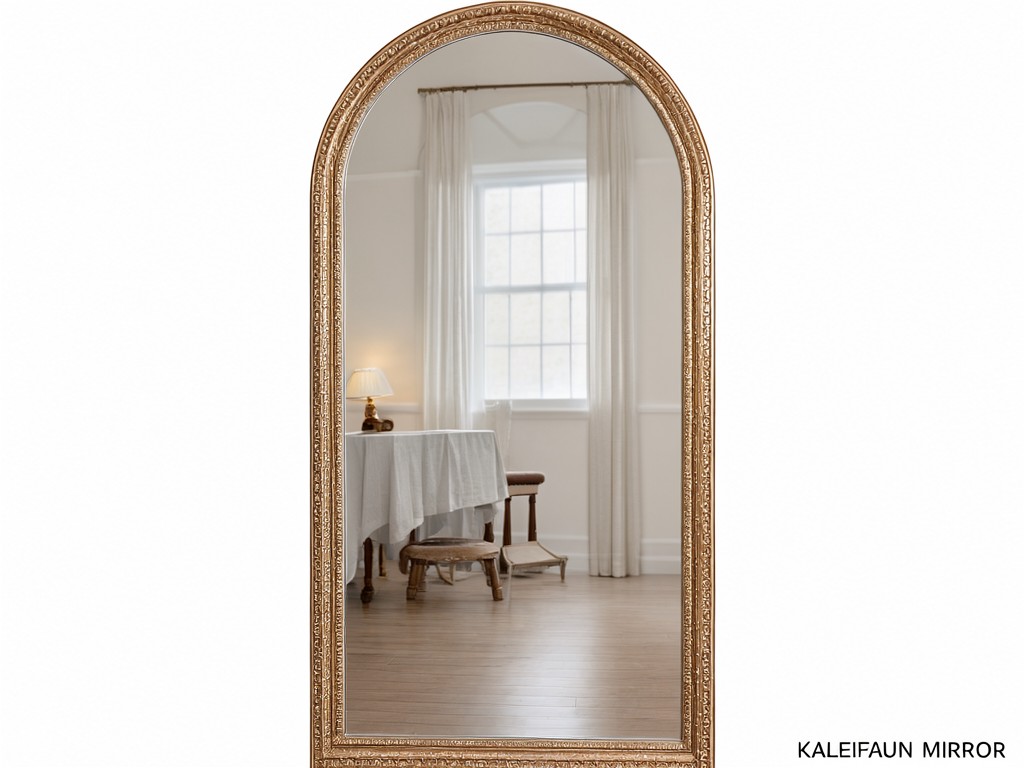
Selection rule: price the frame together with its finish, support hardware, and protective packing. Neither frame type compensates for unsuitable room conditions or poor handling after delivery.
Matching the Product to the Buyer's Need
Start with the point where returns occur. If complaints report breakage, review carton restraint, corner protection, and unloading instructions before changing the glass specification. If the mirror arrives intact but the frame is marked, compare surface protection and handling clearances; if damage appears after installation, check the mounting method and wall condition.
For an entry-level retail range, keep the size and finish selection narrow and validate the packed unit through the buyer's actual freight route. A hospitality or dressing-room order may justify a more abrasion-resistant frame finish and replaceable mounting hardware if mirrors will be moved or cleaned frequently. In either case, make the care instructions specific: use a soft cloth and a suitable glass cleaner, keep liquid away from frame joints and backing, and avoid abrasive pads or harsh chemicals.
Confirm whether the mirror is freestanding, wall-mounted, or supplied for either method. A floor-standing design needs stable support on the intended surface; a wall installation needs compatible fixings and a suitable substrate. Sweat, chlorine, and frequent washing are not normal direct-use conditions for a household floor mirror, but gym or pool-adjacent placement can expose it to residue and humidity, so specify cleaning and placement limits for those environments.
Customisation Options and Their Limits
OEM orders can typically define overall dimensions, arch shape, frame profile, finish colour, support hardware, backing details, carton artwork, and retail labels. Changes to width, height, or arch radius affect glass yield, frame tooling or fabrication, unit weight, carton dimensions, and the fit of support parts. Approve a dimensioned drawing before sampling so that a visual change does not create a packing or installation mismatch.
Colour matching is limited by the selected coating or wrap and the substrate beneath it; request a physical finish sample when adjacent furniture colours must coordinate. Branding can usually be placed on packaging or labels, while applied marks on the mirror face require separate review for appearance and cleaning compatibility. Custom shapes and finishes can add setup time, raise minimum order quantities, or make replenishment dependent on dedicated materials.
Treat weather resistance as a defined use condition, not a general customization promise. A finish selected for normal indoor use should not be presented as suitable for uncovered outdoor storage; repeated UV exposure, condensation, and wet cleaning can shorten the service life of finishes and backing components.
Usage Scenarios and Buyer Segments
Home-furnishing retailers often choose an arched full-length format for bedroom and dressing-area displays, where customers inspect the reflection and frame finish at close range. Their recurring risks are chipped glass edges during delivery, visible finish variation between units, and cartons too large for store-room or last-mile handling.
Hospitality procurement teams may specify mirrors for guest rooms, suites, or dressing areas that receive routine housekeeping. The product must tolerate careful surface wiping and ordinary indoor humidity without allowing cleaner to pool at joints or edges. For gyms, dance studios, or pool-adjacent changing areas, review mounting security, room ventilation, and cleaning practice; these environments can add impact, sweat residue, or humid-air exposure beyond standard bedroom use.
Importers and private-label buyers should also match packaging to the delivery model. A palletized container shipment and a parcel or home-delivery route place different demands on corner protection, face separation, carton strength, and handling marks. Include the actual route in sample approval rather than judging the product only at the factory gate.
Inspection Items and Test Methods
A repeat-order inspection should compare the approved sample and drawing with production units. Record overall height and width, arch symmetry, frame profile, support position, and carton dimensions. Inspect the reflective face under consistent lighting for visible scratches, coating defects, or distortion; check edges and corners for chips before the mirror is packed.
- Check frame colour and gloss against the approved reference, then inspect exposed edges, joints, welds, or wrapped corners for gaps, scuffs, and incomplete coverage.
- Fit the specified stand or mounting hardware and verify that the parts align with their intended attachment points. Do not substitute a load rating unless it has been established for that exact configuration.
- Review carton restraint, corner protection, and face separation. A controlled handling or drop evaluation should use an agreed protocol and the final packed configuration; results from a different carton do not validate the order pack.
- Where cleaning or humidity is a known concern, agree a representative finish and edge exposure check with the supplier before production. Record the cleaner, contact method, duration, and acceptance criteria instead of treating an informal wipe test as a general weather-resistance claim.
- Retain batch references, inspection records, and an approved sample identifier so a later claim can be traced to the relevant materials and packing configuration.
For repeat orders, pay particular attention to whether the complaint rate tracks a frame finish, glass size, or freight route. A targeted correction to packaging or handling may reduce breakage more than an across-the-board material upgrade.
Stock Availability and Reorder Planning
Stock availability depends on the selected size, frame finish, support parts, and packing format. Standard dimensions and finishes may be easier to replenish than a custom arch or colour, but availability should be confirmed against current inventory rather than assumed from a previous purchase. Ask suppliers to separate ready stock from made-to-order quantities and confirm whether stock uses the same approved specification as the next production run.
Set a reorder point using the full replenishment lead time: sample or artwork approval where relevant, production, packing, and export transit. Reserve time for replacement stock if a breakage claim would interrupt a seasonal promotion or project handover. For custom finishes, confirm material continuity and retain the approved colour reference; otherwise, a later batch may not match the original display units.
Before release, align carton marks, retail labels, quantities per pallet, and destination requirements with the importer or retailer. Forecasting the same size and packing configuration across repeat orders can simplify freight planning and make inspection comparisons more meaningful.
Request a Specification Review
Send the target dimensions, frame and finish preference, installation method, sales channel, cleaning conditions, and shipping route for review. A clear specification and approved packed sample give procurement and quality teams a practical basis for reducing repeat-order damage and avoidable returns.
Discuss your wholesale or OEM mirror specification