Specifying wholesale tall gold arched wall mirror suppliers for Wholesale and OEM Orders
Most quality disputes start with a consistency gap: a gold frame reads warmer on one reorder, the arch profile shifts slightly, or the mirror arrives with edge damage despite an unchanged product code. For distributors and importers matching a private-label specification, the supplier must hold the approved geometry, finish appearance, and packing method—not redesign the mirror with each order.
The practical specification starts with the glass dimensions and arch radius, then fixes the frame material, gold finish, backing, mounting hardware, and export pack. Each choice affects appearance, landed cost, and the amount of production setup required.
How It Performs in Use
In bedrooms, dressing areas, and retail interiors, buyers judge a tall mirror by the reflected image, stable wall mounting, and whether the frame keeps its colour under normal indoor conditions. A flat, correctly supported mirror gives a more consistent reflection; uneven backing support or pressure at the perimeter can introduce distortion or stress at the glass edge.
Gold is a finish description, not a single colour standard. Plated, brushed, and painted surfaces can differ in tone and gloss, so the approved sample should define the reference. For humid rooms, specify the frame and backing for the intended exposure; a decorative indoor mirror should not be represented as suitable for exterior weather without a separately engineered construction.
How It Is Built and What That Changes
Glass and Backing
Glass is cut to the approved outline, the perimeter is finished, and the reflective coating and backing are applied before assembly. A safety backing film can help retain fragments if glass breaks, but it does not make the mirror impact-proof.
Frame and Finish
A formed metal frame supports a repeatable arch profile and a narrow border. The finish may be applied by plating or by a coating process, depending on the required tone, surface texture, and target price. Frame construction and finish must be approved together because the substrate affects the final appearance.
For a private-label reorder, the drawing should control overall height and width, arch transition, frame face width, and mounting-point location. A tooling or forming setup can require an initial cost; once spread across a larger order, it can reduce per-unit setup cost and help hold the profile across production runs.
Measured Performance in Real Use
What the Approved Specification Needs to Hold
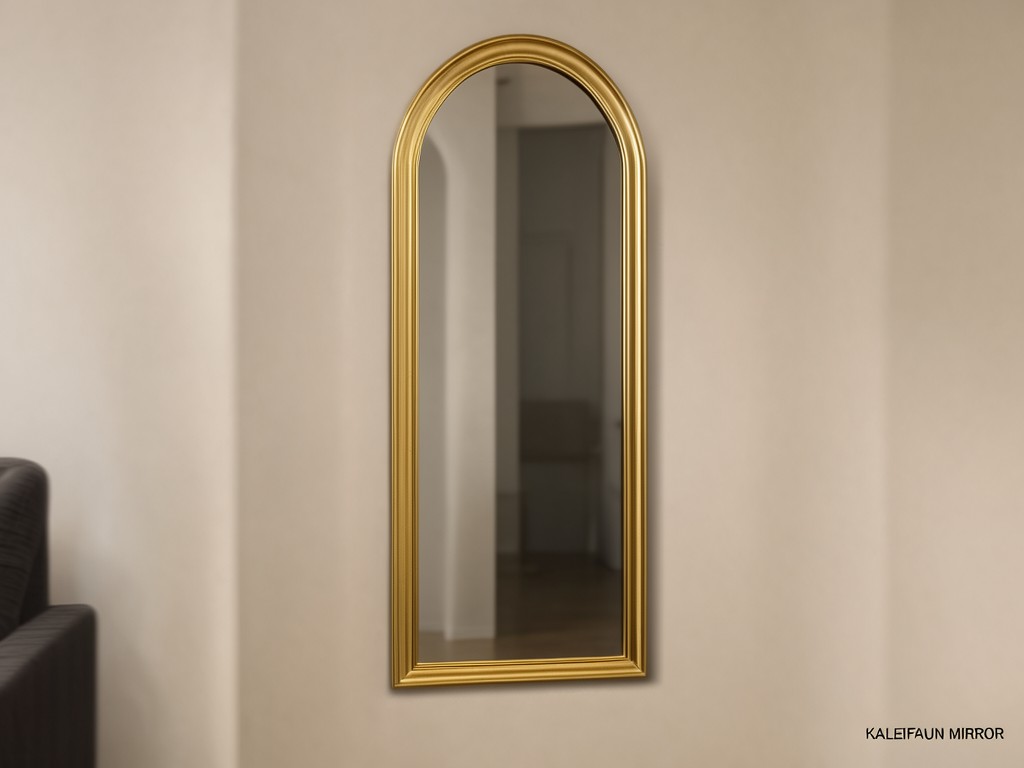
Dimensional agreement matters most at the full-height silhouette: even a small change in width or arch radius can make a reorder look different beside existing stock. The approved drawing and sample should define the glass outline, frame coverage, finish reference, and hardware position. Confirm the actual values against the buyer’s retail specification rather than relying on a catalogue image.
Mirror clarity also depends on glass flatness, coating condition, and support through assembly. A frame that presses unevenly against the glass can create edge stress; a backing arrangement that does not support the panel can raise the risk of movement in transit or after wall installation. For damp indoor locations, agree the exposure limits and compatible materials before the order is released.
Customisation Options and Their Limits
Keep the existing outline and mounting layout when the goal is a private-label match. Changes to the arch tooling, frame section, or glass size can affect setup cost, carton dimensions, and production scheduling; bundle those changes into one approved revision instead of making incremental adjustments after sampling.
| Specification area | Options to confirm | Production effect |
|---|---|---|
| Dimensions and arch | Overall size, arch radius, frame width, and mounting positions from the approved drawing | Existing tooling may suit a specification match; altered geometry can require new or revised forming setup. |
| Gold appearance | Tone, gloss level, and surface texture, referenced to a physical sample or agreed finish target | Finish method and batch setup influence the cost of matching appearance at reorder. |
| Glass and backing | Glass specification, edge finish, reflective backing, and optional safety film | Additional backing or glass requirements can change component cost and assembly steps. |
| Private-label details | Carton artwork, product label, barcode, and included mounting hardware | Artwork approval and component sourcing need to be complete before pack-out. |
Segment-Specific Requirements
Distributors
A distributor often needs a stable SKU, repeatable finish reference, and carton labelling that fits existing warehouse intake. Keep approved artwork, hardware, and pack configuration tied to the product revision.
Importers
An importer needs the packed dimensions, gross weight, and shipping protection confirmed before freight booking. Glass edge protection and a fixed inner-pack arrangement reduce movement that can cause corner or perimeter damage in transit.
Private-Label Buyers
A private-label buyer should lock the sample, drawing, finish reference, label, and packaging artwork as one release set. That record lets a supplier reproduce the agreed product without changing the underlying design.
Working as a Production Partner, Not a Catalogue Supplier
When an existing mirror needs a private-label specification rather than a redesign, the production partner should work from the buyer’s approved references and flag any mismatch before production release.
- Review the drawing, physical sample, finish target, and current hardware before quoting.
- Identify which existing frame and forming setup can be retained, and price any tooling change separately.
- Keep product revision, carton artwork, and packing instructions linked to the order record.
- Confirm which packaging components can be sourced locally and which depend on order volume or print setup.
| Packaging element | Specification to agree | Order consideration |
|---|---|---|
| Glass protection | Edge guards, face separation, and immobilisation inside the carton | Pack design should match mirror size and selected freight method. |
| Outer carton | Carton dimensions, board construction, print, and handling marks | Printed cartons may need a minimum order or a separate print setup charge. |
| Pallet or container loading | Units per pack, orientation, and load plan | Tall cartons need a planned loading arrangement to limit shifting during transit. |
How Consistency Is Held Across Batches
- Release one controlled drawing and one approved finish sample as the production reference.
- Keep glass, frame, backing, hardware, and packaging specifications linked to that revision.
- Record material and finish batches against the production lot so a reorder can be compared with the approved reference.
- Route any proposed material substitution or finish change for buyer approval before it reaches assembled goods.
Gold-tone variation can occur when coating materials, surface preparation, or process settings change. Batch records and a retained approved sample make the difference visible before dispatch. For humid indoor markets, the selected frame finish and backing materials should remain consistent with the agreed exposure condition; changing a component can change its resistance to moisture.
Capacity, Tooling and Scheduling
Order volume changes the cost balance. A small run can carry a larger share of forming setup, finish preparation, and printed packaging costs per mirror. Larger releases can spread those costs across more units, but they still need confirmed materials, approved artwork, and an agreed production window.
Lead time depends on whether the order uses an existing frame profile and finish process or requires new tooling, a revised sample, or custom cartons. Schedule estimates are more useful after the drawing, finish reference, order quantity, and packaging plan are fixed. Split shipments may change freight cost and pack-out priorities; agree them before the production slot is allocated.
Tooling review: Send the current drawing, reference photos or sample details, target quantity, finish preference, and destination packaging requirements. A review can identify which specifications can stay unchanged and where tooling or order volume will affect unit cost and timing.
Request a tooling and specification review before releasing artwork or committing to a production schedule.