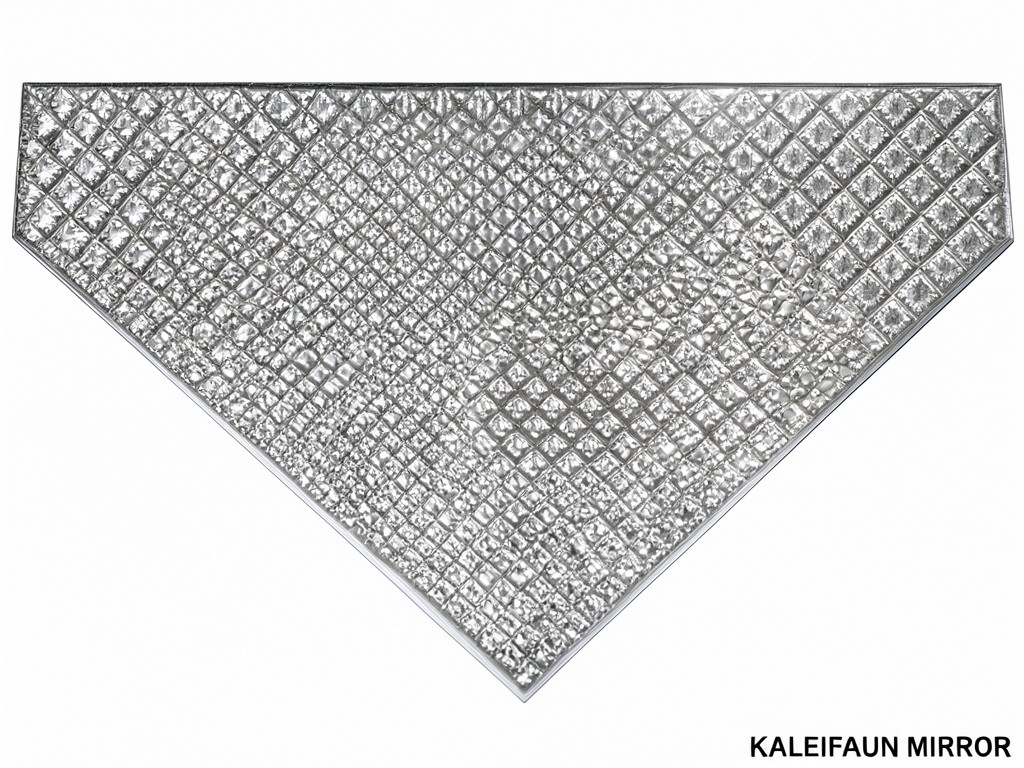
Specifying Customized Diamond Relief Mirror Wholesale for Wholesale and OEM Orders
Material choice starts with the conditions the mirror will meet. A diamond relief design is typically built from shaped and polished mirror facets assembled into a raised geometric pattern. Glass thickness, edge finishing, backing protection and mounting method all affect the finished weight, appearance and resistance to edge damage.
The Problem Buyers Keep Paying For
Returns often start at the edges: a facet arrives chipped, the silver layer shows dark spots near a cut edge, or the relief pattern sits unevenly against its backing. Those faults are difficult to correct after installation and can make an otherwise usable mirror look inconsistent across a retail display or a multi-unit project.
For a second source, compare the same approved drawing and assembly details—not just the overall outside dimensions. Define facet count, diamond layout, glass thickness, edge finish, backing construction and mounting points before comparing quotes. This gives procurement a practical basis for checking both unit cost and the likely cost of breakage, rework or shade variation.
Material Options and Their Trade-offs
Standard Clear Mirror Glass
Standard clear float glass suits many decorative interior orders and usually has the lower material cost. Its slight green edge tint may show more clearly on thick or exposed facets, so approve a physical sample when the design relies on a near-neutral edge appearance.
Low-Iron Mirror Glass
Low-iron glass reduces the green cast at exposed edges and can make a pale or colour-sensitive interior scheme easier to match. The glass premium is most useful when the edges remain visible; it does not replace edge sealing or careful handling.
For many wall-mounted designs, 4–6 mm glass is a practical starting range, subject to facet size, overall dimensions and support design. A silvered mirror with a protective backing paint is common for indoor use. Where humidity or frequent cleaning is expected, ask whether a copper-free mirror construction and sealed cut edges are available. Neither option makes the assembly suitable for standing water or direct chemical exposure.
More facets and thicker glass increase material use, processing time and finished weight. If the relief depth is created by the arrangement of bevelled pieces, confirm the facet angles and spacing on a sample; a change to one facet can alter the visual rhythm across the full panel.
Volume Planning and Lead Time
Set the approval point before releasing volume. Confirm the drawing, glass type, relief layout, edge treatment, backing and mounting details on a signed-off sample or specification sheet. Changes after glass cutting can require new templates and create scrap, which can affect both unit price and schedule.
Lead time depends on the availability of the selected mirror glass, the number of unique facet shapes, finishing steps and order quantity. Standard sheet sizes may shorten material procurement; a custom layout with many individually shaped pieces adds cutting, polishing and assembly work. Request a production estimate after the drawing and sample scope are fixed rather than relying on a preliminary quote.
For a second-source qualification, a pilot order can test dimensional agreement, edge quality, colour appearance and protective packing before the buyer shifts repeat volume. MOQ and sample charges should be quoted against the actual layout, since tooling or setup needs differ between a repeat pattern and a new facet arrangement.
Keeping Repeat Orders Supplied
| Packaging Item | Specification to Confirm | Why It Matters |
|---|---|---|
| Facet separation | Foam or other non-abrasive separators between exposed mirror faces | Prevents face-to-face rubbing and reduces surface scratches. |
| Perimeter protection | Corner and edge protection matched to the finished panel profile | Exposed bevels and cut edges are vulnerable to impact damage. |
| Carton identification | SKU, finish, size, order reference and carton quantity | Clear identification helps receiving teams separate revisions and replenishment lots. |
Decorative mirror glass is not always held as finished stock because size, facet arrangement and backing details vary by order. Buyers can improve continuity by keeping an approved drawing and sample reference, defining which components may be substituted, and agreeing how glass batch or coating changes will be communicated. Reorder availability should be checked against current sheet-glass supply before a promotion or project schedule is committed.
Setup, Use and Replacement Parts
Mounting
Confirm the finished weight, wall material and mounting hardware as a matched set. Support points should not load a single facet or force the backing out of plane.
Cleaning and Exposure
Use a soft cloth and a mirror-compatible cleaner; keep liquid away from exposed edges and the backing. Chlorinated splashes, sweat residue and abrasive pads can attack vulnerable edges or scratch the face, so wipe them promptly. Avoid prolonged direct sunlight where heat may build behind the panel.
Replacement
A damaged individual facet may be replaceable if the assembly method allows access. Keep the approved facet drawing, glass specification and edge finish with the order record; a visually close substitute can still differ in tint or bevel width.
Before installation, check the panel for chipped corners, backing damage, loose facets and alignment against the approved sample. Store cartons upright only when the packing design calls for it, and keep them dry until fitting; pressure on exposed relief faces can transfer through the pack and mark the mirror surface.
Questions Buyers Ask Before Ordering
Can the diamond pattern be made to our drawing?
Usually, subject to facet size, glass thickness, edge access and assembly method. Provide a dimensioned drawing or artwork with overall size, facet layout, relief depth or bevel details, backing and mounting requirements. A physical sample is useful where reflected appearance and facet alignment are part of the approval.
What should be checked when qualifying a second supplier?
Compare an approved reference for glass tint, thickness, outside dimensions, facet geometry, edge finish, backing and pack protection. Ask the supplier to identify which materials are held in regular supply and which require a fresh purchase for each order.
How do MOQ and lead time change for a custom layout?
A new layout may require added setup and sample approval, while repeat production from a controlled drawing can reduce approval work. Confirm minimum order quantity, sample cost and the production window after the supplier reviews the final drawing and glass selection.
Can the mirror be specified for a humid room?
Ask about mirror backing, sealed edges and suitable installation clearance. Humidity resistance depends on the whole assembly and room conditions; no mirror should be treated as suitable for standing water or routine contact with aggressive cleaning chemicals unless that use has been specifically assessed.
Qualifying a second source? Send the target dimensions, diamond layout, glass preference, mounting details and forecast quantity for a project review. These details allow the factory to assess sample scope, material availability and a production schedule against your current supply requirement.