Customized Floral Detail Mirror Wholesale - Bulk Supply and Specification Guide
Tooling amortisation decides whether a custom floral frame makes sense at the planned order volume. For private-label handheld vanity mirrors, the cost calculation should include the frame finish, decorative detail, packing protection and likely replacement claims—not only the unit price.
The Problem Buyers Keep Paying For
| Finish and colour option | Typical construction | Buyer trade-off |
|---|---|---|
| Solid pastel or neutral frame | Coloured ABS frame with molded floral relief | Lower part count; colour matching depends on the resin and production lot. |
| Metallic or pearlescent accent | Coated frame with a separate floral appliqué | More finish steps and a higher rub-wear risk at raised edges. |
| Two-tone floral detail | Base-colour frame with printed or painted flower accents | Avoids a second molded part, but artwork registration and colour approval need control. |
A low unit quote can lose its advantage when the floral pieces loosen, the coating rubs through, or the glass edge chips before retail display. These complaints often start at the frame-to-glass fit or at a raised decoration that catches on a pouch or carton divider.
Confirm the hand feel and the intended use before fixing the specification. A lightweight frame suits a bag mirror, while a heavier frame can feel more substantial at a vanity; neither choice compensates for a sharp perimeter, loose back cover or weak decorative bond.
Material Options and Their Trade-offs
ABS is a practical frame choice for a handheld mirror that needs low weight and repeatable molded contours. A molded flower uses the same frame material and avoids a separate bond line, although a dedicated mold raises initial tooling cost. Painted or coated accents add colour choices without a new mold, but the finish needs a rub check at petals, corners and the handle transition.
A resin floral appliqué allows sharper relief or a different surface sheen. It also adds an attachment point that can fail after handling or exposure to warm, humid storage. For mirrors sold for bathroom use, specify resistance to ordinary indoor humidity; do not position a standard decorative mirror as suitable for persistent condensation or outdoor exposure.
Specification rule: Approve the floral relief, frame colour and surface sheen together on a finished sample. A colour chip alone cannot show how coating collects around raised petals or how the mirror feels at its edge.
Comparing Two Standard Configurations
The choice is usually between a single-piece molded look and a more pronounced applied detail. Match the configuration to the retail price point and the amount of handling expected before the mirror reaches the customer.
Molded Floral Relief
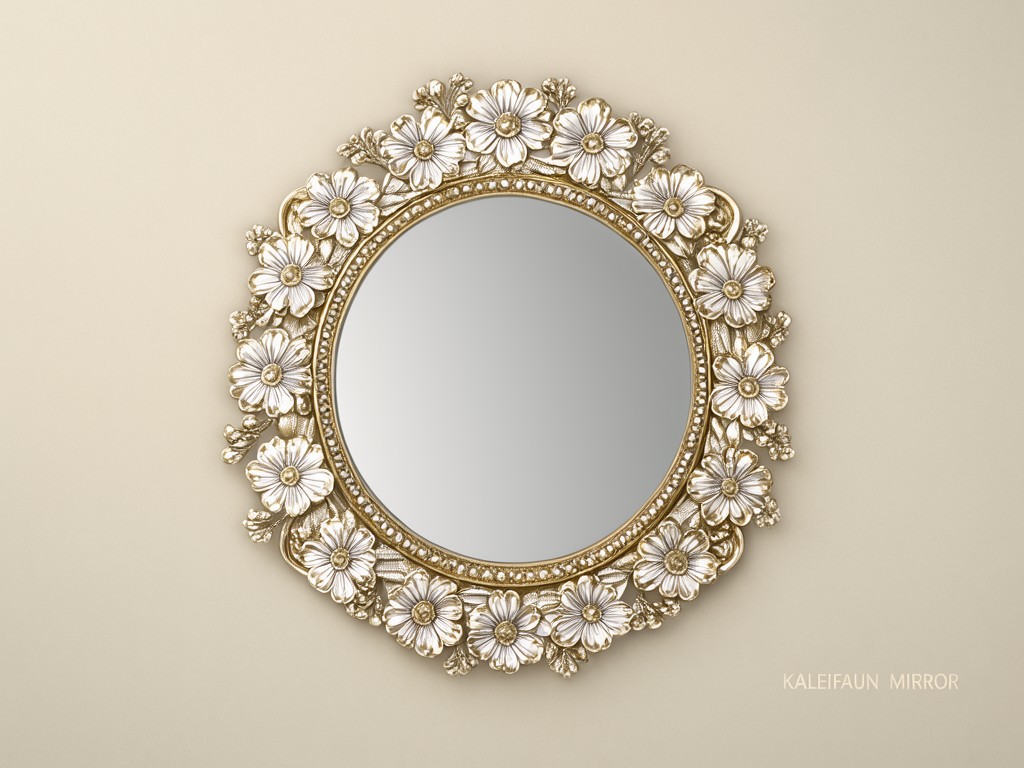
The flower contour is part of the ABS frame. Fewer separate components reduce the chance of a flower detaching, and the smooth transition is easier to protect in a compact retail pack. Tooling cost is higher at the start, so this option suits repeat volumes that can absorb a dedicated mold.
Applied Floral Detail
A separate resin or molded accent gives more depth and contrast without changing the full frame tool. The unit price includes the extra part and assembly check; raised edges also need protection from abrasion and impact inside the carton. This route can suit smaller runs or artwork that changes more often.
OEM and ODM Programme Structure
For OEM work, buyers can retain an existing mirror shape and specify frame colour, floral placement, logo treatment and retail pack. This route limits redesign and keeps approval focused on the areas customers see and handle. ODM work may add a new frame contour or floral mold, with a tooling charge that should be reviewed against forecast volume and expected reorder life.
Send vector artwork for printed details and a reference sample or marked drawing for flower position. Approval should record the mirror dimensions, edge finish, frame colour reference, decoration method and acceptable visual variation. Changes after sample sign-off can affect both tooling and production timing.
Inspection Items and Test Methods
Inspection should target the failure points that generate returns, not just the appearance of a sample at arm’s length.
- Check mirror length, width, thickness and finished weight against the approved sample or drawing. Compare frame fit around the glass at multiple points.
- Inspect the mirror face and perimeter for visible marks, edge chips, distortion or gaps between glass and frame under consistent lighting.
- Apply a controlled hand pull to the floral detail and examine the bond line or molded transition for movement and visible separation.
- Rub coated or printed areas with a dry cloth, then inspect raised areas for colour transfer, scratches or coating loss. For humid-use positioning, assess the finished assembly after a defined humidity exposure agreed during sampling.
- Check the back cover and handle for movement, sharp edges and assembly gaps. A sample drop or transit simulation can help identify glass damage and decoration breakage before pack approval.
Keeping Repeat Orders Supplied
Existing frame colours and standard components may support shorter replenishment planning, subject to current stock and the confirmed production schedule. A custom flower mold, special coating or exclusive colour usually needs a separate production slot and may require a minimum order quantity tied to material or setup economics.
Keep the approved sample, artwork version and finish reference with the purchase specification. This gives the next batch a clear comparison point and helps separate normal colour variation from a process change. Forecasts also help reserve repeat components before a seasonal selling window.
Packing, Marking and Freight Configuration
Raised petals and exposed mirror edges need separation from neighbouring units. A sleeve or individual bag can reduce surface rub, while a formed insert or divider can hold the frame in place through export handling. Select the pack after testing the actual mirror and decoration profile; a tight insert can press directly on a fragile floral edge.
Confirm retail labels, barcode placement, carton marks and inner-pack quantity before mass packing. Carton dimensions should limit excessive movement without placing compression on the mirror faces. Keep the approved pack configuration on file so replacement orders do not introduce a different transit risk.
Ordering, Tooling and Lead-Time Questions
Can the floral detail change without a new frame mold?
Often, yes, if the design uses a separate appliqué or surface decoration and the frame dimensions remain unchanged. A molded flower integrated into the frame may require a tool revision or a new mold. Confirm the proposed construction before artwork approval.
What information supports a tooling and MOQ review?
Provide the target quantity, mirror size, frame colour, floral reference, logo artwork and preferred retail pack. These details show whether an existing configuration can meet the brief or whether new tooling and a different order quantity are likely.
How is the production lead time confirmed?
Timing depends on sample approval, tooling status, material availability, decoration steps and pack requirements. The factory can confirm a schedule after the configuration and purchase quantity are agreed; late artwork or finish changes can move that schedule.
Need a tooling review? Share your target volume, approved mirror shape and floral reference to compare a molded detail with an applied option before you lock the private-label specification.
Request a tooling and quotation review