Specifying Custom black wood framed bathroom mirrors for Wholesale and OEM Orders
During a private-label launch with a fixed ship date, a bathroom mirror must arrive with the black finish intact, the glass undamaged and the mounting points aligned. A lower-cost frame can suit a dry powder room, while a sealed wood frame is a safer specification for bathrooms with frequent steam and wipe-downs. Set the frame material and finish against the actual cleaning routine before approving the production sample.
What Actually Determines Performance
| Exposure or use condition | Likely concern | Specification decision |
|---|---|---|
| Repeated steam and damp air | Swelling at joints or finish breaks at exposed edges | Choose a frame substrate and coating system intended for indoor humidity; seal cut ends and joints. |
| Routine glass and frame cleaning | Dulling, scuffing or colour change from cleaner residue and abrasive cloths | Approve the black finish with the buyer's intended cleaner and care instructions. |
| Bright window exposure | Gradual finish fading, depending on coating and direct sunlight | Request a finish suited to the placement; do not treat indoor paint as a UV-proof coating. |
| Handling and export transit | Glass edge chips, corner impact or frame abrasion | Confirm corner protection and carton support against the packed mirror's size and weight. |
The working principle is simple: the glass provides the reflective surface, while the wood frame protects its perimeter and carries the wall-fixing hardware. Moisture usually reaches vulnerable areas through joints, unfinished edges or damaged coatings rather than through the centre of the frame. For bathroom placement, specify edge sealing and joint coverage as part of the finish sample, not as an assumed feature.
Mirror backing and frame construction also affect how the assembly responds to humidity. A gap or pressure point between glass and frame can lead to movement or contact damage; the approved sample should show the intended glass support and clearance.
Material Options and Their Trade-offs
Moving from sample orders to container loads changes the cost of a material choice: small differences in frame preparation, coating steps and packing repeat across every unit. Select the substrate and finish together, since a black colour match alone does not show how the edge or corner will hold up to damp use.
Solid Wood Frame
Solid wood gives the frame a natural grain and can support routed profiles or a furniture-style finish. Grain variation and movement between pieces need control, so expect more sorting and finishing work than with a uniform engineered substrate.
Use it when the range depends on visible wood character. Confirm moisture conditioning, joint construction and full coating coverage on the sample.
Engineered Wood Frame
Engineered wood, including suitable MDF grades, offers a more uniform face for a consistent painted black appearance. It depends on intact coating and sealed edges; exposed or damaged areas can be more vulnerable to moisture than the coated face.
Choose it when repeatable colour and profile dimensions matter more than visible grain. Review the edge treatment and care limits before cost approval.
Finish approval rule: approve a production-representative frame with the intended coating, corner joints and back-edge seal. Chlorine-based cleaners, strong solvents and scouring pads can damage some paint systems; list approved care methods on the product label rather than implying chemical resistance.
Size, Weight and Specification Range
When a brand extends an existing range, the new mirror has to fit the same bathroom layout and freight plan as its companion products. Common custom formats run from compact vanity mirrors around 400 × 600 mm to larger wall mirrors near 900 × 1200 mm, with other proportions available by order. These are planning examples, not fixed catalogue limits.
Glass thickness is commonly specified within approximately 3–5 mm, subject to size, support and buyer requirements. Frame face width often falls around 20–50 mm. Overall weight changes with glass area, frame section and hardware, so request a packed and unpacked weight for each approved size before setting carton quantities or freight estimates.
- Record overall dimensions, visible glass dimensions and frame width separately on the purchase specification.
- Confirm portrait or landscape orientation, hanging method, hardware position and whether the mounting hardware is included.
- Set allowable dimensional variation and black colour reference against the signed sample and the buyer's inspection plan.
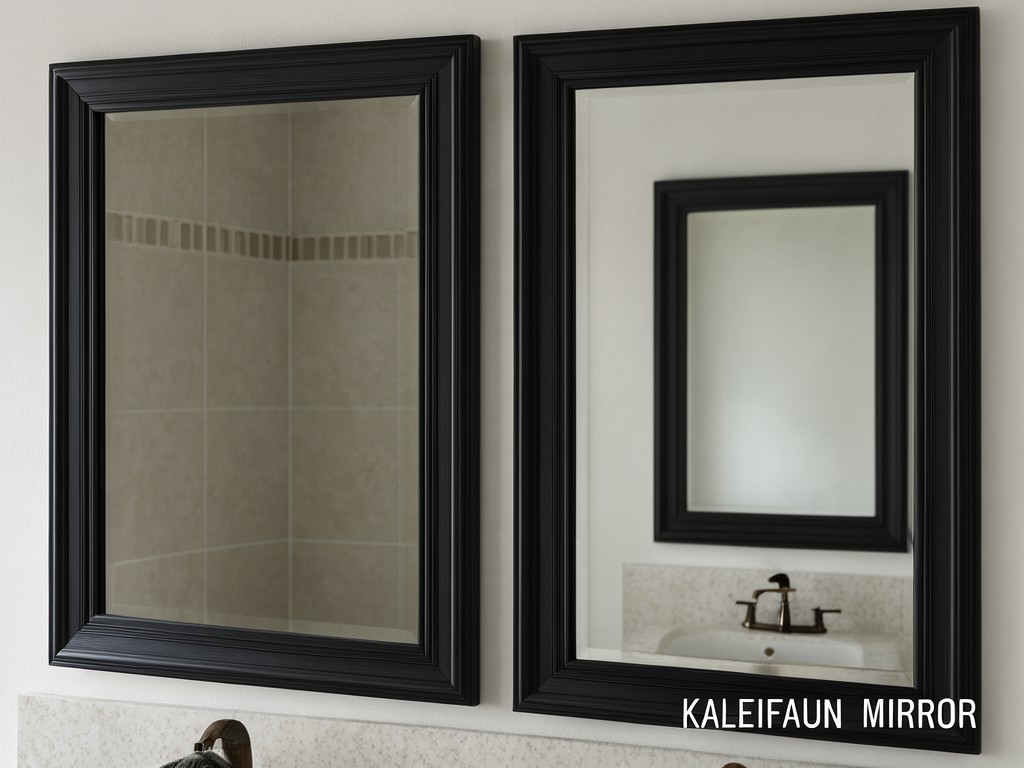
Who Uses It and Where It Matters
Retail buyers use black-framed mirrors in coordinated bathroom collections where frame colour and profile need to match shelving, taps or lighting. Their main exposure risk is repeated household cleaning, especially around lower edges where spray and water can sit.
Importers supplying hotels, serviced apartments and fitness-club changing rooms face more frequent wipe-downs and tighter replacement schedules. These installations may encounter damp air, cleaning residue and occasional sweat splash, but they are not poolside products by default. For sites with bright window exposure or stronger cleaning chemicals, agree on the finish and care limits before quoting.
A second-source qualification should compare a complete approved assembly, not just a glass sample: frame profile, black finish, backing, hardware and export pack all affect the incoming product. Keep the reference sample and signed specification available for later reorder checks.
Inspection Items and Test Methods
Inspection should catch defects that affect fit, appearance or service in a damp room. At incoming and final inspection, check dimensions, frame squareness, glass condition, finish coverage, joint alignment and the position of mounting hardware against the approved drawing or sample.
Factory Checks for Sample Approval
- Measure overall size, visible glass area and frame width at defined points; compare the results with the signed specification.
- Inspect the black coating under consistent light for shade variation, pinholes, missed edges, scratches and visible touch-up.
- Check corners and joints for gaps or movement, then examine the back edge for complete sealing and secure hardware.
- Use an agreed damp-cloth cleaning check on the sample; add a cleaner-specific check only when the buyer identifies the product used at destination.
- Review the packed mirror for glass edge protection, corner support and movement inside the carton before shipment approval.
A short sample check can identify visible coating and fit issues, but it does not establish service life under every bathroom condition. If the intended installation has prolonged humidity, direct sun or repeated use of chlorine-based cleaner, document that exposure and agree on an appropriate evaluation before production.
Capacity, Tooling and Scheduling
A second source can use existing profiles where the size, frame section and hardware align with its current process. A new moulded or routed profile, unusual corner detail or custom hanging system may require a tooling review and added sample approval time. Production scheduling should begin after the size drawing, finish reference, pack method and inspection criteria are signed off.
Lead time depends on glass availability, frame material, coating sequence, order mix and packaging requirements. A pilot quantity can confirm line setup and carton handling before a container order; it may carry a higher unit cost because setup and packing work are spread across fewer pieces. Share the target ship window and size breakdown early for a realistic production slot.
| Packaging item | Specification to confirm | Why it matters |
|---|---|---|
| Glass protection | Face protection, edge guards and separation from frame contact | Reduces the chance of scratches and edge chips during handling. |
| Corner and frame support | Corner protection and restraint against movement inside the carton | Protects joints and finish from impact and rubbing in transit. |
| Carton and pallet plan | Carton dimensions, units per carton, orientation and pallet arrangement | Sets storage footprint, handling method and shipment cube. |
| Retail identification | Barcode, carton marks, orientation labels and private-label artwork | Avoids relabelling work and keeps the shipment aligned with the buyer's receiving process. |
For second-source approval, retain the signed sample, packaging specification and batch identification details together. Those records give purchasing and quality teams a clear basis for comparing the first production lot with later reorders.
Request a Production Sample
Send the target dimensions, frame material, black finish reference, mounting method, forecast quantity and ship window. A sample request can establish the construction and inspection points before you qualify a second source for repeat orders.
Request a sample and discuss your OEM specification