custom quatrefoil decorative accent mirror supplier - Bulk Supply and Specification Guide
Measured Performance in Real Use
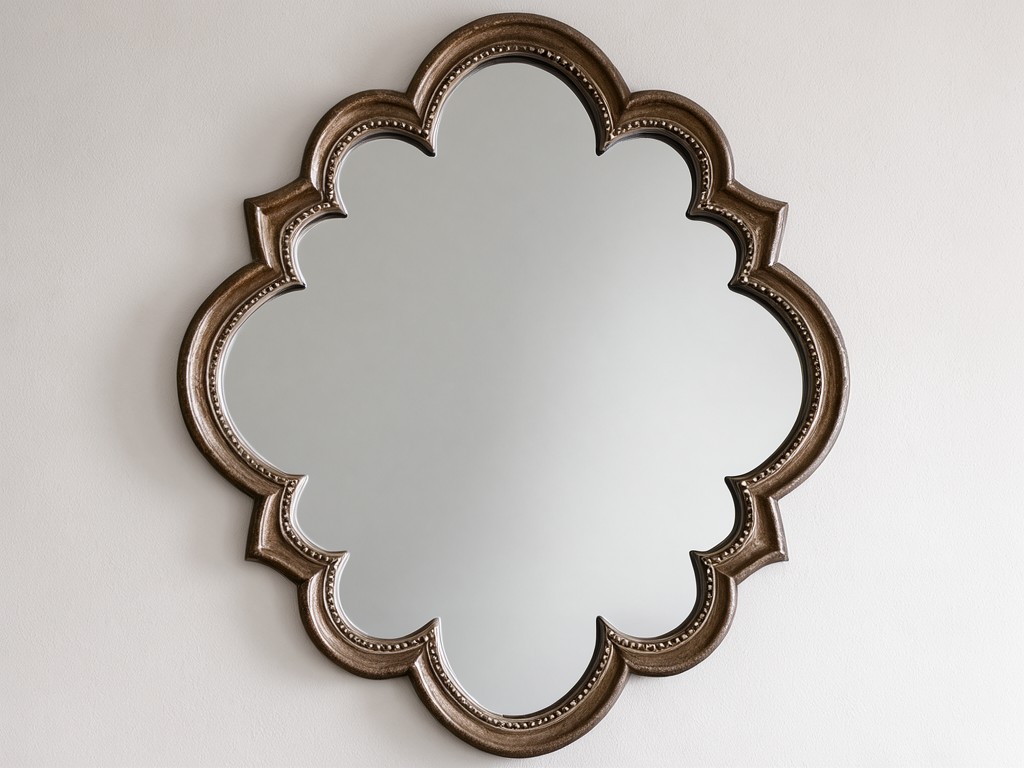
The build method decides whether a quatrefoil mirror arrives with clean lobes, consistent edge finish and a backing that suits its intended room. The usual route starts with silvered float glass, followed by CNC contour cutting, edge grinding and polishing, then backing and any specified frame assembly. A more complex outline takes longer to finish than a rectangular panel, so the buyer’s decision is whether the profile detail justifies the added processing time and cost.
In a dry bedroom or retail display, appearance and dimensional repeatability lead the specification. Bathrooms and other humid interiors put more pressure on the mirror backing, perimeter seal and frame finish; that does not make the product suitable for exterior exposure. For a second source, align the approved outline, glass thickness, edge finish and backing before comparing unit prices.
- A polished perimeter gives an exposed-edge design a finished appearance, but adds edge-processing time at each lobe.
- A protective backing helps retain fragments if glass breaks; confirm that its coverage and adhesive suit the intended installation.
- A frame can shield vulnerable edges, though its material and finish add weight, cost and another source of batch variation.
Size, Weight and Specification Range
Overall Dimensions
Common project sizes fall around 300–900 mm across the widest points. Confirm the bounding width and height, lobe radius and centre alignment on the approved drawing.
Glass Thickness
Specify the glass by thickness, commonly 3–6 mm for decorative accent mirrors. Thicker glass adds mass and may require revised mounting hardware.
Approximate Glass Mass
At 4 mm thickness, glass mass is about 10 kg per square metre before frame and hardware. The quatrefoil occupies less area than its rectangular bounding dimensions.
Edge and Backing
Set polished or framed edges, backing coverage and hanging points on the same specification. These choices affect both finished weight and installation clearance.
Treat these figures as a starting range, not a substitute for a signed drawing. For a private-label reorder, freeze the outside dimensions, glass thickness, edge treatment, backing and hardware before the first production sample.
Comparing Two Standard Configurations
An exposed polished edge keeps the silhouette visually light and avoids frame assembly. A framed build costs more in components and labour, but can cover the perimeter and provide a defined mounting structure. The right choice depends on whether the retail presentation favours a frameless look or the installation benefits from a protected edge.
| Configuration | Construction and Cost Effect | Best Fit and Trade-Off |
|---|---|---|
| Frameless, polished edge | CNC-cut mirror glass with ground and polished perimeter. Fewer assembly parts, but more edge-finishing work around the lobes. | Suits a clean, open silhouette. Exposed edges need careful handling and an installation plan that prevents contact with hard surfaces. |
| Framed perimeter | Mirror glass assembled with a metal or wood frame. Frame material, finish and joinery raise component and assembly costs. | Suits designs that call for a defined border or edge cover. For humid rooms, specify a frame finish intended for that exposure and confirm it during sample approval. |
Segment-Specific Requirements
Humidity is not an outdoor rating. For bathroom or coastal-interior use, specify the backing, perimeter protection and frame finish for the expected room conditions. Exterior installation requires a separate exposure review rather than an assumption based on a decorative mirror’s indoor performance.
Wholesale home-furnishing buyers often need a compact accent size that fits coordinated room sets and displays consistently across stores. Private-label buyers tend to place more weight on repeatable outline geometry, branding position and a stable mounting arrangement. For hospitality projects, confirm the installation surface, fixing method and cleaning routine before approving the glass and frame combination.
Those use cases should not share a single unqualified specification. Humidity exposure, edge access and mounting load change the appropriate backing and hardware; revise the drawing where the installation condition differs.
How Consistency Is Held Across Batches
- Consistency is set at the forming stage: lock the approved CAD outline, glass thickness and lobe geometry before production cutting.
- The first-article check compares overall width and height, symmetry, edge finish, glass appearance and hardware position against the approved sample.
- Batch checks should record dimensions, visible coating or backing defects, frame finish and finished weight where that value is part of the purchase specification.
- A change to glass source, backing, frame material or finishing route needs review before it enters a repeat order; otherwise, appearance and fit can shift despite an unchanged product name.
First-article tooling determines how quickly a new outline can move into repeat production. For a new quatrefoil profile, CNC programming and any dedicated holding or frame tooling create upfront cost. Higher order volume spreads that setup across more units; small trial quantities carry a higher unit cost and may need a longer production slot.
Keeping Repeat Orders Supplied
| Order Situation | Indicative MOQ Planning Range | Indicative Lead-Time Planning Range |
|---|---|---|
| Repeat order using an approved profile and standard finish | Often 50–100 units, subject to glass and frame availability. | About 3–5 weeks after order confirmation and material allocation. |
| New outline, frame finish or private-label detail | Often 100–300 units where setup and finish changeover costs need to be spread across the run. | About 5–8 weeks after drawing, sample and finish approval. |
| Prototype or first-article review | Quoted separately; sample cost may include setup or dedicated tooling. | Schedule confirmed after drawing review and material selection. |
These are planning ranges, not a fixed offer. Actual MOQ and lead time depend on the outline, frame, finish, sample approval and current production loading. A second-source qualification is easier to maintain when the approved drawing, finish references and inspection points are available before the reorder window opens.
Confirm the Reorder Basis
For a quote, provide the target dimensions, glass thickness, edge or frame choice, intended room conditions, annual volume and preferred order lot. Those inputs show whether the unit price benefits from a larger run or whether a staged order better fits the buyer’s supply plan.
Review Artwork and Branding Before Sampling
Send the quatrefoil drawing, logo artwork, preferred branding location and target order volume for a feasibility review. Approval before sampling helps keep the outline, brand placement and repeat-order specification aligned.