custom upholstered full body standing mirror suppliers - Bulk Supply and Specification Guide
Scope of Supply and Physical Form
Consistency depends on fixing the mirror size, upholstered border profile, fabric lot and standing hardware as one repeatable specification. Custom upholstered full body standing mirrors combine a full-length glass panel with a padded, fabric- or vinyl-covered frame and a freestanding support, such as a rear easel or hinged stand.
For OEM and private-label orders, the supply scope can include the mirror assembly, selected upholstery, rear support, protective packaging and retail-ready labels. Buyers should approve the assembled sample, not just a fabric swatch: the mirror-to-frame alignment, edge coverage and stand position affect both appearance and stability.
Design Constraints Behind the Specification
Deflection under load governs the support design. A taller or wider glass panel adds mass and leverage, so the stand footprint, hinge position and frame stiffness must suit the specified dimensions. Approve the complete mirror at its intended display angle before locking the repeat-order specification.
Upholstery thickness and foam firmness change the visible border width and the way the mirror sits against a wall or stand. Softer foam can feel more cushioned, but it may compress around fasteners or develop uneven edges during handling. Firmer foam and a stable substrate cost more, yet they help preserve the approved profile across production lots.
Balance and load analysis shows where a broad base or reinforced rear frame is needed. The choice depends on mirror height, glass mass, support geometry and the expected floor surface; a light, compact stand may reduce freight cost but can leave less margin against tipping.
Where This Product Beats Standard Alternatives
Upholstered Frame
A padded perimeter gives bedrooms, dressing areas and boutique retail displays a softer touchpoint than a bare metal or timber frame. Buyers can coordinate the cover fabric and colour with a collection, while accepting higher material and assembly costs than a plain-frame mirror.
Standard Unupholstered Frame
A non-padded frame usually has fewer upholstery seams and fewer fabric-lot variables. It suits price-led ranges or settings where easy surface cleaning takes priority over a cushioned feel and coordinated soft furnishings.
The upholstered option makes commercial sense when the appearance supports the retail price and the buyer can hold the approved cover, foam and seam layout constant. If those details drift between batches, the product can look mismatched beside earlier stock and generate avoidable returns.
Specification Range and Customisation Limits
| Specification | Typical options | Buyer decision point |
|---|---|---|
| Overall size | Project-defined height and width; confirm usable mirror area separately from the upholstered border. | Set finished dimensions and tolerances against the approved sample and retail space. |
| Mirror panel | Glass thickness, edge treatment and backing options depend on panel size and support design. | Agree the edge finish, reflectance appearance and any safety-backed construction before sampling. |
| Upholstered surround | Fabric or vinyl cover over foam and a timber-based or other specified frame substrate. | Approve material, colour, foam firmness, border width, seam placement and cleanability as a set. |
| Freestanding support | Easel, hinged rear support or another agreed stand configuration. | Check opening angle, floor contact, folded profile and stability at the final mirror weight. |
| Pack and presentation | Corner protection, face protection, carton markings and private-label inserts. | Match protection to the distribution route and confirm packed dimensions for freight planning. |
Ranges are set by the agreed design rather than a universal size catalogue. Changes to mirror area, border width or stand geometry can alter weight and packing volume, so price comparisons should use the same finished dimensions and pack-out.
Matching the Product to the Buyer's Need
For a coordinated bedroom range: match cover colour and texture to the approved furniture or soft-goods palette, then retain the same supplier material reference for reorders.
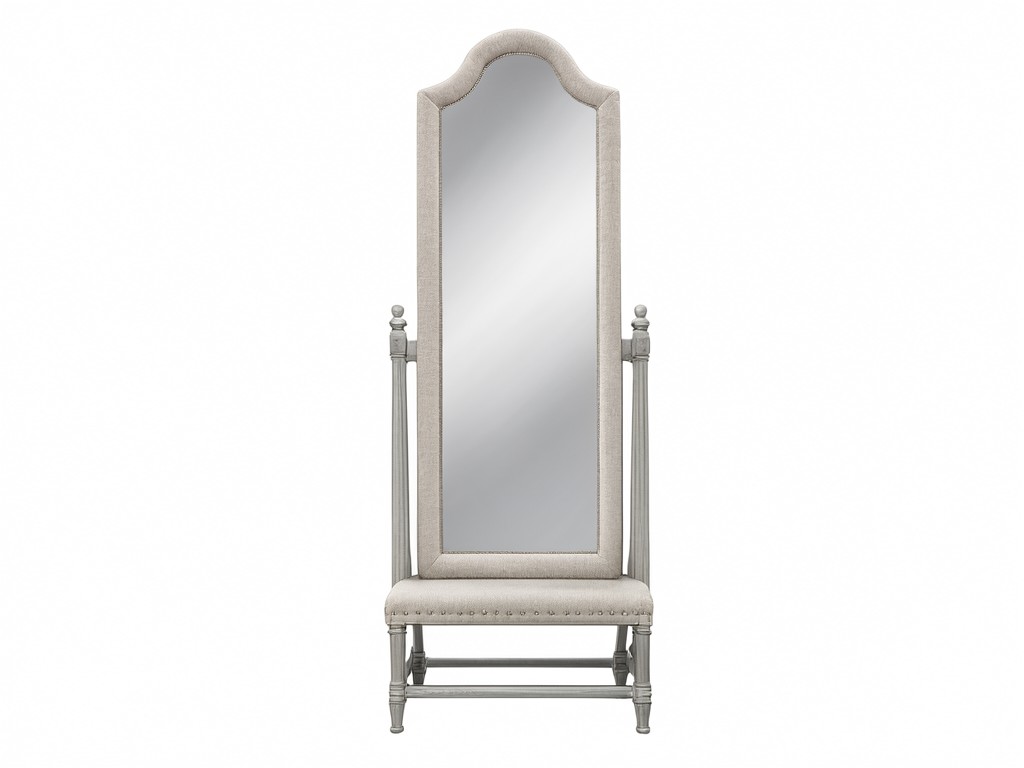
For frequent retail handling: prioritize protected glass edges, secure stand hardware and upholstery that tolerates routine surface cleaning.
For parcel or export distribution: test the packed configuration through the buyer's handling route; a lower unit price has little value if glass damage drives replacement freight and claims.
Compare quotations on landed cost per sellable unit. Include upholstery yield, protective packaging, damage allowance, replacement handling and the cost of shade or dimension variation across repeat orders.
What Can Be Customised and What Cannot
- You can specify the overall dimensions, mirror-to-border proportion, upholstery material and colour, seam location, support style, rear finish, branding and pack presentation.
- Fabric shade can vary by dye lot. Set an approved colour reference and tolerance, and request a new approval if the material source changes.
- The glass panel, substrate and stand must work as one load-bearing assembly. A change in panel size or mass may require revised support geometry rather than a direct component substitution.
- Artwork placement is limited by seams, padded edges and the available flat surface. Provide vector artwork and placement dimensions before sample approval.
- A low-price fabric or thinner substrate can reduce unit cost, but may change hand feel, shape retention or resistance to handling wear. Compare finished samples before approving a cost-down.
What Gets Checked Before Shipment
| Check area | Factory check | Why it matters to repeat orders |
|---|---|---|
| Dimensions and weight | Measure finished height, width, border profile and packed dimensions; record unit weight against the approved specification. | Flags size drift that affects display fit, carton loading or freight cost. |
| Glass and reflection | Inspect the face under consistent viewing conditions for scratches, edge damage, visible distortion and contamination. | Separates transit damage from panel or assembly defects before dispatch. |
| Upholstery and seams | Compare colour and texture with the approved reference; check seam alignment, cover tension, exposed staples and surface marks. | Controls batch appearance and catches weak points that can loosen in handling. |
| Stand and assembly | Open and close the support, inspect fasteners and confirm the mirror sits at the approved angle on a level surface. | Finds loose hardware, uneven floor contact or assembly variation before the product reaches the customer. |
| Packaging and traceability | Review edge and face protection, carton closure, labels and batch identification against the approved pack specification. | Links any field complaint to a production lot and helps distinguish packing issues from product issues. |
Agree the inspection sample size and defect categories before production. Retain the signed sample, upholstery reference and packing specification as the comparison set for subsequent batches.
Ordering, Tooling and Lead-Time Questions
Can the mirror dimensions change after sample approval?
A dimension change can affect glass sourcing, frame construction, stand geometry and carton size. Treat a revised size as a specification change and review a new assembled sample before placing a repeat order.
What information helps suppliers quote the same product?
Provide finished dimensions, mirror area, edge finish, upholstery reference, frame and stand details, branding files, packing requirements and destination market. If a reference sample exists, identify which details are fixed and which remain open to quotation.
How do MOQ and lead time change with custom upholstery?
A stock cover colour may avoid a material minimum, while a custom-dyed fabric or printed label can add supplier minimums and approval steps. Confirm material availability, sample sign-off, order quantity and packing details together when requesting a schedule; timing depends on the selected components and approval cycle.
What should buyers compare beyond unit price?
Compare finished dimensions, upholstery match, stand stability, inspection scope, protective pack-out and the supplier's process for batch identification. Those terms help estimate total cost when warranty claims, replacements and returns are counted with the purchase price.
For a quotation review, send the approved drawing or sample photos, target order quantity, upholstery reference and destination pack requirements. Share your mirror specification for a quotation review before approving cost-down changes or a repeat batch.