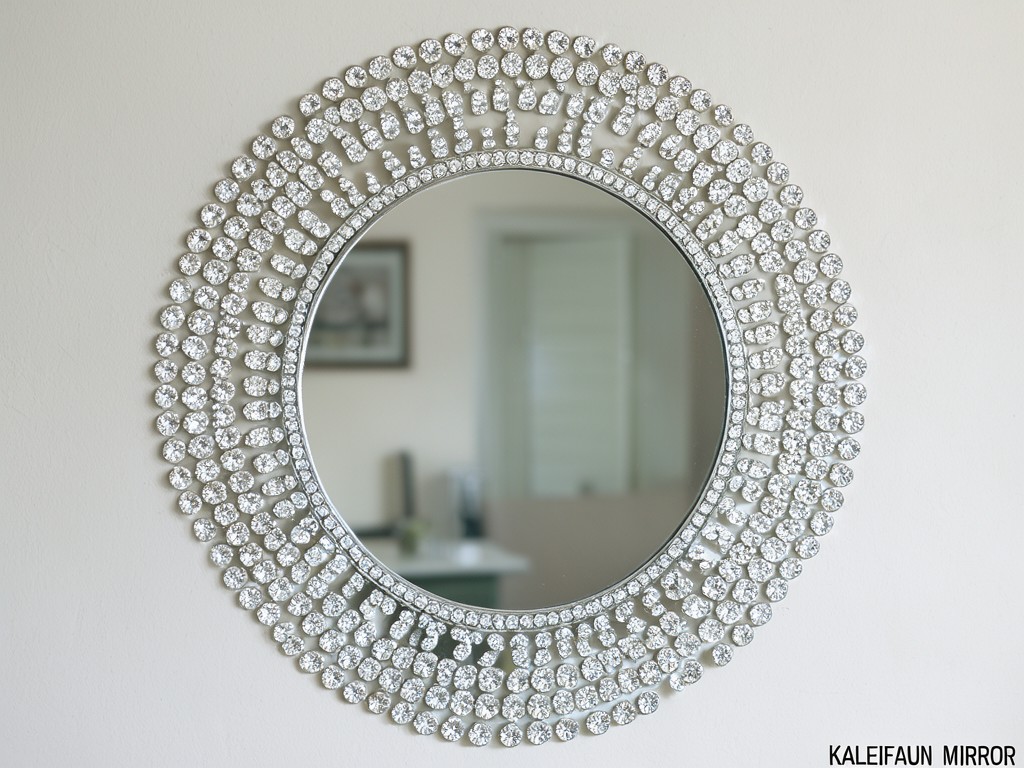
Factory Direct glass rhinestone decorative wall mirror China Supplier: Specification, Ordering and Quality Notes
Consistency is set at the forming stage: mirror dimensions, edge finish and the position of the rhinestone border need to be fixed in the approved drawing before repeat production. For importers and private-label buyers, holding those details constant is usually more valuable than changing the design to shave a small amount from unit price.
Materials and Construction Trade-offs
A decorative wall mirror combines mirror glass, a backing or support structure, mounting hardware and glass rhinestones fixed around or beside the reflective area. The approved specification should identify the glass thickness and dimensions, edge treatment, rhinestone size and placement, adhesive appearance, backing material, and hanging arrangement. If any of those details remain open, two visually similar samples can differ in weight, fit or assembly time.
Weather resistance needs a clear boundary in the sales specification. Unless the full assembly has been assessed for the intended exposure, position this product for indoor use; humidity, direct water and large temperature swings can affect backing materials and rhinestone adhesive. For bathroom or other humid-room sales, approve the actual construction and care wording rather than relying on the mirror glass alone.
Lower-cost backing or a less controlled stone layout can reduce the factory quote, but any uneven spacing, visible adhesive or loose stones can generate sorting work, returns and warranty claims. Cost comparisons are more useful when they include packaging, inspection and the expected cost of replacing damaged or rejected pieces.
Construction Method and Its Effect on Consistency
First-article tooling determines whether the mirror outline, border width and stone spacing can be repeated without relying on visual estimation. A typical production sequence cuts the mirror glass to the approved dimensions, finishes its edges, cleans the bonding area, positions rhinestones with a guide or fixture, applies adhesive and allows the assembly to cure before backing and hardware are fitted.
For private-label batches, inspect a first article against the signed sample and drawing before releasing the run. In-process checks can cover overall dimensions, edge condition, border alignment, stone count or pattern, adhesive residue and mounting position. Final visual inspection should also look for chipped glass, loose stones and surface marks; the agreed sampling level and acceptance criteria belong in the order specification.
Changing adhesive, rhinestone supplier or fixture settings can shift the appearance even when the product name stays the same. Record the approved material references and retain a signed production sample so repeat orders have a defined comparison point.
Comparing Two Standard Configurations
Process choice shows up later as differences in border coverage, backing support, assembly time and freight risk. Treat the configurations below as specification directions, not fixed catalog definitions; confirm the exact construction and available dimensions with the supplier.
| Configuration | Construction and inspection focus | Typical order fit and cost trade-off |
|---|---|---|
| Narrow rhinestone border | Rhinestones follow the mirror perimeter; check border width, corner transitions and spacing consistency. | Uses fewer decorative components and can reduce assembly time. Suits buyers prioritising a defined reflective area and simpler repeat inspection. |
| Wider rhinestone frame | A larger decorated area needs closer control of stone placement, backing fit and total assembly weight. | Uses more stones and labor, so unit cost and protective-packaging needs may rise. Consider it when the display impact justifies those added costs. |
- If the retail brief depends on a larger reflective area, start with the narrow border; confirm the required mirror dimensions and border width on the sample.
- If the rhinestone frame is a key visual feature, select the wider layout and price the added stones, assembly checks and carton protection together.
- For either option, approve a finished sample and packaging configuration before the production order; appearance checks alone do not confirm freight protection.
Assumptions Buyers Should Stop Making
A mirror that looks suitable for a room display is not automatically suitable for a damp room or outdoor installation. Decorative rhinestones and their adhesive can respond differently to moisture and temperature than the mirror glass, so specify the intended environment and ask the factory to confirm the limits of the complete assembly.
Do not assume that the same product name guarantees the same glass, backing, stone finish or hanging hardware on a reorder. Nor does factory-direct sourcing remove the need to define packaging: glass corners, face protection and separation between units affect damage rates and landed cost. Compare quotations against the approved specification, inspection plan and export packing details—not unit price alone.
Customisation Options and Their Limits
A private-label match usually starts with adjustments that preserve the existing assembly route. Confirm which options the factory can repeat with its current cutting, positioning and packing fixtures:
- Mirror outline, finished dimensions and edge treatment, subject to available tooling and glass supply.
- Rhinestone colour, size, border width or layout, subject to component availability and sample approval.
- Backing, hanging arrangement, retail label and carton artwork, subject to the product’s weight and packing configuration.
A change to mirror shape, frame width or stone pattern can require new guides, revised packing and another approval sample. Send dimensioned artwork or a marked-up drawing with tolerances where needed, then lock the accepted sample, material references and label files to the purchase order. Artwork approval does not replace a check of the physical finished sample.
Stock Availability and Reorder Planning
Stock status can apply to glass, rhinestones or packing materials rather than to a finished private-label mirror. Ask the supplier to identify which components are available, which are ordered for the batch, and whether the approved colour and dimensions can be reserved for a repeat order.
Allow for sample approval, component procurement, production inspection and export packing when setting a launch date. Reorders are easier to plan when the buyer retains the approved drawing, reference sample, artwork and carton specification; confirm current lead time and minimum order quantity against the actual configuration rather than assuming stock availability.
For a specification review, send the target dimensions, rhinestone layout, intended use, label requirements and estimated batch quantity. Discuss your mirror specification and private-label order before sampling so the quotation reflects the required construction, inspection and freight protection.