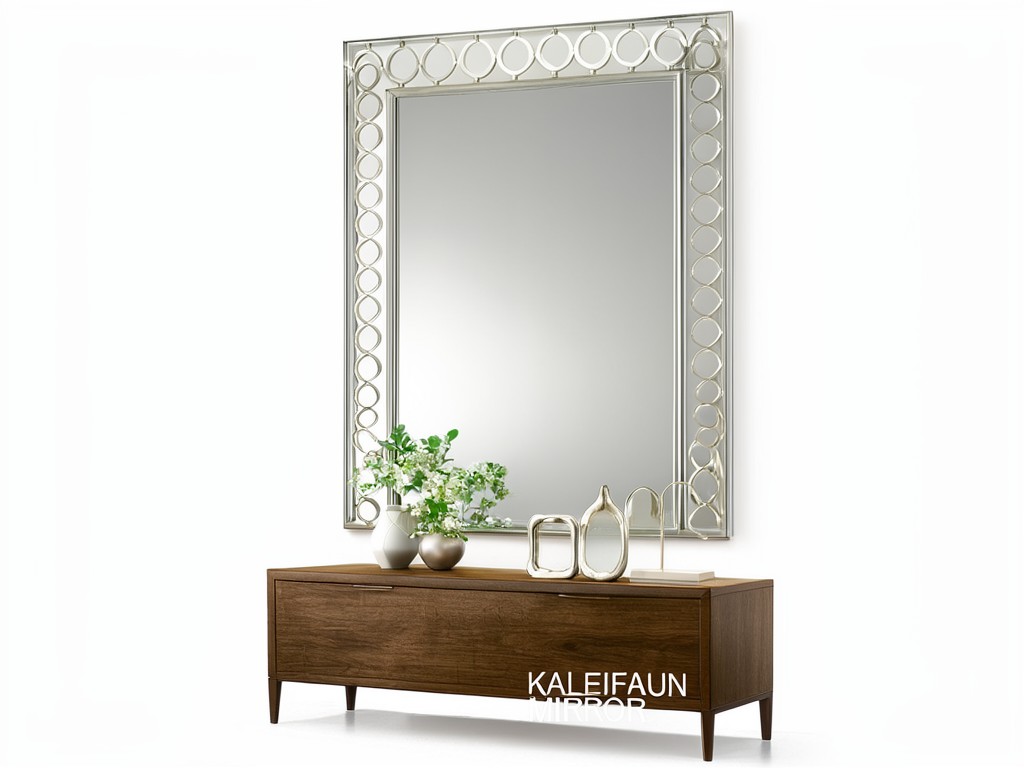
Specifying top quality elegant modern mirror living room decor suppliers for Wholesale and OEM Orders
Cheaper stock options fail at the worst point in the season when frame finishes, dimensions or packing differ from the approved sample. For distributors and retail buyers, the lower unit price only pays off if the next lot matches closely enough to avoid display resets, returns and replacement shipments.
A mirror order moves through glass cutting, edge finishing, backing and frame assembly before export packing. Confirm the reference sample, repeat-order tolerances and carton configuration before the production slot is booked; late changes to glass size or frame tooling can push a launch date.
What the Design Has to Balance
In living rooms with limited wall space, buyers need a mirror that reads as a decor piece without placing excessive load on the wall fixing. Frame width, glass area and overall dimensions set the visual proportion; the hanging method and finished weight set the installation demand.
Replacement rate, not unit price, is the better cost measure. A small shift in frame colour or external dimensions between lots can disrupt a coordinated retail range. Ask the supplier to retain the approved finish reference and record checks for glass size, overall size and finished weight for each production lot.
- Choose a frame profile and mirror proportion that suit the display setting, then hold those dimensions across repeat orders.
- Specify the intended wall-mounting arrangement before packing design; hanging hardware and carton protection affect the shipment weight and handling plan.
- For coordinated assortments, define finish references and acceptable visual variation before the first bulk run.
Materials and Construction Trade-offs
A silvered glass mirror gives a familiar reflection and a clean edge after polishing, but it adds breakage risk and freight protection requirements. MDF or plywood backing can support a frame assembly at a moderate cost; exposed moisture at an unsealed edge can lead to swelling or finish damage, so the backing and edge treatment should suit the expected indoor environment.
Aluminum frames keep weight down and suit narrow contemporary profiles, while wood frames allow more variation in profile and surface finish. The price difference depends on section size, finish process and assembly labour. Metal finishes need checks for even colour and coating coverage; painted or stained wood needs consistent tone across the faces and corners.
Tooling amortisation decides whether a custom frame profile makes sense. A new extrusion or dedicated mould adds upfront cost; it becomes more economical when the order volume and repeat schedule can absorb that tooling cost. For smaller runs, a standard profile with a chosen finish can reduce setup time and keep the launch plan simpler.
Size, Weight and Specification Range
Standard sizes help control cost and production planning, but the finished weight changes with glass thickness, frame material and backing. Treat the figures below as planning ranges, not final order specifications; confirm the approved sample and packed-carton dimensions before freight booking.
Glass Panel
Common decorative mirror panels use approximately 4–5 mm glass. Confirm thickness against the overall size, frame support and handling plan.
Dimensional Checks
Record panel size and finished outside dimensions separately. This helps identify whether a mismatch comes from glass cutting or frame assembly.
Lot Weight
Weigh finished units during inspection. Frame and backing choices can shift the weight enough to affect carton handling and installation guidance.
| Typical Finished Size | Mirror Glass | Approx. Finished Weight | Common Frame and Backing |
|---|---|---|---|
| 600 × 900 mm | About 4 mm | About 7–10 kg | Aluminum or wood frame; MDF or plywood backing |
| 800 × 1200 mm | About 4–5 mm | About 12–17 kg | Aluminum or wood frame; backed glass assembly |
| 900 × 1500 mm | About 5 mm | About 17–25 kg | Reinforced frame assembly; backing selected for size and mounting design |
Weight ranges vary with frame section, backing and hardware. For an OEM order, approve one complete unit and use its measured dimensions and weight as the production reference.
Comparing Two Standard Configurations
For a launch range with repeat orders, the practical choice is often between a lighter metal frame and a wood frame with more profile character. Compare total landed cost and finish repeatability, not just the quoted unit price.
Slim Aluminum Frame
A narrow aluminum profile keeps the visible frame restrained and can reduce finished weight. It suits modern collections that need a consistent colour across a run. Confirm the finish sample and corner joins, since visible colour variation or uneven assembly can stand out across a retail display.
Cost is affected by profile selection and coating process. A standard profile usually avoids the added setup cost of a custom shape.
Wood Frame with Backing
A wood frame supports wider profiles and a warmer finish, with more opportunity to differentiate a private-label range. Each production lot needs a finish reference because grain and stain appearance can vary across pieces.
This option can add weight and packing volume. Specify corner protection and backing attachment before confirming the carton design.
Buying Mistakes That Lead to Returns
Most avoidable claims come from a gap between the approved sample, the bulk inspection reference and the retail listing. Resolve those differences before cartons are sealed.
- Ordering by nominal glass size but listing the finished outside size can create a mismatch in customer expectations. Label both measurements in the specification sheet.
- Approving a colour from a screen image alone leaves room for a finish mismatch. Sign off on a physical frame sample and identify it for later lot checks.
- Ignoring finished weight can lead to unsuitable wall hardware or unclear installation guidance. State the intended mounting method and provide the unit weight to the retail team.
- Checking the mirror face without checking the back can miss loose backing, exposed edges or hardware movement. Include front, rear and corner checks in the inspection record.
Customisation Options and Their Limits
Custom dimensions, frame colour, profile, bevel detail and rear branding can distinguish a private-label collection. Each change affects a different production step: a new profile may require tooling, a new finish needs a signed colour reference, and a size change can alter glass yield, assembly fixtures and carton dimensions.
Group artwork, finish approval and dimension approval into one sample sign-off. After that point, changes can require a new sample and a revised production schedule. For mixed-SKU orders, use clear item codes and keep the approved finish reference tied to each SKU so later lots do not drift between variants.
Ask for the expected tooling charge, sample timing and bulk lead-time basis before setting a retail launch date. The production slot should be confirmed only after the final size, finish and packaging details are agreed.
Packing, Marking and Freight Configuration
Glass edges and frame corners take the first impact during rough handling. Use edge guards, corner protection and internal restraint so the mirror cannot shift inside its carton. Carton construction should match the unit size, finished weight and chosen shipping route; a sample packed carton gives buyers a chance to review handling and storage before the full run.
Confirm carton dimensions, gross weight, units per master carton and pallet pattern before freight booking. Outer-carton marks should identify SKU, quantity and handling orientation as required by the buyer’s distribution process. Keep lot identification connected to the production inspection record to help isolate any damage or finish complaint after delivery.
Do not treat a passing packed sample as proof that every carton has the same protection. Define the packing materials, internal layout and carton marks in the approved packing specification, then check those details during the production run.
Setup, Use and Replacement Parts
Install the mirror with fixings suited to the wall construction and the unit’s finished weight; the included hanging hardware should not be assumed to suit every installation. Keep the mirror indoors and dry, and wipe the glass with a soft cloth. Prevent moisture from sitting on frame joints or exposed backing edges, where it may mark the finish or weaken the backing over time.
For retailer after-sales support, confirm whether replacement hanging hardware, backing pieces or frame components can be supplied separately. Record the SKU and production lot with each claim. That information helps distinguish transit damage from a component issue and makes repeat orders easier to match to the original finish.
Discuss Your Mirror Order
Share your target size, frame material, finish reference, order quantity and required delivery window for a project review. Include the destination market and preferred carton configuration so the production and freight plan can be checked against your launch date. Discuss your mirror project.