Top Quality gold accent wall mirrors decorative Vendor: What Buyers Should Check Before Ordering
Material choice starts with the conditions the product will meet: target dimensions, wall type, retail price point and how often the mirror will be handled before installation. These factors determine whether a metal frame, glass thickness or protective backing deserves the extra cost.
For a brand or private-label buyer, the relevant figure is not simply the factory price. A frame that arrives with chipped finish, a distorted reflection or a hanger that does not suit the intended wall can generate replacement freight and returns. Process capability and a repeatable approved sample help control those costs across reorders.
Where Cheaper Alternatives Fall Short
The lowest quote often comes from reducing glass thickness, simplifying the frame or applying a less controlled gold-tone finish. Each choice can be reasonable, but it shifts risk to a different point in the product’s life.
- Thin glass lowers shipping weight, but a large panel is more vulnerable to flex and edge damage if the frame does not support it evenly.
- A basic metallic paint may cost less than electroplating or a multi-layer finish. Uneven colour, visible scratches and wear at corners can increase store-level markdowns.
- A lightly built frame may twist during packing or installation. That movement can put stress on the mirror edges and create an uneven gap between glass and frame.
- A low-cost hanger can be incompatible with the mirror’s actual weight or the wall fixing supplied for the destination market.
Compare options against the expected return and damage rate, not just the quoted unit cost. A small increase in frame material or pack protection can pay back when it prevents a single replacement shipment.
How It Performs in Use
A wall mirror depends on a flat reflective panel, secure edge support and a frame that holds its shape. The glass reflects; the frame protects the perimeter and carries the hanging hardware load. If the frame is out of square or the backing presses unevenly, the reflection may show distortion even when the glass surface has no obvious flaw.
Selection rule: For a large mirror or a long-distance export route, specify edge protection, frame stiffness and hanging hardware together. A heavier glass panel alone does not correct a weak frame or an unsuitable wall fixing.
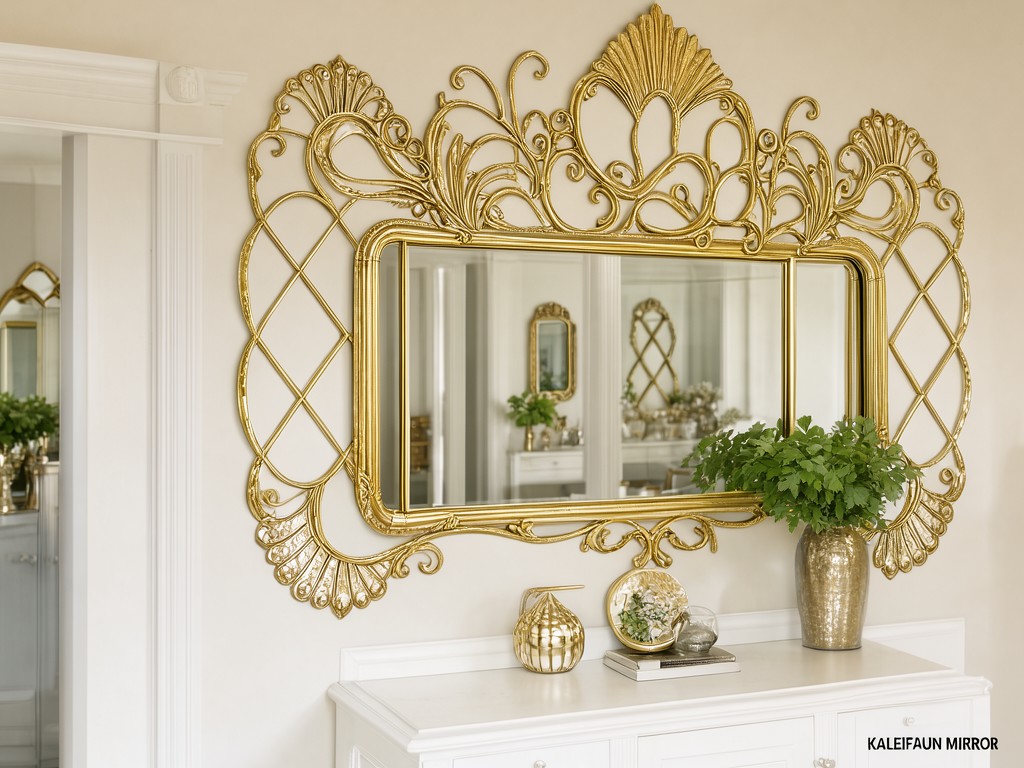
Gold appearance also varies with the substrate and finish route. Powder-coated metallic finishes usually suit buyers prioritising cost control and repeatable colour; electroplated or brushed metal effects can offer a different depth and sheen, with more sensitivity to substrate preparation and process control. Approve the finish on the production-intent frame, since a colour sample on a flat coupon may not show how corners and curved details will look.
Size, Weight and Specification Range
Confirm the finished outside dimensions, not only the visible glass size. Frame profile, hanging orientation and glass thickness change both carton dimensions and gross shipping weight.
Glass Panel
Common decorative builds use 3–5 mm mirror glass. Select thickness against panel size, frame support and intended handling conditions.
Frame Build
Steel or iron profiles suit many decorative shapes; aluminium can reduce frame mass. Profile section and reinforcement affect rigidity.
Finish Route
Metallic powder coating and electroplated finishes differ in setup, colour character, scratch visibility and cost per order.
Hanging System
D-rings, keyhole plates or wire systems affect installation clearance, packaging protection and the hardware kit.
| Typical finished size | Indicative net weight | Common material choices | Buyer specification point |
|---|---|---|---|
| Round, 400–600 mm diameter | About 2–5 kg | 3–4 mm mirror glass; formed metal frame | Confirm the outside diameter and hanger position. |
| Rectangle, about 600 × 800 mm | About 5–9 kg | 3–4 mm mirror glass; steel, iron or aluminium frame | Check wall-fixing compatibility and carton dimensions. |
| Large panel, about 900 × 1200 mm | About 12–20 kg | 4–5 mm mirror glass; reinforced metal frame as required | Assess edge support, handling risk and freight pack before finalising. |
Weights are planning ranges, not a substitute for a finished-sample measurement. Custom silhouettes, wide decorative frames and heavier backing can move the final figure substantially.
Assumptions Buyers Should Stop Making
A gold sample is not automatically a colour standard. Lighting, gloss level and the shape of the frame all affect how the tone appears at retail, so sign off against a physical sample under agreed viewing conditions.
Do not assume that “same size” means same carton or freight cost. A deeper frame, a different hanging orientation or added corner protection can change carton volume enough to affect container loading and landed cost.
Custom tooling also needs a volume case. A dedicated bending die or forming fixture can improve repeatability on a distinctive profile, but its cost is spread across the order quantity. For an unproven design, compare a standard profile with a custom tool before locking the retail price.
Quality Control and Batch Consistency
Repeat orders depend on holding the approved frame profile, glass dimensions, finish colour and hardware position. A supplier should retain the approved reference and identify the finish route, material and key dimensions on the order record. That makes a later colour or profile deviation easier to trace to a specific batch decision.
For a new shape, assess tooling cost against forecast volume and reorder frequency. A dedicated fixture can narrow variation in bends and corner joins; a standard profile avoids that initial expense but may limit the design. Record ownership, storage and reuse terms for any buyer-funded tooling before production.
Agree allowable dimensional tolerances, finish appearance and acceptance criteria before the first production run. Without those details, buyer and factory teams may judge the same gold-tone variation or frame alignment differently.
What Gets Checked Before Shipment
Inspection should follow the agreed sample and purchase specification. The checks below focus on issues that can trigger a return or a complaint after installation:
- Measure outside dimensions, frame width and hanger location; record finished weight for the approved configuration.
- Inspect the reflective surface for scratches, spots, visible distortion and edge damage under consistent light and viewing distance.
- Compare frame colour, gloss and visible finish defects with the signed reference sample, including corners and formed details.
- Check frame joints, glass retention and hanging hardware. Any pull or load check should use a buyer-approved method and agreed acceptance limit.
- Review carton fit, protective separators and product marking on packed samples before the shipment is released.
For a new finish or frame design, a pre-production sample and a production inspection plan are more useful than relying on a final visual check alone. If a coating adhesion or corrosion test is required, agree the method and pass criteria in advance; do not treat an unspecified test as a comparable result.
Packing, Marking and Freight Configuration
Glass edges and projecting frame details need protection from both impact and carton movement. Define the packing level for individual retail units, master cartons and palletised export loads. A pack that works for local delivery may not control vibration or corner damage over a longer freight route.
Ask the vendor to confirm packed dimensions and gross weight from a production-intent sample. Those figures support landed-cost calculations, pallet planning and product listing data; estimates based only on the mirror panel can be misleading.
Mark cartons with the agreed SKU, quantity, orientation or handling symbols, and destination-specific retail or importer information. Confirm the wording and label artwork before print so late changes do not hold shipment.
Questions Buyers Ask Before Ordering
How does order volume change the unit price?
Larger orders can spread setup, finish changeover and dedicated tooling costs across more units. Compare the price breaks with your sell-through forecast; excess stock and storage can outweigh a lower ex-factory price.
What MOQ and lead time should a buyer plan for?
The figures below are planning ranges only. Confirm them against the chosen frame, finish, packaging and factory schedule; the lead-time clock should start after specification and sample approval.
| Order path | Indicative MOQ | Indicative lead time | Cost and timing consideration |
|---|---|---|---|
| Existing shape and finish | About 200–500 units | About 30–45 days after approval | Lower setup burden; availability depends on frame and finish stock. |
| Custom finish or dimensions | About 300–800 units | About 35–55 days after approval | Finish setup and material purchasing can extend the schedule. |
| New frame shape with dedicated tooling | About 500 units or more | About 45–70 days, including tool sampling | Tooling charge and sample approval affect initial cost and launch timing. |
Can the gold colour be matched across reorders?
A closer match is more achievable when the finish type, sheen and approved physical reference stay on file. Ask how the vendor controls batch colour and how any permitted variation will be judged.
What files are needed for private-label packaging?
Provide approved logo artwork, SKU and barcode details, carton marks, destination language and any retailer-specific layout requirements. Confirm a digital proof before production print.
Review Tooling Before You Commit
Share the target dimensions, estimated order volume, finish reference and packaging plan for a tooling and cost review. The discussion should separate one-time fixture charges from repeat unit pricing and identify how volume changes lead time.
Request a tooling review before approving the production sample.