Specifying top quality gold wall mirror full length suppliers for Wholesale and OEM Orders
For importers, distributors and private-label buyers, a full-length gold wall mirror is a glass panel, a reflective backing, a frame finish and a mounting system that must arrive intact as one sellable unit. The choice of glass edge treatment and frame construction affects appearance, freight risk and how well the mirror tolerates routine indoor cleaning.
Scope of Supply and Physical Form
The build method decides how a mirror handles the repeated knocks and cleaning that come with retail, hospitality or residential use. A typical unit uses float glass with a reflective silver layer and protective backing paint, plus a metal frame finished in a gold tone. Polished glass edges sit within the frame; rear brackets or keyhole fittings provide wall mounting. Buyers should specify whether the gold refers to the frame colour, rather than a tinted reflective surface.
Frame profiles commonly use aluminum or steel. Aluminum keeps the frame weight down and suits an extruded profile; steel can provide a thinner, more rigid profile, with added weight and a greater need to protect cut edges and joints from corrosion. The mirror is intended for indoor use. High humidity, standing water or direct outdoor exposure can damage backing paint, frame joints or the wall fixings.
Where This Product Beats Standard Alternatives
In dressing areas and full-length retail displays, a framed mirror gives buyers a defined colour and a protected edge that a frameless panel does not provide. The gain depends on the finish and installation conditions: gold-tone powder coating usually suits everyday indoor handling, while plated or PVD finishes may carry a higher cost and need sample approval for colour and gloss consistency.
For cleaning with mild, non-abrasive products, specify a sealed frame finish and keep cleaner away from exposed glass edges. Chlorine-based products, abrasive pads and prolonged moisture can attack coatings or allow liquid to reach the mirror backing; this is not an outdoor or poolside specification.
| Use Condition and Typical Size | Complaint to Prevent | Specification Choice and Indicative Unit Weight |
|---|---|---|
| Bedroom or dressing-room wall; about 1500 × 400 mm | Edge chips or frame scuffs during handling and installation | Protected glass edges, padded frame corners and suitable wall brackets; approximately 8–12 kg, depending on glass and frame. |
| Retail fitting room or hotel wardrobe; about 1600–1700 × 500–600 mm | Loose brackets, visible frame-joint gaps or coating marks after frequent cleaning | Confirm mounting points, joint construction and approved finish sample; approximately 11–17 kg. |
| Tall retail display or residential feature wall; about 1800 × 600 mm | Flex during movement, wall-fixing failure or breakage in transit | Review glass thickness, frame stiffness, fixing capacity and export carton support for the destination wall type; approximately 14–20 kg. |
Dimensions and weights are indicative, not a substitute for a signed specification. Glass thickness, backing, frame profile and mounting hardware can move the finished weight; confirm the final packed dimensions separately for freight planning.
Assumptions Buyers Should Stop Making
A gold sample does not define the production colour by itself. Warm lighting, gloss level and substrate can change how the finish reads, while slight differences between finish batches may stand out across a multi-mirror display.
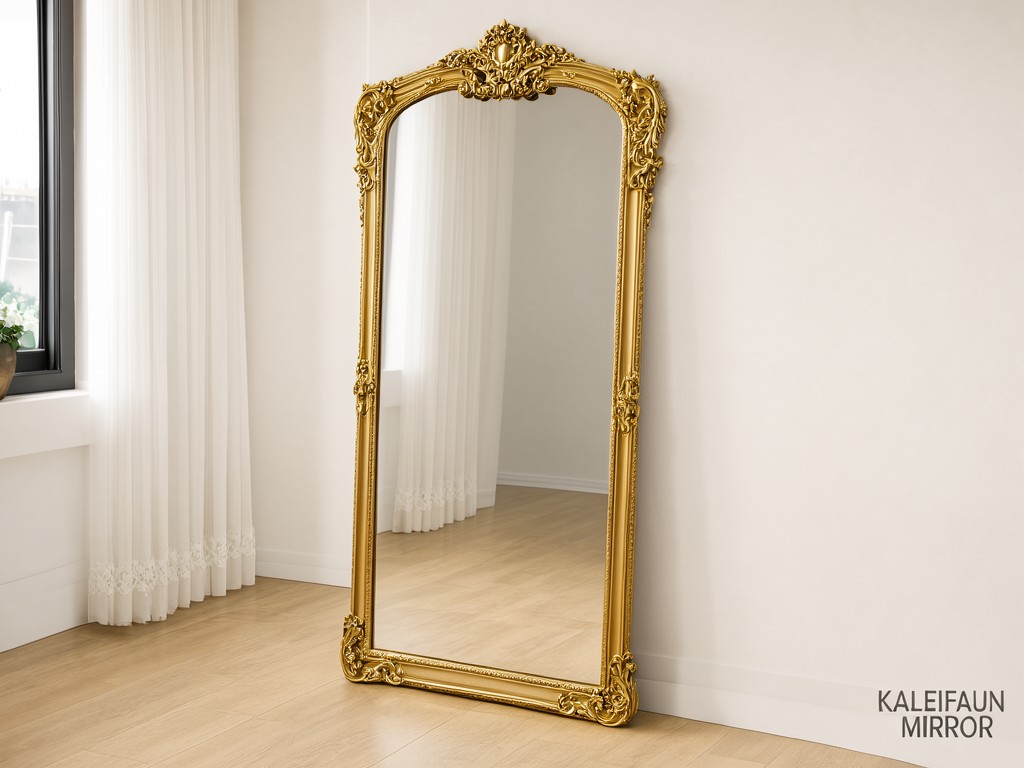
- Do not treat “gold frame” as a complete finish specification. Approve a physical sample with the intended colour, sheen and texture.
- Do not assume a wall mirror is suitable for wet rooms or outdoor installation. Humidity and water at the glass edge can affect the reflective backing and frame.
- Do not select fixings by mirror size alone. Wall material, mounting orientation and finished unit weight determine the suitable fixing arrangement.
- Do not rely on a retail carton for export protection without checking corner support, internal movement and handling marks on a packed sample.
What Can Be Customised and What Cannot
A private-label order can usually retain an existing frame profile while changing the dimensions, finish, mounting hardware, backing details and retail pack. That route avoids a redesign, but it still needs a confirmed drawing and sample because changes to width or height can alter frame stiffness, bracket position and carton size.
Options to Match a Brand Specification
Set the mirror dimensions, gold-tone finish, frame material, corner detail, bracket position, backing protection, label and carton artwork. A coating change may affect price and sample timing; a new frame profile can require tooling review.
Limits to Confirm Before Sign-Off
A specified glass size must suit the available frame and pack. Finish colour needs approval under agreed viewing conditions, and wall-fixing suitability depends on the installation surface. A gold finish should not be sold as a guarantee of weatherproof use.
OEM and ODM Programme Structure
Repeat orders work best when the approved sample, dimensioned drawing, finish reference and packaging specification describe the same product. For an OEM order, the buyer supplies the target specification and branding files; the supplier confirms which existing frame and mounting components match it. ODM work may involve a new profile or construction change, with added tooling cost and a longer sample stage.
Before purchase-order release, agree the sample approval point, carton artwork version, order quantity, production lead time and shipping configuration. Record any approved variation in writing so a later reorder does not depend on a colour impression or an unlabelled sample alone.
Questions Buyers Ask Before Ordering
Can the existing frame profile be kept for a private-label order?
Usually, if the required mirror dimensions, finish and fixing positions suit the current profile. Share the drawing or target dimensions for a tooling review before sampling; a profile change can add tooling expense and approval time.
Which cleaning instructions should appear on the retail pack?
Use a soft cloth and a mild mirror cleaner, and keep liquid away from the glass edges and frame joints. Avoid abrasive pads and chlorine-based cleaners unless the supplier has confirmed compatibility with the selected finish.
What changes the minimum order and lead time?
An existing frame profile and standard carton generally involve fewer setup steps than a new profile, special finish or custom pack. Confirm the current MOQ and schedule after dimensions, branding, sample approval and shipping requirements are defined.
Arrange a Tooling Review
Send the target dimensions, frame finish reference, mounting requirements and private-label artwork. We can review the existing profile and flag any tooling, sample or packing decisions before you place a wholesale order.