Specifying top quality light luxury gold wall mirrors company for Wholesale and OEM Orders
When a brand extends an existing range, a gold wall mirror has to match more than the catalogue photograph. Frame tone, glass size, hanging position and the way each unit is protected in transit all affect whether the next shipment fits the approved assortment and arrives without avoidable claims.
For importers and private-label buyers, the practical control point is agreement before production: approved drawings, a reference sample, written tolerances and signed-off artwork. Those records give the factory and buyer a common basis for repeat orders.
Material Options and Their Trade-offs
| Packaging stage | Protection to specify | Approval checkpoint |
|---|---|---|
| Individual unit | Face cover, corner protection and separation from frame hardware; specify whether the mirror needs a protective film. | Check the packed sample for contact points, movement and access to the hanging fittings. |
| Retail carton | Fit the insert to the mirror outline and frame depth; keep the glass from bearing against carton edges. | Approve carton dimensions, printed panels, handling marks and barcode position from final artwork. |
| Master carton and pallet | Set the pack count and orientation for the mirror size, carton strength and expected freight handling. | Review a packed shipping sample and confirm marks, carton count and pallet pattern for the destination. |
A gold appearance usually comes from the frame finish, not the reflective glass. The mirror itself may use standard silvered glass or another agreed mirror construction; the buyer should approve the visible reflection, backing and edge finish on a physical sample. Glass thickness and frame material are selected against mirror dimensions, weight and mounting design rather than chosen by appearance alone.
Aluminum frames reduce shipped weight and suit narrow profiles, while steel or other heavier metal frames can support a different edge shape and feel. Champagne gold, polished gold and brushed gold also read differently under retail lighting. A finish chip or frame sample under agreed lighting is more useful for repeat orders than a screen image.
How It Is Built and What That Changes
The build sequence starts with a released drawing that defines the outside dimensions, glass opening, frame profile, corner joints, backing and hanging hardware. The frame is cut and assembled to that geometry; its surface is prepared and finished in the selected gold tone. The mirror panel is cut, its edges are finished, and the panel is fitted with a backing and retention method suited to the frame design.
Lock down the drawing revision, visible face dimensions, frame depth, corner detail, hanging-point position and finish reference before the production sample is approved. Any change to these items can affect fit, carton design or the way the mirror sits on the wall.
A thin decorative frame can reduce material use and carton volume, but it leaves less room to conceal joints and retain the glass. A deeper or heavier profile can accommodate different fastening details, though it adds shipping weight and may require revised wall hardware. The sample should therefore include the production-intent frame, backing and fittings—not a display-only mock-up.
Where This Product Beats Standard Alternatives
A coordinated light-luxury range earns its place when finish, silhouette and packaging stay consistent across several mirror sizes. Compared with a basic frameless mirror, the framed option gives a retailer a stronger decorative cue; the trade-off is more finish, joint and hardware details to control.
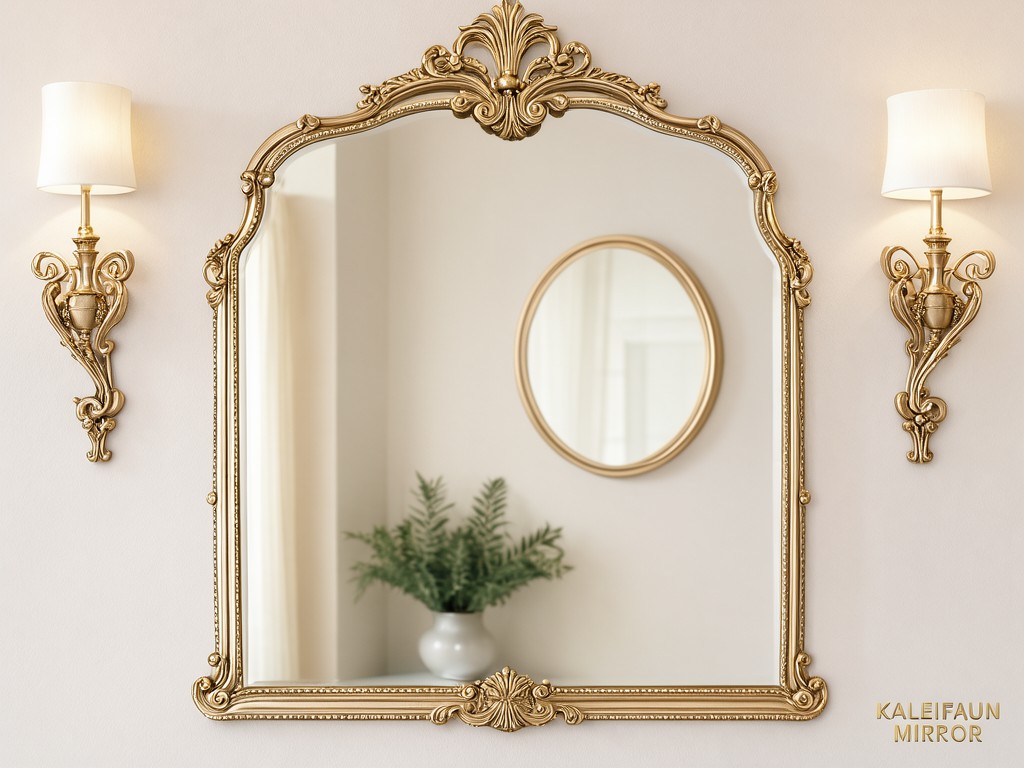
Framed Gold-Tone Mirror
The frame defines the outline and conceals the glass edge. This option fits coordinated room collections, provided the buyer approves the tone, corner finish and frame-to-glass fit as production details.
Basic Frameless Mirror
Fewer frame components can simplify the product and reduce visual weight. Exposed edges and a simpler decorative profile may not deliver the same coordinated look for a light-luxury furniture or home décor assortment.
The framed design is not automatically the better choice for every range. It works best when the retail position justifies the added finish and assembly controls, and when the carton protects the frame corners as well as the glass face.
Customisation Options and Their Limits
Private-label changes can cover the mirror outline, frame profile, gold tone, backing, hanger position, retail carton and brand graphics. Each change has a boundary: a new outline affects cutting yield and packaging, a new frame profile affects tooling or forming setup, and a revised finish can require a fresh approval sample.
- Release dimensioned drawings with stated tolerances for overall size, frame width, glass opening and hanging-point location.
- Approve a physical finish reference for the gold tone and surface texture; keep the approved sample identified by revision or batch reference.
- Provide editable logo artwork and final carton files with print dimensions, colour references and barcode placement confirmed.
- Treat changes after sample approval as a new review point if they affect dimensions, finish, fittings, packaging or printed content.
Custom wording or a revised logo panel is generally simpler than a frame redesign. For repeat-order control, artwork approval and product approval should be recorded separately so a carton update does not silently change the approved mirror specification.
Working as a Production Partner, Not a Catalogue Supplier
An OEM or ODM project should move through documented checkpoints: brief and drawings, material and finish confirmation, pre-production sample, artwork proof, packed sample, then release against the approved revisions. The buyer can compare the sample with the drawing and flag issues before the order moves into full production.
For a private-label range, the useful discussion is specific: which finish differences are acceptable, which dimensions control fit, what packaging marks are mandatory, and which changes require reapproval. Those answers reduce ambiguity for both the factory floor and the receiving team.
Model, drawing, sample and artwork revisions should remain traceable to the purchase order. If the next order changes the mirror size or carton, the previous approval still provides a clear baseline rather than an assumed specification.
How Consistency Is Held Across Batches
Moving from sample orders to container loads changes the risk: small differences in finish, fit or packing become visible across many units. A controlled reference sample and written acceptance limits keep inspection focused on the features buyers and end users notice.
Factory checks can include overall dimensions, squareness, glass edge condition, frame joints, finish appearance, backing security, hanging hardware position and carton condition. Agree the sampling approach and defect criteria with the order specification; do not rely on a verbal match to a showroom sample.
For reflective distortion, inspection should use a consistent viewing position and lighting setup. For finish matching, compare units against the approved reference rather than judging each piece under changing warehouse light. Packaging checks should confirm that the mirror cannot shift into the carton wall or contact adjacent hardware during handling.
Batch identification on cartons or production records helps connect a reported issue to the relevant order and specification revision. That traceability is useful when a buyer needs to distinguish a one-off transit breakage from a recurring fit or finish concern.
Setup, Use and Replacement Parts
Install with wall fixings suited to the wall construction and the packed mirror weight; the included hanger does not determine whether a particular wall anchor is suitable. Keep the mirror vertical and supported at the specified hanging points. For large units, use two-person handling to limit frame twist and edge impact.
Clean the glass with a soft cloth and a suitable glass cleaner. Keep liquid away from the frame joints, backing and exposed mirror edges; moisture that enters those areas can damage the backing or finish over time. Avoid abrasive pads and cleaners that could mark the gold-tone surface.
For a damaged unit, identify the model and order revision before requesting replacement hardware or a full replacement. Hangers, fasteners or backing components may be serviceable separately when the frame design allows; glass replacement is usually a controlled repair rather than a loose spare part for routine retail handling.
Review Drawings and Branding Before Release
Send the dimensioned drawing, target finish reference, logo files and carton artwork for a pre-production review. A joint review can catch mismatched dimensions, unclear tolerances and print-placement conflicts before the sample is approved.
Request an artwork-and-branding review to align product details and packaging files with the intended wholesale order.