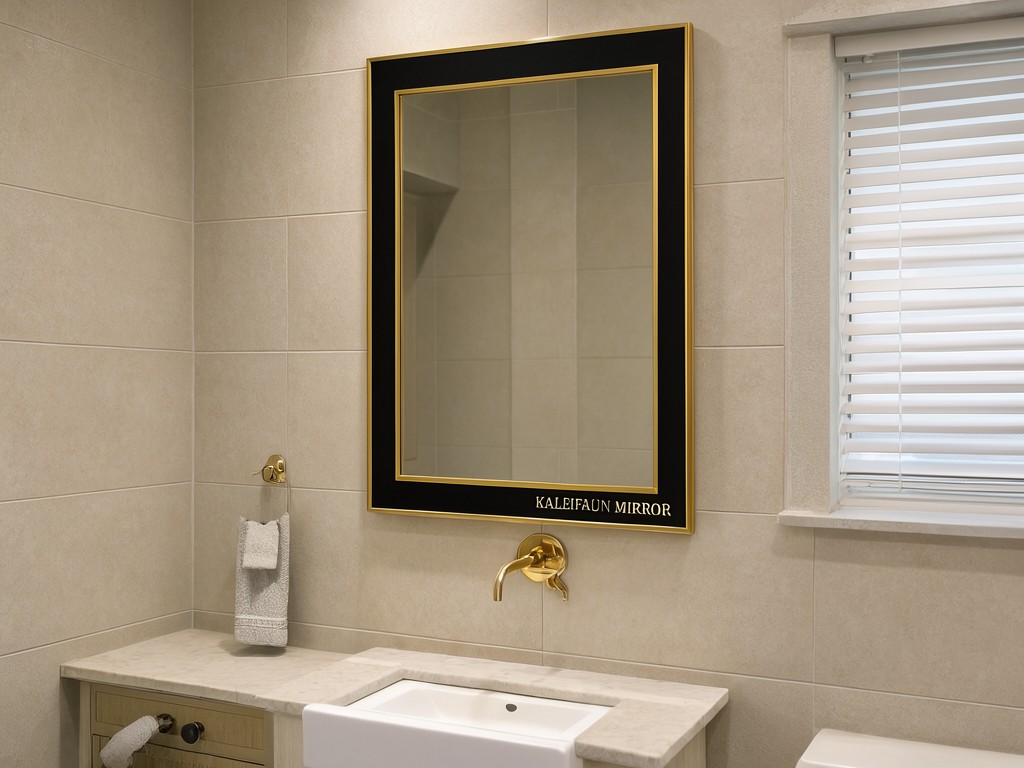
Specifying Wholesale gold and black bathroom wall mirror Factory for Wholesale and OEM Orders
What This Product Is and Where It Fits
Most quality disputes start with a consistency gap: a replacement mirror arrives with a slightly different gold tone, an edge seal that does not match the first batch, or a frame that sits unevenly against the wall. For a private-label buyer or a club purchasing manager, those differences can turn an otherwise usable mirror into a return, a warranty claim, or a mismatched washroom installation. Repeat orders need a defined glass, frame, finish, and packing specification—not just a reference image.
Gold and black bathroom wall mirrors combine a reflective glass panel with a coloured frame for residential bathrooms, hotel washrooms, and club or academy locker-room facilities. Indoor humidity, repeated wipe-downs, splashes, and cleaning chemicals put pressure on the mirror’s edge protection and the frame finish. The selected construction should match the cleaning routine and installation location; a mirror intended for a dry vanity area is not automatically suited to a humid, high-turnover shower or pool changing room.
Design Constraints Behind the Specification
Moisture tends to expose weak points first at the glass perimeter, rear coating, joints, and mounting hardware. If water repeatedly reaches an unprotected mirror edge, corrosion or dark spots can develop there; if a thin frame has poorly finished cut ends, the coating may wear or lift around those areas after cleaning. Specify sealed edges and a frame finish suited to the site’s exposure, then keep the same construction and finish route on the approved reorder reference.
For gold and black frames, powder-coated aluminum offers a practical balance of low mass and finish coverage. Anodized aluminum is another option for a metallic gold appearance, but it has a different surface character from painted finishes; it should not be substituted mid-order if colour matching matters. Ask the factory to approve a physical finish sample under the lighting used in the sales channel or washroom, since warm indoor light can make two gold tones appear closer than they do in daylight. On the mirror itself, glass thickness affects weight and handling, while the backing and edge treatment influence how the panel tolerates damp service.
Where This Product Beats Standard Alternatives
Compared with an unframed mirror or a basic painted-frame model, a specified gold or black frame gives the buyer a repeatable visual detail and a defined perimeter for mounting. That benefit depends on finish control and edge protection: a decorative frame alone does not prevent mirror corrosion, and a coloured coating does not make the mirror suitable for direct spray or standing water.
| Usage level | Specification emphasis | Buyer trade-off |
|---|---|---|
| Residential or low-turnover washroom | Standard frame finish, protected mirror edges, and wall fixings matched to the installation surface. | Lower initial cost can suit routine wipe-downs and moderate humidity, provided the mirror is kept clear of direct spray. |
| Club, academy, or hospitality washroom with frequent cleaning | Prioritise sealed edges, corrosion-conscious hardware, a finish route approved for the cleaning routine, and protective export packaging. | A higher specification may add unit cost, but it reduces avoidable exposure at the edges, mounting points, and frame joints. |
Size, Weight and Specification Range
Common order sizes run from compact vanity formats around 400 × 600 mm to larger wall formats near 900 × 1200 mm; available dimensions depend on the frame design, glass handling limits, and packing arrangement. Treat these as planning ranges rather than a fixed catalogue schedule. Confirm the finished outside dimensions, not only the glass size, because the frame changes the installation footprint.
Weight check: 4 mm mirror glass weighs about 10 kg per square metre before the frame, while 5 mm glass weighs about 12.5 kg per square metre. Add the frame and mounting components to estimate packed and installed weight, then select wall anchors for the actual substrate. Increasing glass thickness can improve handling stiffness, but it raises freight weight and the load at each fixing point.
Before a purchase order is released, record glass thickness, overall dimensions, frame material, gold or black finish reference, edge treatment, rear backing, fixing method, and carton protection. Keep a signed or retained finish sample where the shade must stay consistent across shipments. Any change to one of those inputs should be reviewed against the approved sample and installation drawing.
Stock Availability and Reorder Planning
Stock status can vary by frame colour, dimensions, and glass configuration. Standard sizes may be easier to replenish than a special dimension or a non-stock gold tone; confirm component availability and the production slot before promising a delivery date to a retailer or facilities team. For a repeat order, share the prior order reference and approved specification, then check whether any material or finish source has changed.
Stock Configuration
A standard size and established frame colour can simplify replenishment. Confirm the quantity available, carton dimensions, and whether the current lot matches the approved finish reference before booking shipment.
Repeat or Special Configuration
A custom dimension, frame profile, or gold shade may require material preparation and a new production run. Allow time for sample approval and confirm packaging requirements early, especially when mirrors ship in mixed-size export cartons.
Care, Storage and Service Life
Frequent cleaning is manageable when the cloth and cleaner do not abrade the frame or leave liquid sitting at the mirror edge. Use a soft cloth with a mild, non-abrasive cleaner, then dry the perimeter and frame joints. Avoid direct application of concentrated bleach or chlorine cleaner to the frame, backing, or glass edge; pool and locker-room teams should follow the cleaner supplier’s dilution instructions and prevent prolonged chemical contact.
Store cartons indoors, dry, and upright as marked, with the mirror protected from impact and frame-to-frame rubbing. During receiving inspection, check for cracked corners, chipped frame coating, loose hardware, and dark marks at the mirror perimeter before units enter inventory. Keep the packing materials for any units that need to move between locations.
Discuss Your Repeat-Order Specification
Share the required dimensions, finish reference, installation conditions, target quantity, and destination market. A project review can identify the details that need sample approval and confirm stock or production timing before you place the order.
Discuss your mirror project