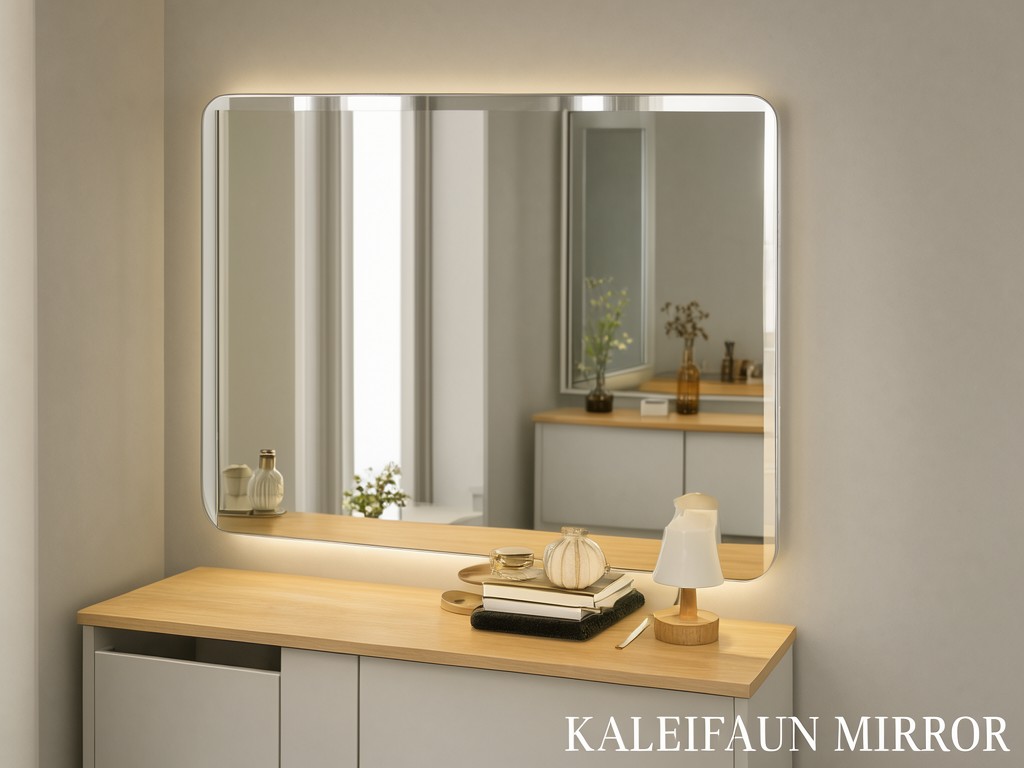
Affordable new designs wall mounted dressing mirror vendor - Bulk Supply and Specification Guide
The build method decides whether a dressing mirror stays flat, arrives intact and fits the wall hardware specified for the project. Production typically runs from glass cutting and edge finishing through reflective coating, backing or frame assembly, and protective packing. For OEM and private-label buyers, a small saving on the glass or frame can be outweighed by distortion complaints, chipped edges or transit breakage that drives returns.
What the Design Has to Balance
A larger glass panel gives a fuller dressing view, but it also raises weight, packing volume and the consequences of a mounting error. Glass thickness, panel dimensions and backing support therefore need to be assessed together rather than priced as separate line items. For many wall-mounted models, 3–5 mm glass is a practical specification range; the final choice depends on the panel size, frame design and intended installation.
Edge grinding and polishing add processing time but reduce sharp-edge exposure and visible chips at the perimeter. A protective backing can help contain fragments if glass breaks, while a frame can cover the edge and provide a more defined mounting structure. The decision rule is straightforward: specify the least costly construction that meets the retailer’s safety, appearance and installation requirements without increasing damage-related returns.
For mirrors destined for humid rooms, confirm the reflective coating and backing system, edge coverage and frame material as a set. A corrosion-prone frame or exposed edge can show deterioration before the mirror face does.
Comparing Two Standard Configurations
Process choice shows up later as a difference in packing cost, installation tolerance and how well a batch holds its retail appearance. The two configurations below are common starting points; glass size and mounting method still need approval against the buyer’s product brief.
Framed Mirror
An aluminum, steel or polymer frame protects the glass perimeter and can simplify hanging. Aluminum avoids rust on the frame, while steel can suit a lower-cost design if its finish and edge protection are appropriate for the sales environment.
The frame adds material and assembly steps, but can reduce edge damage during handling and give buyers more control over the finished style.
Frameless Mirror
A frameless design reduces visible bulk and frame component cost. Its ground and polished edges remain exposed, so packing separation and careful handling matter more than they do on a fully framed panel.
Choose it when the clean edge is part of the retail look and the mounting hardware supports the panel without point loading the glass.
Assumptions Buyers Should Stop Making
A mirror that looks acceptable in a single approval sample may still vary across production if the factory does not control glass dimensions, coating appearance, frame fit and carton protection as separate checkpoints. Variance becomes costly when stores receive visibly different finishes or installers find the hanger position has shifted. Set acceptance criteria before the production run, not after a return pattern appears.
- A reflective face is not automatically free of image distortion; inspect the finished panel at its intended viewing distance and angle.
- A wall anchor supplied with the mirror does not suit every wall type. Confirm the intended substrate and state clearly when different fixings are required.
- Matching a frame colour by name alone does not control shade. Approve a physical finish sample and compare production against it under consistent light.
- A lower ex-factory price does not necessarily lower cost per unit sold if the packout allows edge chips, cracked glass or missing hardware to reach the customer.
Usage Scenarios and Buyer Segments
Home-furnishing retailers often select full-length panels for bedroom and dressing-area installation, where carton dimensions and corner protection affect freight damage. Hotel procurement teams may need a consistent appearance across multiple rooms, plus mounting hardware that installers can repeat without altering the wall layout. Bathroom and changing-area buyers should account for humidity and cleaning practices, since coating edges, frame finishes and backing materials may face repeated moisture exposure.
For each segment, compare the cost of protection and frame construction with the expense of replacement, service calls and store-level markdowns. The table maps common use conditions to the complaint they can trigger and the specification points buyers can use to prevent it.
| Use Condition | Likely Customer Complaint | Specification That Helps Prevent It |
|---|---|---|
| Long-distance parcel or mixed-pallet freight with frequent handling | Chipped corners, cracked glass or damage discovered at unpacking | Specify corner and face protection, internal separation, carton compression support and a packout check matched to the panel size. |
| Installation in a bathroom or other humid room | Darkened mirror edges, finish deterioration or visible corrosion | Review edge sealing, backing and frame finish for the intended moisture exposure; avoid unprotected metal edges. |
| Repeated room installation across a hotel or rental property | Uneven hanging height, loose fittings or panels that do not sit level | Control hanger position and hardware fit, then provide installation dimensions and substrate guidance with the shipment. |
| Retail range with multiple replenishment batches | Frame shades or dimensions differ between units on the sales floor | Keep an approved sample and recorded dimensions and finish references for comparison at each production release. |
Segment-Specific Requirements
Private-label home ranges tend to balance retail appearance with carton cube and shelf price. In that case, standard glass sizes and a repeatable frame profile can reduce purchasing complexity; the trade-off is less freedom to match unusual room dimensions. For hospitality projects, uniformity across rooms and predictable installation usually matter more than offering several frame styles.
Importers should check the packed dimensions and gross weight before confirming a container plan, since mirror cartons use space and need separation from heavy freight. Buyers selling into regions with seasonal humidity or coastal exposure should review frame and backing materials for that environment. Specify the cleaning guidance and mounting limits the end user needs; unclear instructions can turn a sound product into an installation complaint.
How Consistency Is Held Across Batches
Consistency is set at the forming stage, then protected through cutting, edge finishing, coating and assembly. If a glass dimension shifts, the frame fit and hanger position can shift with it; if the reflective coating or frame finish varies, buyers may see a mismatch even when each unit passes a basic visual check. Lot records should connect the approved sample, incoming materials, in-process measurements and final inspection.
A factory inspection plan can include dimensional checks on panel width and height, visual review for scratches and coating defects, edge inspection, frame-fit checks, hanger-position measurement and carton drop or handling checks suited to the packaging route. Weight checks help flag changes in glass thickness, frame parts or included hardware. These controls cannot remove every transit risk, but they help distinguish production drift from freight damage and give the buyer usable batch records.
Set dimensional tolerances, acceptable cosmetic marks, finish references and packaging criteria before mass production. Without those written limits, lot-to-lot disputes often come down to different interpretations of the approval sample.
Volume Planning and Lead Time
Order timing depends on whether the product uses an existing glass size and frame profile or requires new frame development, special finishes or revised packaging. Glass sourcing, finish approval and pack testing can set the schedule before assembly begins. Treat the ranges below as planning guidance only; confirm the quoted MOQ and dates against the approved specification, material availability and destination packaging requirements.
| Order Stage | MOQ Planning Basis | Indicative Timing Driver |
|---|---|---|
| Pre-production sample | One approved configuration; sample and freight charges depend on size and finish. | Allow time for glass processing, frame assembly, review and any requested revisions. |
| Repeat order using approved components | Quoted against glass size, frame material, finish, carton and production lot requirements. | Often planned at approximately 3–6 weeks after order confirmation; material availability and peak loading can change the window. |
| New frame profile or non-standard finish | May require a higher commitment to cover profile development, finish setup or material purchasing. | Add development and approval time before the production schedule; confirm separately with the factory. |
To lower cost per unit sold, plan volume around approved components and realistic reorder intervals rather than increasing the first order without a demand forecast. A standard frame and carton may carry a lower setup burden, while a new profile or retail-specific packout can make sense when it supports a clear price point or reduces handling damage. Confirm whether the quoted lead time starts at deposit, final artwork approval or sample sign-off.
Review the Specification Before the Run
Share the target panel dimensions, frame preference, installation method, sales environment, packout needs and branding files for an artwork-and-branding review. A confirmed drawing and finish reference give both sides a practical basis for sampling, batch checks and reorder matching.
Contact the team to review your mirror specification and branding artwork