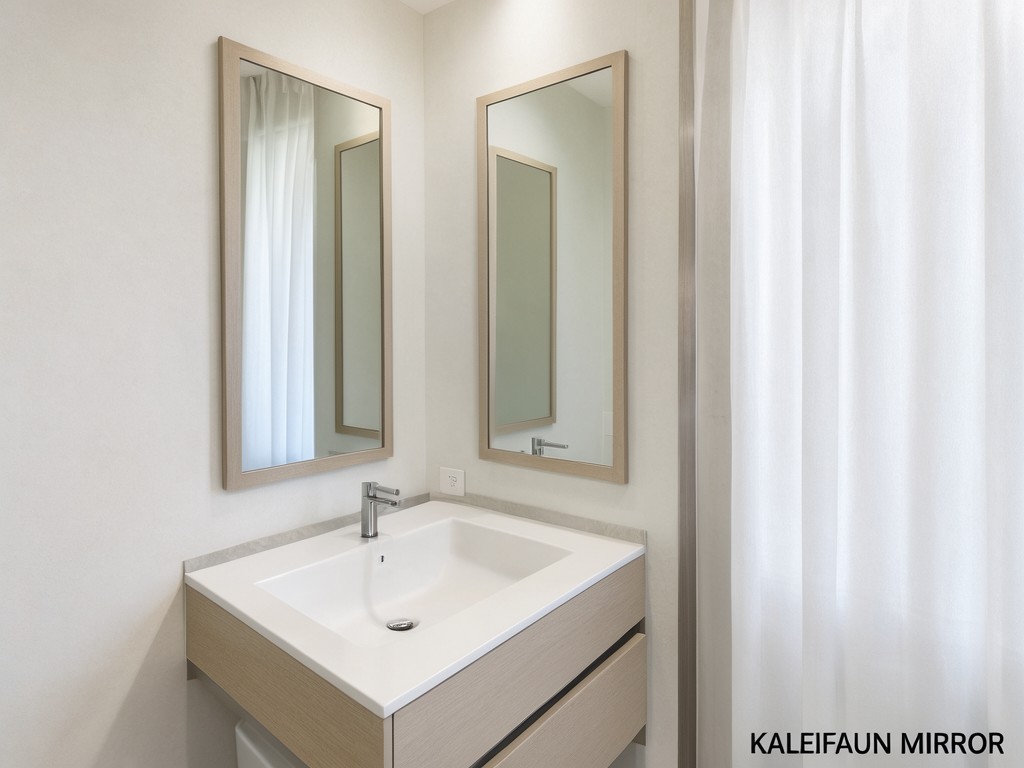
custom tall bathroom vanity wall mirror factory: What Buyers Should Check Before Ordering
Construction options diverge as soon as weight matters. A tall vanity mirror can use 4 mm glass to reduce the load on wall fixings, while 5 mm or 6 mm glass may suit larger formats where a stiffer panel is preferred. The glass thickness alone does not establish suitability: finished dimensions, backing layers, mounting method and wall condition all affect the installed load. Agree these details on a dimensioned drawing before the factory cuts glass.
For repeat orders, returns often trace back to an approval gap rather than a single material choice: an unconfirmed corner radius, an edge finish that differs from the sample, or a backing film omitted from the production specification. Confirm the mirror type, overall dimensions, edge treatment, mounting clearances and any safety backing in one controlled specification. The approved sample should represent the actual coating and edge process, not just a similar-looking glass panel.
Materials and Construction Trade-offs
Bathroom mirrors are commonly made from float glass with a reflective metal coating and protective backing layers. Silvered glass is a frequent choice for vanity use; aluminum-coated mirror is another option where the purchase target places more weight on price. In either construction, coating coverage, backing-paint integrity and edge quality matter. Moisture that reaches an exposed or damaged edge can lead to dark spots or coating deterioration, so polished edges and careful handling are practical controls, not cosmetic extras.
| Bathroom condition or design need | Construction choice to specify | Factory and incoming inspection focus |
|---|---|---|
| Frequent bathroom use with moisture near the mirror perimeter | Specify reflective coating type, protective backing layers and finished edge treatment. | Check coating coverage, backing continuity, edge chips and visible blemishes under agreed lighting. |
| Large, tall panel with a narrow mounting footprint | Set glass thickness and mounting details against panel size and the intended wall fixing. | Measure finished dimensions and verify the agreed mounting positions against the drawing. |
| Breakage risk in a household or shared bathroom | Discuss safety backing film and its coverage as a defined configuration, not an assumed default. | Confirm film coverage, adhesion and compatibility with the selected backing and installation method. |
Thickness has a cost and handling trade-off. A thinner panel weighs less and can lower freight and installation demands, but the permitted size and support arrangement still need review. A thicker panel adds mass and may feel less flexible during handling; it also calls for fixings rated for the complete installed assembly. Do not approve thickness from a catalogue image alone.
Silvered Mirror Glass
Often selected for vanity projects where reflected appearance is a key purchase criterion. Confirm the coating and backing specification, since the word “silver” alone does not define protective layers or edge performance.
Aluminum-Coated Mirror Glass
May meet a tighter unit-cost target, subject to the buyer’s reflection and finish expectations. Review a production-representative sample beside the approved reference before fixing the option for repeat orders.
How to Choose Before Requesting a Quote
Start with the installation, then set the mirror specification. Send the factory the finished height and width, corner shape, edge profile, mounting method and any cut-outs. Include the intended wall type and whether the mirror sits above a basin, backsplash or vanity top. Those conditions affect mounting clearance and can expose conflicts that a front-view sketch will miss.
For custom shapes or repeated project sizes, ask the factory to confirm process capability before approving a price. Cutting and edge polishing must suit the outline; drilled holes, notches and tight corner details need clear dimensions and positions. Use a drawing with a stated tolerance for each critical dimension. If a tolerance is not called out, the buyer and factory may interpret “same size” differently across production runs.
Approval rule: Lock the drawing, finish sample and written tolerance before production. A sample confirms appearance and workmanship; the drawing defines the dimensions and feature locations used for inspection.
If branding or a private-label mark is required, supply vector artwork and identify its exact location, size and orientation on the drawing. Confirm whether the mark is applied to the mirror, backing or a separate label. A placement approved on a small sample can appear out of proportion on a tall panel, so review the artwork at the intended finished size.
Assumptions Buyers Should Stop Making
Repeat orders drift when a verbal description replaces a controlled specification. Record the following points in the purchase file and compare them against the production sample:
- “Tall” is not a finished size. State the overall height and width, plus corner radii or shaped edges.
- A mirror is not automatically supplied with safety backing, mounting hardware or adhesive. List each included component and its specification.
- A polished edge is not the same as a bevel. Name the required edge finish and show it on the approved drawing.
- A visual sample does not settle dimensional acceptance. Set measurement points and tolerances before the order enters production.
A backing film can help retain fragments if glass breaks, but it does not make an unsuitable installation safe. The wall structure and fixing system must carry the complete panel. Confirm who supplies the fixings and who approves the installation detail before purchase; otherwise a warranty discussion may become a dispute over scope rather than product quality.
What Can Be Customised and What Cannot
Factories can usually quote custom dimensions, shape, corner radius, edge finish, glass thickness, mirror coating option, backing film and mounting preparation. Feasibility depends on panel size, shape complexity and the equipment available for cutting, polishing and drilling. A custom dimension may require a new drawing and sample approval, even when the basic mirror construction remains unchanged.
| Specification area | Options to compare | Approval item for repeat production |
|---|---|---|
| Panel size and outline | Rectangular, shaped or radius-corner formats; dimensions depend on equipment and handling limits. | Signed dimensioned drawing with tolerances and critical feature locations. |
| Glass and reflective construction | Thickness and coating option selected for appearance, weight, application and target cost. | Production-representative sample and written material description. |
| Edge and mounting details | Polished or bevelled edge, specified holes or notches, and agreed mounting preparation. | Edge finish sample and drawing that locates each hole, cut-out or mounting feature. |
| Branding and safety backing | Artwork placement and backing film, if required for the application. | Approved artwork proof and confirmation of film coverage and backing configuration. |
Some limits are set by the process and cannot be solved by changing the drawing alone. Very narrow margins around holes, tight internal corners or a large panel with insufficient handling support may increase breakage risk or fall outside the factory’s equipment capability. Ask for a feasibility review before artwork and tooling are finalized. Custom features can also affect price and minimum order quantity if they require separate setup or additional inspection.
Segment-Specific Requirements
Bathroom vanity distributors need a repeatable specification across sizes and finishes so replacement orders match prior shipments. Keep one approved reference for each mirror construction, and record revisions to dimensions, coating, edge treatment or artwork. That record gives customer service a concrete basis for checking a reported defect against the batch supplied.
Hospitality and multi-unit renovation buyers should check the installation detail across room types before standardizing a tall format. Mirror height, basin position, backsplash height and wall fixing can vary by room. A site measurement or verified room drawing helps prevent rework caused by a mirror that is correctly manufactured to the wrong installation assumption.
Private-label product managers should approve the finished appearance, not only the artwork file. Reflection tone, edge finish and branding position are easier to assess on a full-size or representative sample. Agree how production inspection will check visible defects and dimensional points, then apply the same acceptance criteria to reorder lots.
Discuss Your Mirror Specification
Share the target dimensions, installation method, preferred glass and coating, edge details, artwork and expected order volume. A project review can identify drawing gaps and process limits before sample approval, helping keep the production specification consistent on reorders.