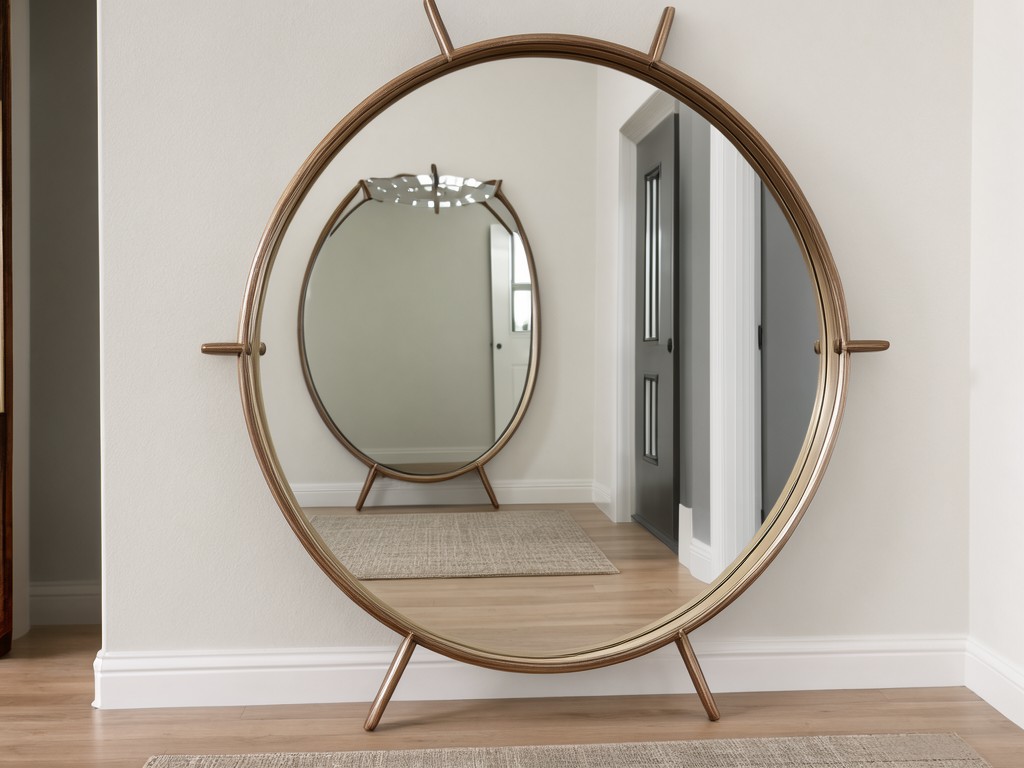
Factory Price mid century modern entryway mirror distributor: Specification, Ordering and Quality Notes
What This Product Is and Where It Fits
Repeat loading drives the failure: a wall mirror shifts or loosens when its frame joints, hanger points, or wall fixings do not suit the unit’s weight and installation. For entryways in homes, hotels, and club or academy reception areas, the buyer is balancing a clear reflection and a furniture-style appearance against safe handling, freight exposure, and dependable repeat orders. Set the frame, glass, and hanging method against the intended size and installation before approving a price.
A mid-century modern entryway mirror is generally a wall-mounted mirror with a restrained frame profile, often in a wood or wood-look finish. Final dimensions, frame material, glass thickness, and hardware affect both the landed cost and the carton design; treat the ranges below as planning references, not a fixed specification.
Glass and Reflection
Specify glass thickness and edge finish against the mirror size. Larger panels need suitable support through fabrication, packing, and installation.
Frame and Finish
Solid wood and engineered wood differ in material cost, weight, and response to humidity. Approve the finish on a production-representative sample.
Mounting and Carton
Hardware and protective packaging must match the finished unit’s mass and shape. Confirm wall-installation instructions for the destination market.
Where Cheaper Alternatives Fall Short
A lower quotation can reflect thinner frame stock, simpler edge work, lighter backing, or less protective packing. Those choices reduce input cost, but they also leave less margin for handling damage, frame movement, or variation between production lots.
Lowest-Input Build
A lightweight frame and minimal corner protection can suit small, low-weight designs with short distribution routes. For larger mirrors or multi-stop export freight, the same choices can increase corner damage, joint separation, and replacement handling.
Specified Build
A defined frame section, controlled joint method, and tested carton add cost per unit. They make sense when damage claims, retail presentation, or repeat-order matching would cost more than the added material and packing.
Compare landed cost and expected replacement exposure, not the ex-factory price alone. For a launch date with little schedule buffer, approve packaging and the full assembled sample before releasing the production order.
Construction Method and Its Effect on Consistency
A practical production route uses cut and edge-finished mirror glass, a fabricated frame, controlled assembly, and a protective backing where specified. Frame parts are cut to the approved dimensions, joined, finished, and checked for squareness before the mirror assembly is fitted. Each interface matters: uneven frame contact can stress the glass, while inconsistent corner joints can change the visible opening and overall dimensions.
Tooling and setup affect repeatability as well as price. A fixed cutting fixture or assembly jig requires initial setup, but its cost is spread across the order quantity; at larger volumes, that can lower setup cost per unit and reduce dimensional variation. A short run avoids some tooling commitment, though manual adjustment and finish matching may take more production time.
Specification rule: Freeze the outside dimensions, visible mirror opening, frame profile, finish reference, glass thickness, and hanger position in one approved drawing. Changes after sample approval can affect fixture settings, material yield, and the launch schedule.
| Parameter | Typical Planning Range | Cost or Consistency Note |
|---|---|---|
| Overall size | About 400–900 mm wide and 600–1,200 mm high | Confirm the finished outside dimensions and mirror opening separately on the drawing. |
| Finished weight | Roughly 4–14 kg, depending on size and frame build | Use the production sample’s measured weight to confirm hanger and carton requirements. |
| Mirror glass | Commonly 3–5 mm, subject to panel size and design | Thickness affects material cost, total weight, and handling needs. |
| Frame material | Solid wood or engineered wood with a specified surface finish | Material choice changes appearance matching, machining, weight, and unit cost. |
These ranges are for initial costing only. A production quote should use the approved drawing, bill of materials, finish reference, hardware plan, and packaging specification.
Buying Mistakes That Lead to Returns
Returns often start with a gap between the sales drawing and the item packed for shipment. Check these points before purchase order release:
- Quoting only the outer dimensions can leave the visible mirror area smaller than the retail image suggests. Record both measurements.
- Approving a finish from a screen image gives no control over tone or sheen. Retain a signed or otherwise traceable physical sample as the production reference.
- Selecting hanging hardware without the finished unit weight and orientation can create installation complaints. Confirm the hardware position and installation method for the intended wall type.
- Treating carton design as a final packing detail leaves little time to check corner and face protection. Approve the packed sample before the shipping window begins.
- Changing glass, frame stock, or dimensions after sample sign-off can reset purchasing and assembly work. Route revisions through one controlled drawing approval.
Working as a Production Partner, Not a Catalogue Supplier
A distributor preparing a retail or facility launch needs decisions tied to a real production sequence: drawing confirmation, material booking, sample approval, batch manufacture, inspection, and export packing. A factory partner can cost the design against those steps rather than quote a catalogue image that may not match the ordered build.
For OEM orders, provide the target dimensions, frame material, finish reference, mirror specification, hardware location, packaging needs, destination, quantity, and required ship date. For ODM development, agree on the sample route and any fixture or setup cost before committing to a launch quantity. Order volume changes the economics: larger batches can spread setup and tooling cost across more units, while smaller batches may carry a higher unit cost or require a longer production window if materials are not shared with other orders.
Keep one approved sample, drawing revision, finish reference, and packing instruction attached to the order record. That reference set gives production and incoming inspection a shared basis for repeat orders.
Quality Control and Batch Consistency
Inspection should follow the approved specification and cover the points that drive fit, appearance, and safe delivery. A practical factory check includes:
- Measure overall dimensions, mirror opening, frame width, and diagonal difference against the approved drawing.
- Inspect the reflective surface and edges under agreed lighting for visible defects, scratches, and edge damage.
- Check frame joints, finish coverage, hanger position, and the assembled unit’s measured weight against the approved sample.
- Run a packing and handling check using an agreed procedure for the intended shipping route; record any damage and adjust the carton before batch release.
For repeat orders, compare incoming frame material and finish against the retained reference, then check dimensions and assembly at defined points in the batch. The inspection frequency and acceptance limits should be agreed before production; do not assume that an informal visual match will hold a finish across different material lots.
Volume Planning and Lead Time
The schedule depends on sample approval, glass and frame material availability, finish preparation, fixture setup, assembly capacity, and packaging sign-off. A confirmed launch date therefore needs a production plan built backward from the required ship date, with time reserved for buyer review and any sample correction.
Higher volume can reduce setup cost per mirror and support a steadier line sequence, but it also requires earlier material commitment and more packing capacity. Lower volume reduces inventory exposure; it may carry more setup cost per unit, and a special finish or non-stock frame material can still set the schedule. Ask for the quoted lead time to identify its start point and whether it includes sample approval, production, inspection, and packing.
For launch planning: Send the target quantity, destination, required ship date, and current specification together. The factory can then check material timing, setup needs, packing method, and production capacity before confirming a workable schedule.
Discuss Your Mirror Order
Share your drawing or reference sample, target quantity, destination, and launch date for a project-specific discussion of construction, tooling, unit pricing, and lead time.
Discuss your project with our team