oem framed bathroom mirrors for interior designers company: What Buyers Should Check Before Ordering
Before comparing quotations, establish whether the frame, mirror backing and mounting method suit the bathroom conditions in the project. Importers qualifying a second source should compare the approved construction and inspection points, not just the glass size and unit price; small differences at the frame joints or rear coating can become repeat complaints across a whole installation.
The Problem Buyers Keep Paying For
| Use level | Common complaint | Specification to review |
|---|---|---|
| Private bathroom, routine daily use | Frame finish marks, a sharp-feeling edge, or an inconsistent gap around the glass | Finish sample, edge treatment, frame-to-glass clearance and corner alignment |
| Hotel or multi-unit residential bathroom | Backing deterioration, loose joints or mounting movement after repeated room turnover | Mirror backing protection, frame joint method and a mounting check agreed for the project |
| High-humidity bathroom with frequent condensation | Dark spots at the mirror edge, corrosion or finish change near joints | Edge sealing, coating system and the limits of the selected frame material |
Unit price and service life diverge when a quotation leaves out these construction details. Mirror silvering and protective backing can be sound while moisture still reaches an exposed edge; a frame can also hide the edge but trap water if drainage and ventilation are not considered. Ask the second-source factory to identify the mirror coating stack, edge finish and frame joint construction on the sample record.
A low-cost frame finish may show scratches or colour variation first, while thin or unevenly finished joints can open during handling and installation. Those defects are difficult to correct on site because the mirror and frame form one assembled unit. A signed sample with a defined finish, corner appearance and rear hardware arrangement gives purchasing and inspection teams a usable reference.
How It Performs in Use
Daily bathroom use exposes the mirror to condensation, cleaning chemicals and repeated wiping. Silvered glass provides the reflective surface; the backing paint protects the reflective layer, while the frame and edge treatment affect how readily moisture can reach vulnerable glass edges. No framed mirror should be treated as waterproof unless its construction and installation details support that claim.
For a clean, comfortable touch at the vanity, specify polished or otherwise softened exposed glass edges and inspect frame corners for burrs, sharp transitions and uneven joints. A flat, narrow profile gives a restrained look and can be easier to wipe; a deeper or more decorative profile adds visual weight but creates more ledges where dust and water residue can collect.
Specify the intended bathroom exposure and cleaning method before sample approval. A frame coating that suits a dry powder room may not hold its appearance at exposed joints in a frequently condensed bathroom; confirm the finish and edge-seal details against the actual installation conditions.
Measured Performance in Real Use
Unit price settles the question only after the factory can hold dimensions, squareness and frame alignment across the production run. A mirror that sits off-centre in its frame or arrives with inconsistent corner gaps creates installation delays even when the glass itself is intact. Define inspection points from the approved sample and check a production sample before releasing a repeat order.
Aluminum Frame
A formed or extruded aluminum frame keeps the assembly relatively light and supports repeatable profile dimensions. Review the coating coverage at corners and cut ends; these areas can show finish weakness before the broad frame face does.
This choice suits projects where installation weight and a consistent profile matter. It still needs a coating specification and joint inspection appropriate to bathroom humidity.
Wood-Based or Solid-Wood Frame
Wood gives designers a warmer material appearance, but moisture uptake and movement can affect joints, finish and frame squareness. Sealed surfaces and protected end grain reduce exposure; they do not remove the need to define ventilation and care conditions.
Choose it when the material character is part of the design brief and the project can accept more care than a coated metal frame typically requires.
Factory checks can include overall dimensions, diagonals, frame-to-glass position, visible coating defects, mirror surface inspection and hardware attachment. For moisture-related claims, agree on a conditioning method and acceptance criteria before production; do not infer bathroom service life from a visual check of an unconditioned sample.
Specification Range and Customisation Limits
Size, glass thickness and frame depth need to be reviewed together. Glass thickness is commonly selected in the 4–6 mm range, subject to mirror dimensions, support and handling requirements; larger formats add weight and raise the demands on wall fixings and export packaging. Confirm the finished outside dimensions, not just the nominal mirror size.
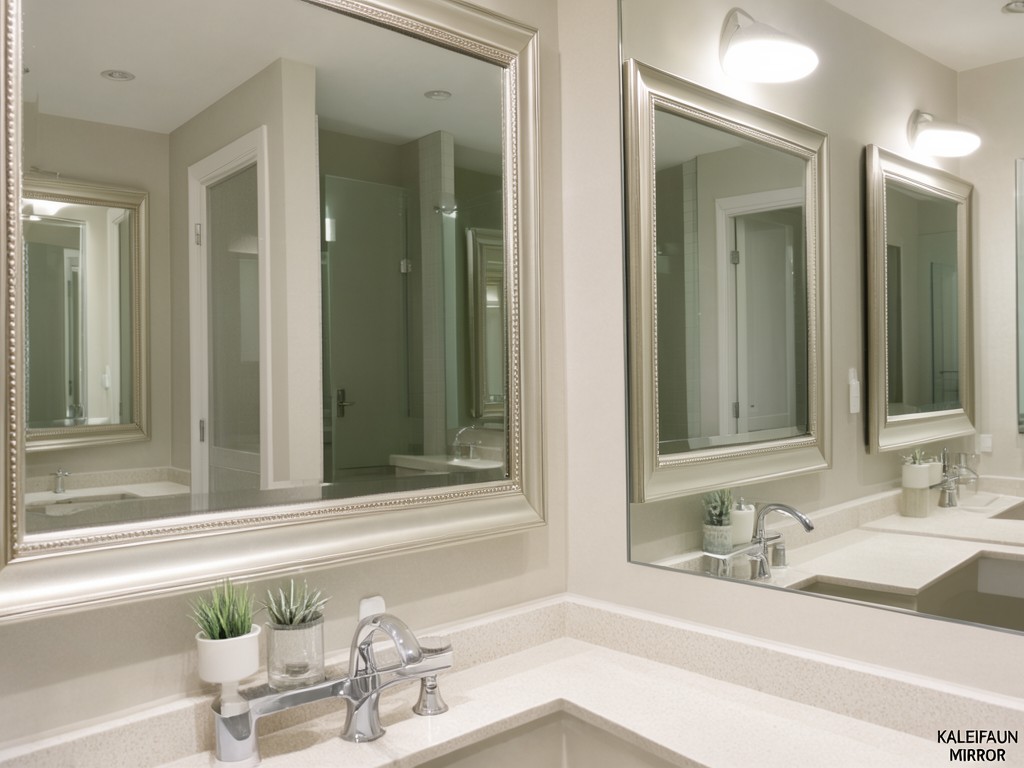
- Record glass type, thickness, edge finish and backing protection on the approved drawing or sample specification.
- Set a frame profile, finish reference, corner construction and allowable alignment variation before bulk production.
- Confirm mounting points, supplied hardware and the wall substrate assumptions with the project installer.
- Treat unusually large dimensions, tight radius corners and complex profiles as feasibility items; they can require dedicated fixtures, altered packing or lower production throughput.
A safety backing film can help retain fragments if glass breaks, but it does not make the mirror equivalent to safety glazing. If the project has a specific glazing requirement, confirm that requirement separately and approve the complete assembly against it.
Matching the Product to the Buyer's Need
For designer-led residential projects, visual consistency often matters as much as the mirror specification. Approve a physical frame finish sample under the expected room lighting, then check how the finish reads beside the selected tapware and cabinet hardware. For hotel and multi-unit orders, give more weight to repeatable dimensions, protected edges and pack-out consistency because replacements must fit the original wall locations.
A second source is useful only if its process can reproduce the approved construction. Keep a controlled reference sample and compare first-article units for frame profile, joint appearance, glass position, finish and mounting layout. If the factory proposes a material or process substitution, assess the changed moisture exposure and appearance rather than accepting it as an equivalent on price alone.
For a review of dimensions, frame details and production tooling, send the drawing and target order mix through a tooling-review request.
Capacity, Tooling and Scheduling
Schedule depends on whether the order uses an existing frame profile or requires a new extrusion, forming die or assembly fixture. New tooling adds sampling and approval time before repeat production; a standard profile can shorten that stage, although finish approval and mirror-size checks still need to be completed.
Ask for separate timing assumptions for first samples, sample revisions, material procurement, production and packing. Large mirrors may occupy more cutting and packing capacity per unit than smaller vanity formats, so confirm the planned batch size and shipment split instead of relying on a single lead-time figure. A second-source qualification run should include the exact hardware and packing configuration intended for the commercial order.
Before bulk release, align the inspection record, approved sample, carton markings and batch identification with the importer’s receiving process. These controls make it easier to isolate a finish or dimension issue without mixing unlike production lots.
Packing, Marking and Freight Configuration
Breakage, chipped corners and frame abrasion are common freight complaints when the mirror is restrained poorly or hardware moves inside the pack. Packaging should protect the glass face, exposed corners and frame finish, while keeping the mirror from shifting under normal handling. Confirm pack strength against the route, container loading pattern and expected warehouse handling.
| Pack element | Buyer check | Freight purpose |
|---|---|---|
| Face and corner protection | Check that pads do not press on vulnerable frame joints or leave marks on the finish | Reduces abrasion and edge or corner damage during handling |
| Inner restraint and hardware pack | Verify the mirror cannot shift and mounting parts cannot contact the glass | Limits impact from movement inside the carton |
| Outer carton or crate | Review stacking arrangement, handling marks and the shipment configuration | Supports the selected parcel, pallet or container route |
| Carton identification | Agree model, dimensions, quantity, batch reference and destination details | Improves receiving checks and lot traceability |
Approve a packed sample for the actual mirror size and frame finish, then inspect it after a handling trial agreed with the buyer. Large-format units may need individual cartons or reinforced group packing; the correct choice depends on dimensions, shipment mode and how cartons will be moved at destination. Record any changes to pack materials before the next production lot.
Review the Second-Source Specification
Share the target dimensions, frame material and finish, bathroom exposure, mounting details and shipment route for a factory-side tooling and feasibility review. A clear sample reference and agreed inspection points help keep the alternate source aligned with the project brief.
Request a tooling review before sampling or production scheduling.