wholesale extra large entryway wall mirror factory: What Buyers Should Check Before Ordering
The limiting factor is rarely the headline specification. An extra large entryway mirror can meet its listed dimensions and still generate costly returns if the reflected image distorts near the edge, the backing is damaged in transit, or the mounting arrangement does not suit the wall. For wholesale buyers, the relevant cost is the delivered, saleable unit after breakage, replacement freight, installation complaints, and channel deductions—not the factory price on its own.
Entryways expose mirrors to repeated handling during installation, frequent cleaning, direct sunlight through glazing, and seasonal humidity changes. Those conditions put pressure on the glass edges, reflective coating, backing paint, frame finish, and packed corners. A factory quotation is more useful when it fixes the glass build, edge treatment, frame and hanging hardware, inspection points, and export pack as one approved configuration.
Scope of Supply and Physical Form
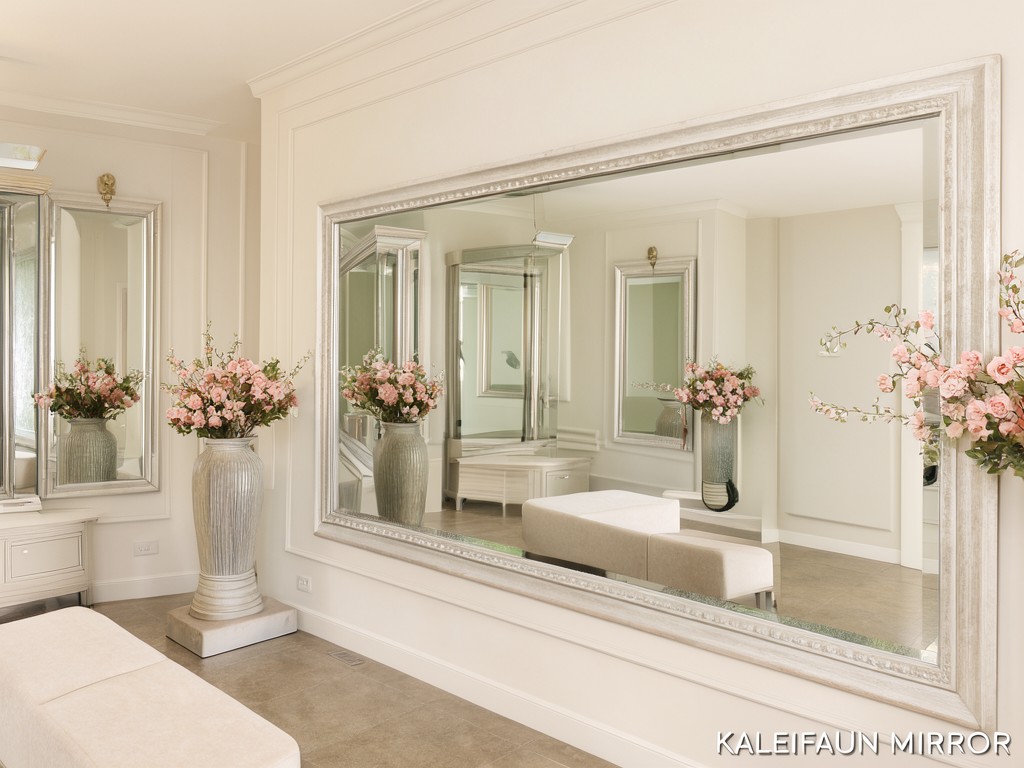
For residential foyers, hotel entrances, and furniture retail programs, the usual supply is a large silvered-glass panel with a protective backing, supplied either frameless or within a structural frame. The order can also include wall hardware, protective corner pieces, and retail or project labeling. Confirm whether the price covers the mirror alone or the complete hanging set; hardware selection depends on the mirror’s finished weight and the wall construction at the destination.
Mirror production generally involves glass cutting, edge grinding or polishing, washing, reflective coating, backing protection, and final assembly. Large panels need careful edge control because chips formed during cutting or handling can become visible after framing or grow into cracks during installation. Frameless designs put the polished edge on display; a frame can protect the perimeter, but adds cost, weight, and another finish that must hold up to cleaning and sunlight.
Design Constraints Behind the Specification
Repeated door traffic and cleaning make perimeter protection a practical design choice, not just a styling detail. Open edges are easier to wipe but more exposed to knocks and moisture; a frame shields the glass edge, though its joints and finish become potential points of wear. In bright foyers, UV exposure can also affect some frame finishes and backing materials, so approve the actual finish and backing combination rather than relying on a general “indoor use” description.
Frameless, Polished Edge
This option keeps the outline visually light and avoids a separate frame finish. It places more responsibility on edge polishing, corner protection, and installation handling. Specify the edge profile and corner shape on the approved sample or drawing.
Framed Perimeter
A frame can cover and protect the glass edge and create a defined retail style. Aluminum, steel, and wood options carry different weight, finish, and cost implications. Check corner joints and finish continuity, especially if the mirror will sit in a sunlit or frequently wiped entryway.
Cleaning practice belongs in the product brief. Abrasive pads can scratch the reflective face, while cleaner that runs behind the mirror can attack the backing or collect at an unsealed edge. Give distributors and end users care guidance that calls for a soft cloth and controlled application; do not position a standard interior mirror as suitable for an exposed outdoor location or persistently wet wall.
Specification Range and Customisation Limits
Large-format programs commonly use panels around 1,200–2,000 mm high and 600–1,000 mm wide, with the final range dependent on the factory’s glass handling capacity, frame design, and export pack. Glass thickness is often selected from 4–6 mm options; the appropriate choice depends on panel dimensions, support points, and the intended mounting method. Treat these as quotation ranges, not a substitute for an approved drawing and weight review.
Lock the build before comparing unit prices. Record finished width and height, glass thickness, edge treatment, backing, frame material and finish, hardware, and pack method on the same revision. A change to panel size or frame can alter finished weight and freight cube, even when the mirror’s appearance remains similar.
Custom dimensions, frame colors, logo labels, and private-label cartons are generally practical options, subject to material availability and order volume. A custom frame color may require a separate finish setup or minimum run; a stock finish can shorten replenishment and simplify color matching across repeat orders. Confirm whether the approved sample is a visual reference only or the production control sample for dimensions, finish, and hardware placement.
Inspection Items and Test Methods
Fatigue appears at the stress concentration: for a mirror, that often means a chipped corner, a poorly supported edge, or a hanging point that carries more load than intended. Factory inspection should check overall dimensions, squareness, visible scratches, edge chips, coating and backing defects, frame joints, and hardware position against the approved specification. A straight-line or grid reflection check can reveal visible distortion across the panel; agree on the viewing conditions and acceptance criteria before bulk production.
For framed models, inspect finish coverage and corner alignment, then verify that the hanging hardware matches the released drawing. A sample installation or load check can help confirm the hardware arrangement, but it does not replace confirmation of the buyer’s wall type and installation method. Where sunlight or humidity exposure is a concern, review the backing and frame finish with the factory and assess a representative sample under the intended care conditions; do not infer outdoor suitability from a finish description alone.
Batch records should connect the production lot to the approved sample, inspection notes, and packing configuration. That traceability gives the buyer a practical route to investigate recurring edge damage, reflection complaints, or finish variation between replenishment orders.
Export Packaging and Handling Protection
Repeat loading drives the failure risk at corners and edges, so packaging must restrain the panel without placing hard pressure on the glass. Individual foam or molded corner protection, a face separator, and a rigid carton or crate can reduce movement in transit; the correct combination depends on mirror size, gross weight, handling route, and whether the shipment is palletized. Confirm the pack with a sample shipment or agreed handling trial before committing to a recurring export program.
| Pack Element | Buyer Check | Cost and Handling Effect |
|---|---|---|
| Face and corner protection | Confirm the face separator and corner pieces stay in position without pressure on the glass edge. | More protection adds pack material and volume; it can lower the cost of transit damage and replacement handling. |
| Carton or crate | Review rigidity, closure, stacking arrangement, and protection against moisture during storage and transit. | A crate can suit heavier or more exposed routes, while a carton may use less freight space when the panel and handling route allow it. |
| Pallet and shipping marks | Align pack count, orientation marks, handling instructions, and retail or importer labels with the receiving warehouse. | A confirmed pallet pattern reduces receiving delays and helps prevent incorrect handling at cross-dock points. |
Before shipment, compare the packed dimensions and gross weight with the freight quotation and warehouse limits. Ask the factory to keep the approved pack specification with the production record; a packaging change can affect both damage exposure and the landed cost per saleable mirror.
Quotation Review
For a quote that supports an accurate cost-per-saleable-unit review, send the target dimensions, glass and frame preferences, hanging method, finish reference, destination, estimated order volume, and packaging requirements. Include any retailer labeling or private-label artwork, plus the expected reorder pattern. The factory can then price the same construction and export pack across the initial order and forecast replenishment.
Share a drawing or reference sample for quotation review, and ask for confirmation of sample timing, production lead time, minimum order quantity, and packing details. Send your mirror specification for a factory quotation.