Specifying Wholesale full length mirror for bedroom entryway Suppliers for Wholesale and OEM Orders
Selection rule: choose silvered glass when an undistorted, full-height reflection is the priority; choose an acrylic mirror only when lower shipping weight and reduced breakage exposure outweigh greater scratch risk and possible image waviness. Frame finish, edge protection, and export packaging should match the expected cleaning and handling conditions.
In a narrow entryway, a full-length mirror must show a complete outfit without obstructing a door swing or occupying too much floor space. When a brand extends an existing range, the practical decision is whether to keep the approved outline and mounting format or change materials to meet a new freight or retail target. Hold the external dimensions and mounting position constant when range continuity matters; revise the material only after reviewing reflection quality, weight, and packaging needs.
What the Design Has to Balance
A tall mirror needs enough reflective area for a head-to-shoe view, but added height and width increase glass weight and carton size. In a bedroom, a leaning format can avoid wall drilling; in a shared entryway, a wall-mounted format keeps the floor clear and reduces the chance of a knock shifting the mirror. The hardware, frame depth, and finished dimensions therefore need to be selected as one specification rather than as separate catalogue options.
The frame protects the glass edge and sets the visual profile. A slim metal frame saves visual bulk but leaves less room to conceal edge variation, while a wider frame can cover the perimeter and support a more substantial hanging arrangement. For rooms with strong window exposure, confirm that the frame coating and backing materials suit prolonged light and heat; direct sun can raise surface temperature and accelerate finish changes.
How It Performs in Use
Glass Mirror
Silvered glass generally gives a steadier image across a large viewing area and resists routine surface scratching better than acrylic. Its added weight and breakage risk call for suitable wall fixings, edge protection, and careful export packing.
Acrylic Mirror
Acrylic lowers shipment weight and avoids glass shards, but the surface marks more readily and a large panel can show image distortion if its support is uneven. Specify a flat, continuous backing and protective face film through storage and installation.
For either construction, use a soft cloth and a mild, non-abrasive cleaner on the reflective face. Keep liquid away from exposed edges and joints, where repeated moisture can damage the reflective backing or corrode metal fittings. Bedroom and entryway mirrors are not intended for direct chlorine contact or sweat exposure; where a mirror may sit beside a bathroom or fitness area, specify edge protection and a cleaning instruction that excludes harsh chemicals.
Materials and Construction Trade-offs
For the common glass version, the mirror is produced from float glass with a reflective silvering system and protective backing, then assembled into a frame with the specified support or hanging hardware. Glass thickness is usually selected against panel size, frame support, and the intended mounting method; a thicker pane adds weight and freight cost, so it should not be chosen without a mechanical reason. Confirm the agreed glass thickness and finished size on the approved sample.
Aluminum frames reduce mass and suit a narrow profile, while steel can provide a firmer section at the cost of added weight and corrosion-control requirements. Wood or engineered-wood frames allow a warmer retail appearance but need stable joints and a finish suited to normal indoor humidity. Surface options should be checked for colour match, coating coverage at corners, and resistance to abrasion from handling and routine dusting.
Matching the Product to the Buyer's Need
Keep the approved silhouette, frame colour, and mounting arrangement when the aim is to add a private-label item to an established range without redesign. A new material or finish can alter both unit cost and case-pack efficiency, so compare landed packaging dimensions alongside the product sample. If the mirror will be leaned against a wall, confirm the intended support and anti-tip provision; if it will be wall mounted, align hardware placement with the buyer's installation instructions.
Specification checkpoint: approve one reference sample for reflection, frame finish, edge coverage, hardware position, and carton protection. Treat any change to glass or panel material as a new approval point, even if the outside dimensions remain unchanged.
Requirements by Buyer Segment
A home-furnishing importer typically prioritizes a stable retail appearance across repeat orders, manageable carton dimensions, and clear installation information. A private-label buyer may need the same frame profile in several finishes; locking the finish reference and packaging artwork before bulk production reduces avoidable variation. For a retailer with compact-store delivery, a lighter panel can lower handling weight, but only where the buyer accepts the surface-care and reflection trade-offs.
Buyers supplying rental apartments or multi-unit housing should focus on secure mounting, replaceable hardware, and protection against repeated moves. For sunlit bedrooms or entryways, request a finish sample under the intended lighting and avoid placing the mirror where direct sunlight creates sustained heat at the panel or frame.
How Consistency Is Held Across Batches
Batch checks should cover finished height and width, frame squareness, hardware position, visible edge coverage, and appearance of the reflection under a straight-line inspection. Compare frame colour and surface sheen with the approved reference under consistent lighting. A check of the mirror image from multiple viewing positions can reveal waviness that a quick face-on inspection may miss.
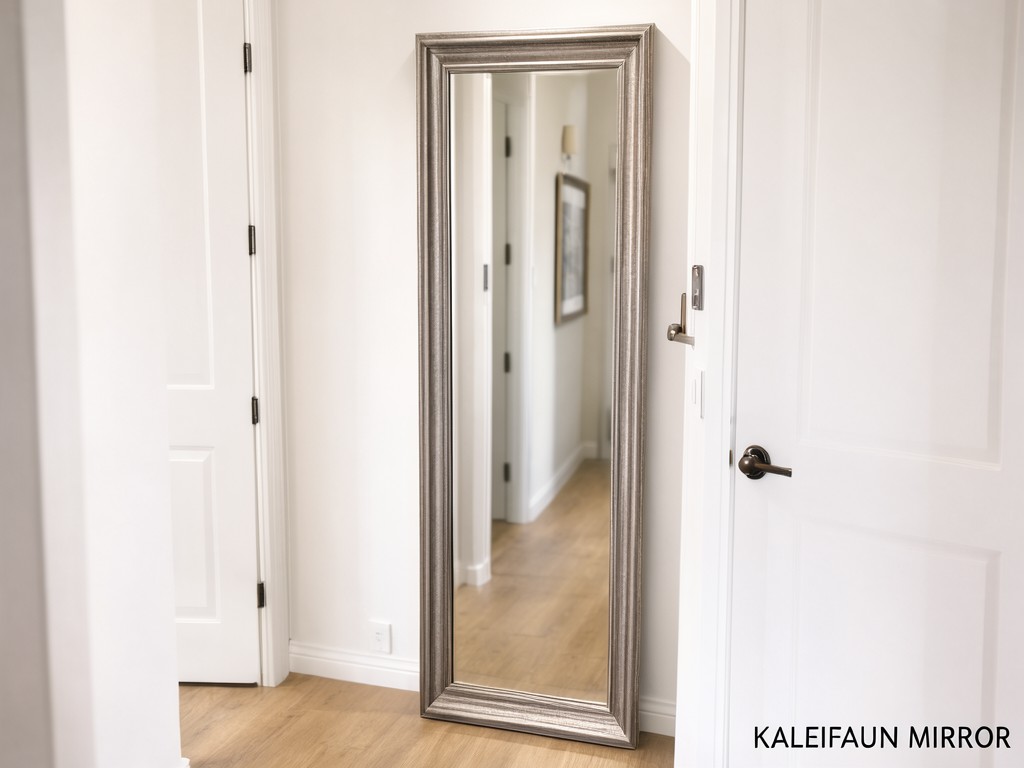
Before release, inspect corner joints, coating coverage, protective film, and attachment points; record the findings against the production lot and approved sample. Packaging checks should confirm that the mirror cannot shift inside its carton and that corners remain protected during normal warehouse handling. The final pack method depends on panel size, glass weight, destination handling, and whether the shipment moves as individual cartons or palletized freight.
| Packaging Point | Buyer Specification to Confirm | Purpose |
|---|---|---|
| Face and corner protection | Protective film, corner guards, and edge separation appropriate to glass or acrylic | Limits face abrasion and corner damage during packing and transit |
| Inner carton | Carton strength, internal restraint, and handling orientation | Reduces panel movement and contact with frame edges |
| Export marking | Private-label artwork, item identification, orientation, and handling marks | Supports receiving, warehouse handling, and retail allocation |
| Pallet or container loading | Carton orientation, stacking limits, and pallet footprint for the shipment plan | Helps prevent crushing and supports planned container utilization |
Questions Buyers Ask Before Ordering
Can the approved dimensions stay unchanged if the mirror material changes?
Often, but the frame support, panel thickness, and attachment method still need review. Acrylic and glass differ in weight and stiffness, and the same outline does not guarantee the same reflection quality or mounting behaviour. Approve a material-specific sample before confirming the production specification.
What information is needed for a private-label sample?
Send the target dimensions, frame material and finish, mirror material, mounting style, hardware details, and packaging artwork or label requirements. A physical finish reference helps control colour and sheen; final print files should be supplied in the agreed production format before carton approval.
How do order quantity and freight affect the pack design?
The carton structure depends on mirror dimensions, panel weight, destination handling, and the shipment configuration. Share the expected order volume and destination early so the supplier can review case packing and pallet loading before sample approval. Minimum order quantities and production timing depend on the selected materials, finish, and packaging scope.
Discuss Your Mirror Specification
Share your approved dimensions, reference sample, material preference, mounting format, target order quantity, and export-pack requirements. A focused project review can identify the details that need sample confirmation before the production run.