custom silver framed bathroom vanity mirror suppliers: What Buyers Should Check Before Ordering
Material choice starts with the conditions the product will meet: a vanity mirror faces repeated humidity, condensation and cleaning, not just showroom lighting. For private-label buyers, the specification should match the existing product and retail position without changing the wall footprint or mounting plan.
A silver appearance can come from an anodized or coated aluminum frame; it does not necessarily mean solid silver or stainless steel. Confirm the frame substrate, finish process, mirror backing protection and hardware together before comparing quotations.
The Problem Buyers Keep Paying For
| Specification to Confirm | Common Complaint | Cost Consequence |
|---|---|---|
| Frame substrate and silver finish | Finish marks, tarnish-like discoloration or corrosion at joints | A better-suited finish can add unit cost but lowers replacement and claim exposure in humid bathrooms. |
| Mirror edge and backing protection | Dark edge spots or backing damage after moisture reaches an unprotected edge | Edge finishing and compatible backing protection add process steps; the trade-off is fewer early-life returns. |
| Frame joint and mounting layout | Corner gaps, a loose frame or mounting points that miss the installer’s anchors | A drawing-approved joint and hole pattern avoid rework and site modifications. |
Cost and durability pull in opposite directions once the frame profile, finish and mirror-edge treatment are fixed. A low-cost finish may suit a dry powder room, but regular condensation can expose weak joints and cut edges. Buyers should compare the complete assembly rather than the frame colour alone.
Rework often starts with a small mismatch: the frame stands proud of the approved depth, a hanger shifts the mirror off-center, or the silver tone differs between production lots. Lock the drawing, finish reference and mounting coordinates at sample approval.
How It Performs in Use
Mirror glass carries the reflection; the frame protects its perimeter and establishes the visible profile. In a typical build, the glass is cut and edge-finished, its reflective backing receives protective coats, and the finished panel is assembled into a fabricated metal frame. The frame finish and edge seal matter most where steam and cleaning moisture collect.
Construction options diverge as soon as weight matters. A wider aluminum profile can add stiffness and a deeper visual border, while a narrow profile uses less material and may reduce shipping weight. Neither choice compensates for incorrect wall fixings or a mirror size that exceeds the approved mounting layout.
Anodized Aluminum Profile
A practical choice where buyers want a metal frame with a consistent silver tone and restrained weight. Confirm the profile shape, corner connection and finish sample; visible tone can vary with alloy, surface preparation and lighting.
Coated Aluminum Profile
A coating gives more control over the silver shade and sheen, subject to the coating system and preparation. It adds a process stage, so the buyer should approve the actual finish sample and check corners for coverage before bulk release.
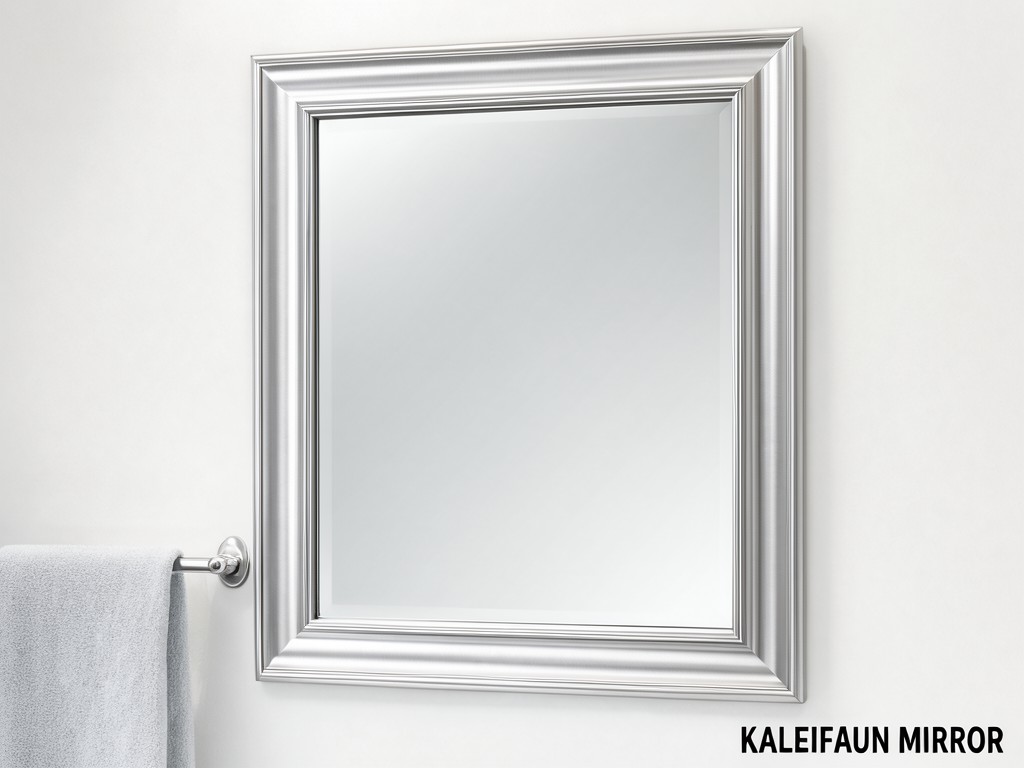
Fit and moisture rule: keep the glass edge, frame channel and backing protection compatible as one assembly. If the bathroom sees frequent steam or splash, specify the edge treatment and frame joint details rather than relying on the word “silver” in a finish description.
Size, Weight and Specification Range
Vanity mirrors are commonly specified by outside frame dimensions, not glass size. Usual custom programs cover widths around 400–900 mm and heights around 600–1,200 mm, with the final range set by the frame profile, glass thickness, mounting method and carton limits.
For planning, 4 mm mirror glass weighs about 10 kg per square metre and 5 mm glass about 12.5 kg per square metre, before adding the frame and hardware. Confirm finished unit weight from the approved drawing, especially when the retailer has a parcel-weight threshold or the installer uses specified wall anchors.
- Record outside width and height, glass thickness, frame face width and overall depth on the same drawing.
- Specify the silver tone, sheen and acceptable visual variation against a physical sample or controlled reference.
- Show hanger position, orientation, supplied fixings and the clear area required for wall hardware.
- State whether the mirror must be packed flat, with corner protection, or with additional separation for mixed-SKU cartons.
Requirements by Buyer Segment
A brand product manager usually needs a repeatable match to an existing range: frame depth, silver tone, retail carton dimensions and the current installation method should remain stable. Approve one reference unit against the brand specification, then define which changes require a new sample rather than treating each reorder as a fresh design.
An OEM buyer focused on cost-efficiency should separate fixed requirements from options. Keeping a supplier’s existing extrusion profile can avoid dedicated tooling and reduce setup cost; a custom profile can improve the intended look but brings tooling expense and a longer first-order path. For distributors, pack-out, barcode placement and damage control in transit may outweigh a small unit-price saving.
Capacity, Tooling and Scheduling
Standard profiles let a factory schedule frame cutting and assembly with fewer setup changes. A custom extrusion requires profile drawings, die preparation and a first-article check; its cost is usually spread across the order quantity, so larger releases can reduce the tooling share per unit. Ask whether the quoted tooling is a one-time charge, who retains it and what happens if the profile needs revision.
Volume also changes production planning. Small runs can carry higher per-unit setup and packing costs, while larger orders may need staged glass cutting, finish batches and carton allocation. Lead time depends on profile availability, finish capacity, sample approval and the requested quantity; obtain separate estimates for first production and repeat orders rather than treating them as the same schedule.
Scheduling checkpoint: include drawing approval, finish-sample approval, production quantity, inspection window, export packing and vessel or collection date in the quotation review. A late change to frame dimensions can affect both extrusion yield and carton fit.
Stock Availability and Reorder Planning
Stock status may apply to the frame profile or packing materials, not to a finished mirror in the buyer’s exact size and finish. Confirm which components are held, how long the silver finish reference remains available, and whether glass is cut to order for each release.
For reorders, retain the approved drawing, physical finish reference, carton artwork and hardware list under one SKU record. Forecast seasonal demand early if the program uses a custom profile; standard components can shorten replenishment, but they do not remove production time for cutting, assembly and export packing.
Setup, Use and Replacement Parts
Installers need the actual finished weight, hanger location and fixing instructions for the supplied unit. Wall substrate and anchor selection remain site-specific; do not assume that a fixing included in the carton suits every wall type.
For routine care, use a soft cloth and a non-abrasive cleaner, then dry the frame joints and lower edge. Avoid letting standing water or harsh cleaner remain in the frame channel. If a unit is damaged, buyers should identify whether replacement glass, hangers or a complete framed assembly is available, since frame construction can limit field replacement.
Questions Buyers Ask Before Ordering
Can an existing mirror specification be matched without a new frame profile?
Often, if the supplier has a compatible stock extrusion and the required outside dimensions, face width and depth fit that profile. Provide the drawing or a reference unit; changing only the frame dimensions may still require a different profile or cutting setup.
What drives the minimum order and unit price?
The quantity, custom tooling, finish batch size, glass dimensions and packaging configuration all affect the offer. A larger order can spread tooling and setup costs across more pieces, but it may also require staged production or storage planning.
What should be approved before a repeat order?
Keep the signed drawing, finish sample, mounting layout, carton specification and approved sample record. If any of these change, request a written impact on cost and lead time before releasing the reorder.
Review a Quotation Against Your Specification
Send the target dimensions, finish reference, mounting drawing, order quantity and packaging needs for a quotation review. The comparison should separate tooling, unit price, sample approval and repeat-order lead time so your team can assess the full cost before committing.