Custom framed gold oval bathroom mirror Factory: What Buyers Should Check Before Ordering
The main cost choice is frame construction and finish, not the oval outline alone. A formed aluminum frame reduces weight and suits damp rooms; a steel frame can feel more substantial but needs a well-specified corrosion barrier. Agree the glass, frame section, gold tone, backing and mounting details on one approved drawing before comparing production quotes.
Design Constraints Behind the Specification
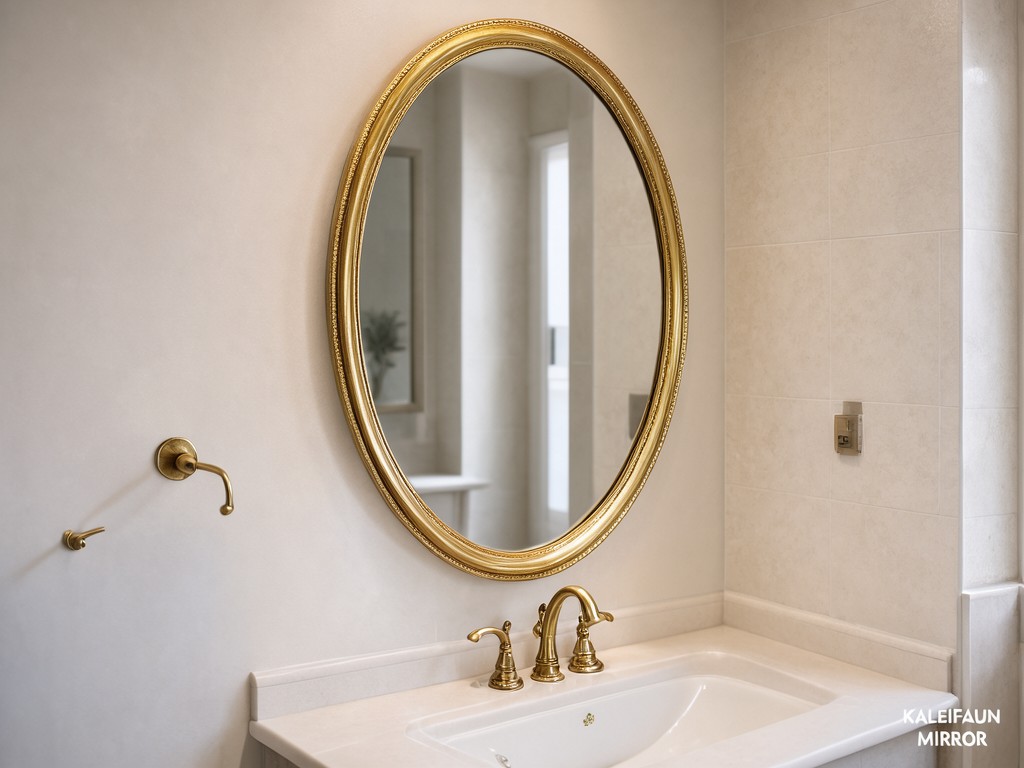
An oval mirror is judged by its outline, frame reveal and hanging position as a coordinated set. A small change to the oval’s width-to-height ratio can alter the visible frame area and the wall clearance around taps, lights or a vanity. The buyer’s drawing should state finished outside dimensions, glass dimensions, frame face width, corner-to-edge profile, orientation and the location of the hanger. A reference image alone does not define these details closely enough for a repeat order.
Deflection under load governs how the frame supports the glass and how securely the mirror sits on the wall. The glass edge should be protected by the frame or a suitable setting method, with no concentrated pressure at narrow points along the oval. Specify the glass thickness and backing treatment together with the mounting method; the factory can then check the assembled weight and select hanger hardware for the intended wall installation. Gold finish samples also need approval under consistent lighting, since a warm brushed tone and a bright reflective gold can look notably different beside bathroom fittings.
Measured Performance in Real Use
Balance and load analysis shows whether the mirror hangs level and whether the chosen hardware matches the assembled unit’s mass. That check matters most on larger formats, where glass thickness and frame material can change the total weight. Buyers should confirm the wall fixing is appropriate for the installation surface; mirror hardware does not make an unsuitable wall anchor safe.
In service, the common complaints are finish discoloration near a damp edge, a loose hanger, chipped glass at an exposed edge or a frame that no longer sits flat. A bathroom-rated finish system, protected mirror backing and secure mechanical support address different failure points; none substitutes for the others. For a second-source qualification, compare a production-representative sample against the approved finish chip, outline drawing and mounting arrangement, then record any accepted variation before bulk manufacture.
Comparing Two Standard Configurations
The following options are starting points for a specification, not fixed catalogue limits. Final dimensions, profile and finish depend on the approved drawing and production method.
| Specification point | Formed aluminum frame | Fabricated steel frame |
|---|---|---|
| Frame and finish | Lightweight section with an anodized or coated gold finish, subject to profile and tone approval. | Heavier fabricated section with a coating system selected to protect the metal and achieve the agreed gold appearance. |
| Glass and edge | Common glass choices include 4 mm or 5 mm mirror glass; polished oval edges and backing options must appear on the drawing. | Common glass choices include 4 mm, 5 mm or 6 mm mirror glass; confirm the frame rebate and support for the selected thickness. |
| Commercial trade-off | Lower assembled weight can reduce handling and freight burden, while profile tooling or finish matching may affect setup cost. | A more substantial frame feel may suit a heavier design, but added mass and coating requirements affect packing, installation hardware and unit cost. |
Choose Aluminum When Weight Matters
For larger retail formats or wall programs with tight freight targets, a lighter frame can lower packed and installed weight. Verify the gold finish against a signed sample, especially when multiple mirror sizes share one product family.
Choose Steel When Frame Presence Matters
A steel profile can support a more pronounced frame appearance, but its extra mass calls for matched hangers and protective packaging. Confirm coating coverage at joints and cut edges rather than judging the finish only from the front face.
Buying Mistakes That Lead to Returns
A gold colour name is not a finish specification. Without a physical sample or an agreed colour reference, two acceptable production lots can still look mismatched beside other bathroom hardware. Approve the actual finish on the selected frame material, and identify whether the target is brushed, satin or reflective.
Another avoidable return begins with a drawing that shows only the outside height and width. Oval geometry, frame face width, glass reveal, hanger position and orientation all affect fit and appearance. A sample should be checked against the retail artwork and installation plan before approval; if a dimension changes afterward, revise the drawing and re-confirm the sample rather than relying on an email description.
Requirements by Buyer Segment
Retail buyers need a repeatable face appearance across sizes, clear carton identification and packaging that limits glass edge damage in distribution. Distributors often prioritize a stable specification that can serve several customer accounts without changing the approved gold tone or hanger arrangement. Brand product managers typically need the drawing, finish sample, packaging artwork and approval record tied to one item code before release.
For second-source qualification, define the commercial assumptions alongside the product file. Minimum order quantity and schedule depend on frame process, finish setup, glass format, packaging and whether a new sample or artwork approval is required; the supplier should state these items in the quotation rather than imply one standard threshold.
| Order planning item | What to confirm in the quotation |
|---|---|
| MOQ basis | State whether the minimum applies per size, finish, frame material or combined order, and identify any setup charge for a new profile or finish. |
| Schedule basis | Request a schedule that begins from drawing, finish sample and artwork approval, with any material procurement or packaging dependencies identified. |
| Reorder control | Record the approved sample reference, drawing revision, carton specification and batch identification method so repeat orders use the same basis. |
Quality Control and Batch Consistency
Consistency depends on checking each production lot against the same controlled drawing and approved reference sample. Inspection can cover overall height and width, oval symmetry, frame face width, hanger position, glass edge condition, assembled mass and finish appearance. The acceptable dimensional tolerances should be agreed before production and shown on the drawing; a factory cannot apply a buyer’s unstated fit requirement consistently.
Finish checks should include visible faces, joints and edges, with sample comparison under agreed viewing conditions. Assembly checks should confirm that the glass is retained without point pressure and that the hanger is secure for the specified design. Packaging approval is also part of batch control: a well-finished mirror can still arrive as a return if the carton allows movement or exposes the oval edge to impact during transit.
Keep the approved drawing revision, finish reference and inspection record linked to each production batch. For a second source, this record lets the buyer compare the supplier’s sample and first shipment against the same acceptance basis as the incumbent program.
Send the current drawing, target gold finish reference, glass and backing requirements, mounting details and carton artwork for a quotation review. A side-by-side review can identify specification gaps before sample approval and give your team a documented basis for qualifying a second source. Request a quotation review.