custom oval gold brass bathroom mirror factory: Specification, Ordering and Quality Notes
Weight and stiffness trade off against each other. A wider brass surround can give an oval mirror a firmer edge profile, but adds load to the wall fixing and to each export carton. Glass thickness, frame section and hanger position therefore need to be approved together; changing one after sampling can affect assembled weight, mounting clearance and freight protection.
For OEM batches, the schedule risk often sits between sample approval and repeat production. A finish described only as “gold” can vary by tone, sheen and visible grain, while oval dimensions measured at different points can drift between suppliers. Lock the overall height and width, frame profile, finish reference, mirror backing treatment and fixing layout on one approved drawing and sample before confirming the production slot.
What the Design Has to Balance
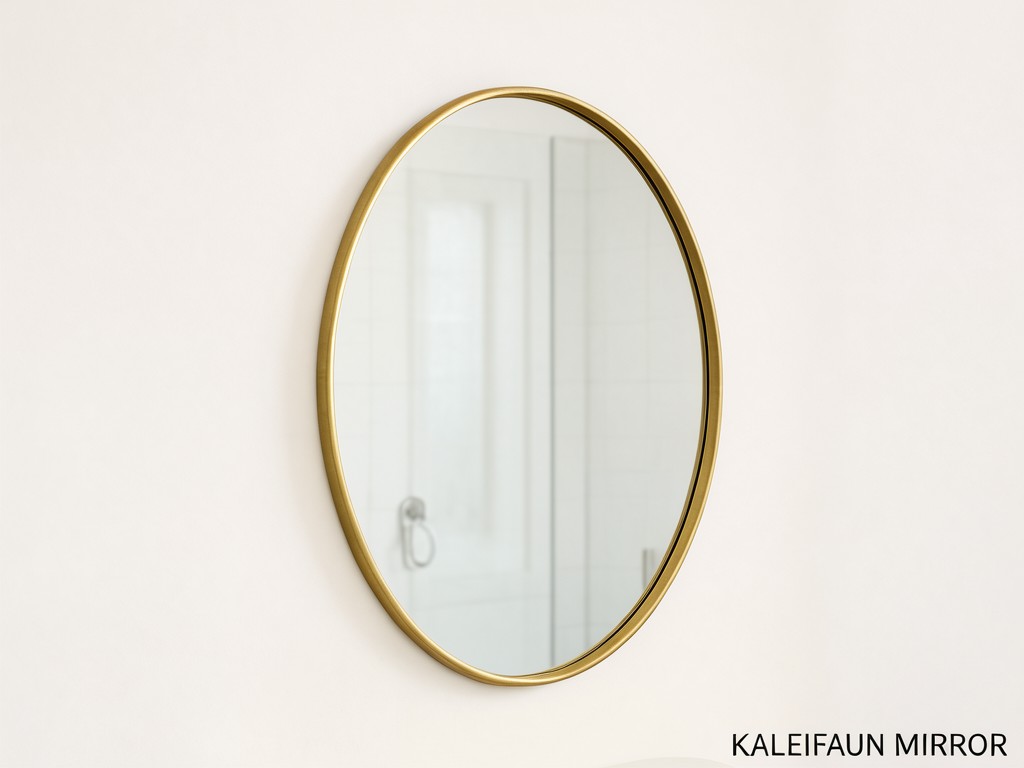
A bathroom mirror is judged by its reflection, touch points and how it sits on the wall. A narrow frame keeps the silhouette visually light, but leaves less room to conceal the glass edge and retain a consistent profile around the oval. A deeper or broader brass frame gives more visual weight and can cover the edge more fully, at the cost of added mass and a larger packing envelope.
Repeated exposure to warm, humid air and cleaning products puts the finish and mirror perimeter under more stress than a dry room does. Specify a protected frame finish and a sealed glass edge for bathroom placement; the exact coating system should be confirmed against the intended cleaning routine. Rounded, smooth frame edges also matter at hand height, where sharp seams or uneven joints are readily noticed during daily use.
Freeze the assembled specification, not just the glass size. Record overall oval dimensions, frame projection, glass thickness, hanger location and finished unit weight on the same approval document. That gives production and the buyer one reference for fit, carton design and wall-fixing guidance.
How It Is Built and What That Changes
A common build route forms brass sheet or profile into an oval frame, joins and finishes the frame, then fits the mirror glass and rear hardware. The gold appearance may come from a plated finish or a PVD coating system over prepared brass; the process and protective top layer affect both the unit price and the available tone. Mirror backing and perimeter sealing are separate from the frame finish and need their own inspection points.
| Inspection point | Factory check | Release reference |
|---|---|---|
| Oval size and profile | Measure overall height and width, frame projection and symmetry against the approved drawing. | Buyer-approved dimensions and agreed tolerances. |
| Brass joint and touch edge | Check the joint for visible gaps or distortion; inspect exposed edges by sight and touch. | Approved sample and appearance criteria. |
| Gold finish | Compare tone, sheen and visible coverage with the signed finish sample under agreed viewing conditions. | Approved finish sample; confirm any batch-to-batch colour allowance before order. |
| Mirror and rear assembly | Inspect the reflective surface, backing condition, edge seal, hanger attachment and assembled weight. | Approved construction, drawing and sample. |
A pre-production sample is useful only if it represents the production route. If the sample uses a different finish process, frame joint or rear fixing, its appearance and weight may not predict the shipment. Buyers should approve a sample built with the intended materials and confirm which inspections will be recorded for each batch.
Where This Product Beats Standard Alternatives
Custom production earns its cost where a retailer needs an oval size, mounting layout or gold tone that does not match stocked formats. Matching the frame profile and fixing position to a vanity range can reduce fit complaints; matching the production finish to a retained sample can also limit visible variation across replenishment orders. Standard stock can cost less per unit, but substitutions in size or finish may create more work at listing, installation or returns.
For a launch date, the useful comparison is total landed cost rather than the frame price alone. A short run with custom tooling or finish setup may carry a higher unit cost, while agreed drawings, retained samples and batch records help avoid rework and warranty claims on later orders. Ask the factory to confirm the sample approval deadline, material availability, production lead time and packing method before fixing the retail ship date.
Option Comparison by Usage Level
Residential and Occasional Use
A lighter frame section and a plated gold finish may suit a price-led retail range with normal bathroom use. Confirm the protective layer and cleaning-care instructions; finish wear can show first at edges, joints and frequently touched areas.
Hospitality and Frequent Use
A more substantial frame and a finish system selected for repeated cleaning can be considered for guest bathrooms or multi-unit projects. The added material and finish cost should be weighed against replacement labour, room downtime and the buyer’s warranty exposure.
| Construction choice | Best fit | Cost and service trade-off |
|---|---|---|
| Plated gold appearance with a protective top layer | Retail programs where the approved colour and unit target lead the selection. | Often a more economical route; confirm finish compatibility with the buyer’s cleaning products and handling conditions. |
| PVD gold-tone coating over prepared brass | Programs that prioritize a specified surface appearance and a controlled finish process. | Process preparation and colour matching can raise setup cost; approve the actual brass sample before batch production. |
| Brushed or polished brass with a clear protective finish | Designs where visible brass character matters more than a uniform plated colour. | Surface grain and tone need a clear sample reference; unprotected brass can change appearance with humidity and handling. |
Assumptions Buyers Should Stop Making
A finish name is not a production specification, and a drawing with only overall dimensions does not control every visible feature. Those gaps usually surface as sample revisions, inspection disputes or rework close to the ship window. Set acceptance criteria before the order enters production.
- Do not assume “gold brass” means solid gold-coloured brass; identify the brass component, surface process, tone and sheen separately.
- Do not treat mirror glass thickness as the only fit dimension. Frame projection, rear hardware and wall clearance affect installation.
- Do not assume a bathroom-rated appearance proves resistance to every cleaner. Specify the cleaning agents and care guidance relevant to the sales market.
- Do not assume wall anchors suit every installation. State the finished mirror weight and fixing method; the installer must match anchors to the wall structure.
- Do not rely on a verbal colour match for repeat orders. Retain an approved finish sample and agree how production batches will be compared with it.
Packing, Marking and Freight Configuration
Oval glass and projecting metal edges need protection from both face impact and movement inside the carton. Pack each mirror so the frame cannot rub against the glass or another unit; confirm the carton orientation, cushioning and pallet pattern with a transit sample before bulk dispatch. A larger frame may push carton dimensions into a less efficient freight configuration, so price packing with the finished size and weight rather than the glass size alone.
- Use corner and edge protection shaped to the oval profile, with a face separator that does not abrade the gold finish.
- Agree carton marks, item code, finish identification, quantity and handling symbols before artwork release.
- Keep batch identification linked to the approved finish sample and inspection record for later replenishment or claim review.
- Confirm whether units ship individually or in master cartons, then validate the packed dimensions and gross weight against the freight plan.
Request a production-route sample before booking the launch shipment. Send the target oval dimensions, finish reference, mounting layout, forecast quantity and destination market. The factory can review the sample scope, packing plan and timing against the required ship date.
Request a custom mirror sample