Wholesale Decorative Oval Bathroom Mirrors Supplier - Bulk Supply and Specification Guide
The complaint that repeats across reorders is often not a broken mirror; it is a visible mismatch in oval proportions, frame finish, or edge appearance. Those differences can turn a low unit price into markdowns and returns. For private-label and retail buyers, repeatable dimensions and a construction suited to bathroom humidity matter more to cost per unit sold than the lowest purchase price alone.
Scope of Supply and Physical Form
Decorative oval bathroom mirrors are made from shaped mirror glass, with the exposed edge either polished or covered by a frame. A typical build uses silvered glass, a protective backing coat, and wall-mounting hardware; frame options include aluminum, steel, wood, or molded materials. The selected frame and backing affect purchase cost, visual weight, moisture tolerance, and how easily a retailer can service or replace the mounting hardware.
The reflective surface works through a deposited reflective layer behind the glass. A protective backing separates that layer from wall contact and helps limit damage from moisture at the rear. Since bathrooms expose edges and hardware to repeated humidity and cleaning, the mirror’s service life depends on the complete build—not glass thickness alone.
What Actually Determines Performance
Returns usually trace back to the perimeter or the mounting arrangement. Moisture can reach the reflective layer through an inadequately protected edge; frequent cleaning can expose weak frame finishes; and a mounting system that depends only on adhesive can be difficult to remove or replace. Specify the use conditions and installation method first, then choose the glass, edge treatment, frame, and hardware as a matched set.
For humid rooms, request a backing and perimeter treatment intended for bathroom use, and confirm how the frame protects the glass edge. That specification reduces the chance of early edge spotting; it does not make the mirror suitable for direct, standing water or outdoor exposure.
| Bathroom Use Condition | Complaint Seen After Sale | Specification and Retail Pack Detail |
|---|---|---|
| Daily humidity and condensation near the basin | Dark spots or deterioration that starts at an exposed edge | Define bathroom-suitable backing protection and specify polished, protected, or frame-covered edges. Keep the mirror away from direct water exposure. |
| Regular wiping with household bathroom cleaners | Frame finish dulls, discolours, or shows wear around corners | Match the frame finish to the expected cleaning routine and give care guidance that excludes abrasive pads and harsh chemicals unless the finish supplier confirms compatibility. |
| Wall mounting with repeated removal or refitting | Mounting points loosen, or the mirror is hard to remove without damage | Choose accessible mechanical brackets where serviceability matters; confirm wall type, orientation, and fixing method before release. |
| Retail shelf handling before installation | Corner chips or face scuffs are found at store or customer opening | Set a retail-pack specification with face protection and corner guards appropriate to the frame profile; confirm barcode and private-label artwork placement. |
Size, Weight and Specification Range
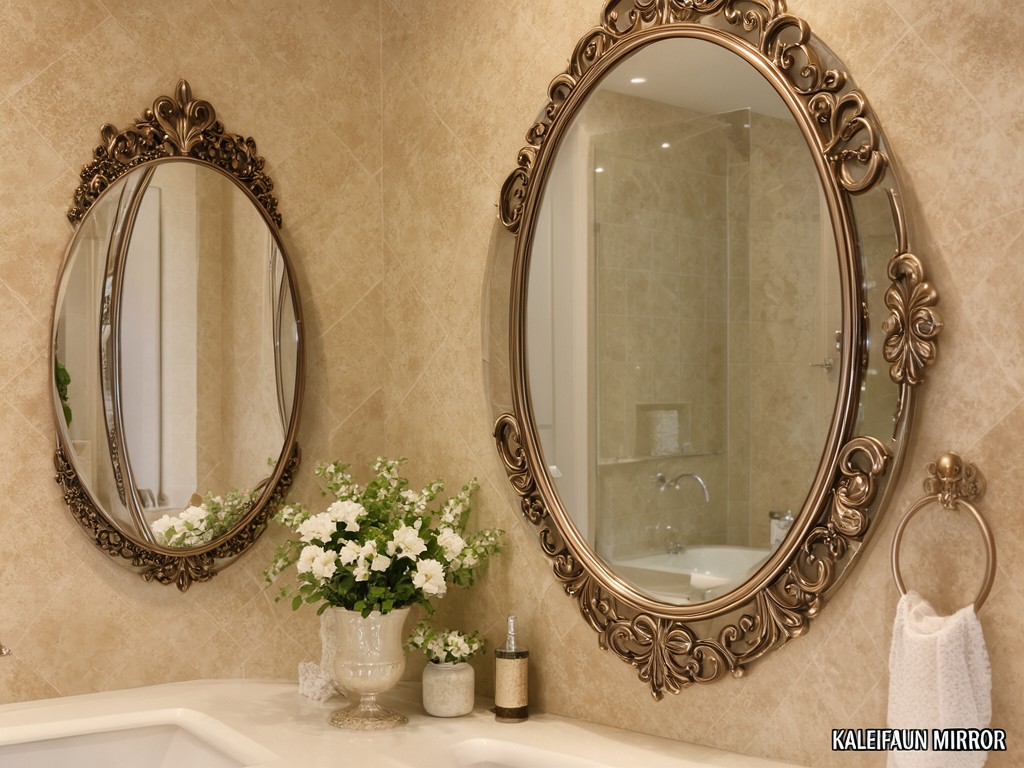
Oval mirrors are specified by overall height and width, glass thickness, frame depth, and mounting orientation. For a repeatable retail listing, lock the finished outside dimensions and define whether those measurements include the frame. Small changes to the oval profile can alter the apparent proportions even when the height stays constant.
Four-millimetre mirror glass is a common starting point for many wall-mounted designs; a 5 mm build adds glass mass and stiffness but also raises material and handling cost. As a planning estimate, 4 mm glass weighs about 10 kg per square metre and 5 mm about 12.5 kg per square metre, before frame and hardware. The finished weight depends on the oval’s area and the frame construction, so mounting hardware should be selected against the completed mirror rather than the glass alone.
- Set an agreed dimensional tolerance for overall height and width, and approve the oval outline before the first production run.
- Choose polished exposed edges for a frameless look, or a frame that covers the perimeter where edge protection and a defined decorative finish take priority.
- Specify frame material, finish colour, depth, and corner construction separately; these choices affect both visual consistency and unit cost.
- Confirm the hardware position and portrait or landscape orientation on the approved drawing, especially when one design supports both mounting directions.
Requirements by Buyer Segment
Private-label buyers usually need the approved silhouette, finish, and pack artwork to remain stable between initial production and replenishment. A signed sample and controlled drawing help prevent a frame colour or oval ratio shift that makes the new batch look different on the same shelf. For a range with multiple sizes, use shared frame finishes and clearly separated product codes to reduce picking errors and customer confusion.
Retail buyers tend to weigh price against expected returns and the shelf appeal of the finished unit. A frameless polished-edge mirror can reduce frame material cost, while a framed option can conceal more of the perimeter and deliver a stronger decorative identity. For either route, installation instructions and a serviceable fixing method can reduce complaints after the customer opens the box.
Capacity, Tooling and Scheduling
A new oval outline requires a dimensioned drawing and a confirmed edge profile before production planning. A simple shape with standard glass thickness and an existing frame profile usually needs less development work than a custom frame section, unusual finish, or non-standard mounting arrangement. The added setup cost can be worthwhile when the design supports a distinct retail position or a larger repeat order.
Scheduling depends on sample approval, glass and frame material availability, finish selection, and artwork sign-off. Approve the physical sample and retail presentation together; a late change to the frame colour, mounting position, or label can affect the production slot. Reorders move more predictably when the drawing revision, finish reference, approved sample, and pack artwork are all identified in the purchase specification.
Ordering, Tooling and Lead-Time Questions
What details are needed to quote a custom oval?
Provide finished height and width, glass thickness, frame material and finish, edge treatment, mounting orientation, hardware preference, and order quantity. A drawing or physical reference helps clarify the oval profile and whether dimensions include the frame.
Does a custom frame or outline change the minimum order?
It can. A custom frame section, finish, or outline may require dedicated setup or material purchasing, so the minimum depends on the specification and supplier availability. A standard frame profile and existing finish can lower setup exposure; confirm the order quantity after the sample and material plan are agreed.
What affects the lead time after sample approval?
Glass and frame availability, finish production, order volume, and final artwork approval are the main variables. Confirming the approved drawing, colour reference, hardware, and retail label together avoids a schedule reset caused by specification changes.
Request a Specification Review
Send your target size, retail price position, bathroom-use conditions, preferred frame, and planned order quantity. A specification review can identify where glass thickness, edge protection, or mounting choices affect cost per unit sold before sample approval.