Specifying bulk long full length bedroom mirrors b2b supplier for Wholesale and OEM Orders
Material choice starts with the conditions the mirror will meet: bedroom humidity, wall or floor placement, the distance between supports, and the route from factory to retail shelf. A long mirror can look acceptable in a sample yet arrive with edge damage or show a visibly bowed reflection after installation. Glass thickness, backing construction, frame stiffness and carton support each affect a different part of that risk, so buyers should approve them as one specification rather than as separate options.
For repeat orders, a lower unit price can lose its appeal if a thin frame twists in transit, a backing layer lifts at an edge, or the reflection differs across production batches. Those complaints often trace back to a drawing that defines the outside dimensions but leaves glass, edge finish, mounting points or packaging open to interpretation. Set those details against the intended placement and sales channel before confirming the sample; the result is a more useful cost comparison and a clearer basis for reorder approval.
The Problem Buyers Keep Paying For
Returns tend to cluster around a few visible faults: chipped corners, broken glass, dark marks near the perimeter, loose frame joints and reflections that appear wavy. A mirror that reaches the customer intact can still disappoint if the wall is uneven and the mounting arrangement pulls the frame out of plane. These are not interchangeable defects; glass processing, edge protection, frame geometry and installation hardware each need a defined acceptance point.
| Inspection point | Practical check at sample or production stage | Complaint it helps prevent |
|---|---|---|
| Overall dimensions and squareness | Measure against the approved drawing; compare diagonals and frame alignment. | Fit problems, uneven frame gaps or a mirror that sits crooked. |
| Reflection and surface appearance | Review the face under agreed lighting and viewing conditions; check for visible distortion, scratches and coating marks. | Wavy images, blemishes or batch-to-batch appearance differences. |
| Edges, backing and frame joints | Inspect edge finish and backing coverage; check joint fit and mounting-point attachment. | Edge chips, early backing deterioration, loose corners or failed hardware. |
| Packed unit and shipment protection | Review corner guards, face separation, carton fit and the agreed handling-validation method for the shipment route. | Transit breakage, rubbed faces or pressure damage at the corners. |
What the Design Has to Balance
Construction options diverge as soon as weight matters. Thicker glass can give a long panel more stiffness, but it adds shipping weight and raises the demands on the frame, wall fixings and protective packaging. A lighter build can reduce freight cost, yet needs support designed around the mirror’s full height so the panel does not flex excessively during handling or use.
Frameless designs keep the outline visually simple and place more emphasis on edge finishing and concealed mounting. Framed versions can protect the perimeter and provide a defined mounting structure, though a weak corner joint or inconsistent frame section can create its own return pattern. Bedroom placement also matters: where the mirror may be moved often, specify stable floor support or secure wall mounting rather than relying on appearance alone.
Approve the complete assembly, not just the glass sample. The accepted reference should include mirror dimensions, glass and backing choices, frame profile, edge treatment, hardware locations and the retail packing method.
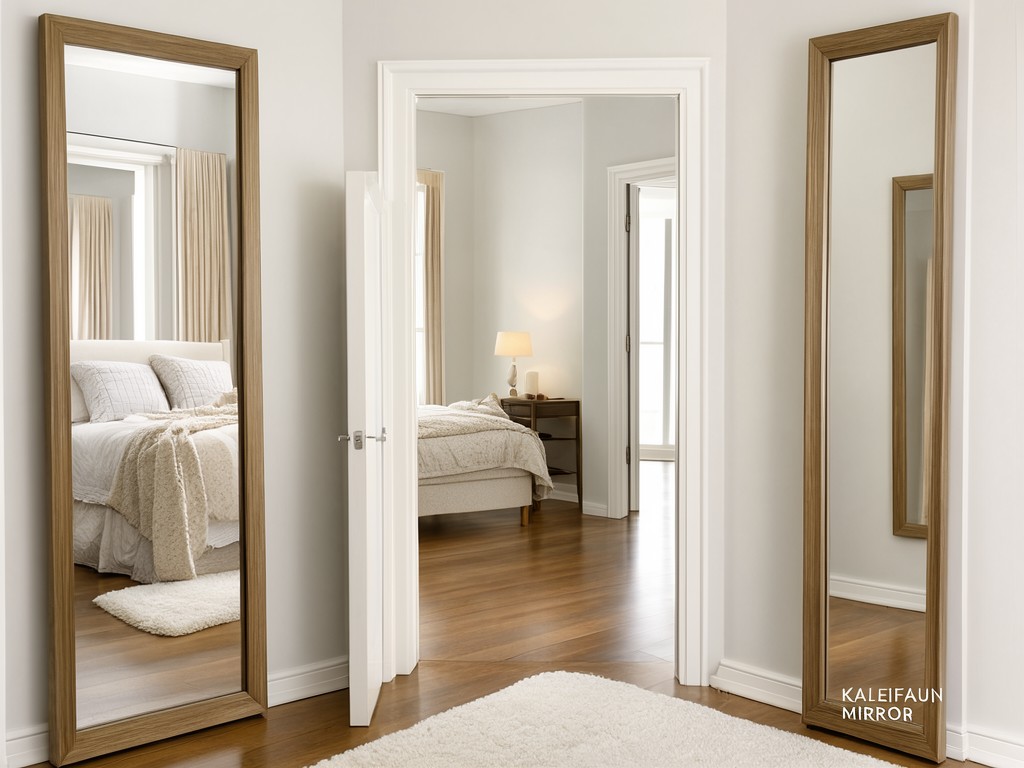
What Actually Determines Performance
A clear reflection depends on more than the reflective coating. Glass flatness, panel support and the way the finished mirror is held all affect what the user sees. If a long panel is forced against an uneven wall or a frame is not square, the reflection can appear distorted even when the glass face passed a basic visual review.
The reflective layer and protective backing also need suitable edge coverage. Moisture that reaches an exposed or poorly protected edge can contribute to darkening or deterioration around the perimeter. Specify the backing system and edge condition for the intended indoor environment, and assess the finished sample rather than assuming every mirror with the same nominal size will age alike.
Finally, packing is part of product performance for long glass goods. Full-length cartons need enough restraint to limit movement and corner impact without putting concentrated pressure on the mirror face. Confirm package dimensions, protective inserts and stacking orientation with the shipment plan; a packaging change can alter damage rates even when the mirror itself has not changed.
Where This Product Beats Standard Alternatives
A full-length bedroom mirror gives shoppers a single view for dressing, which suits bedroom furniture ranges, rental-property furnishing programmes and home retailers that need a practical vertical mirror rather than a small vanity format. Compared with a compact wall mirror, it serves a different use case and can become a stronger room-furnishing item when its footprint, mounting method and finish match the surrounding furniture.
The trade-off is handling and freight. Long panels need more protection, occupy more carton space and can be harder to move through a home than smaller mirrors. For wholesale buyers, the advantage is most relevant when the retail offer calls for a full-body view and the packaging plan can protect the unit through distribution without pushing landed cost beyond the target.
Option Comparison by Usage Level
Selection should reflect expected handling, merchandising position and target price. A lighter, simpler assembly may suit a value-focused range with careful home installation; a framed build with more perimeter protection may make better commercial sense where the item will be moved repeatedly or displayed on a sales floor.
Value-Focused Bedroom Range
A straightforward frame or frameless format can control unit cost and keep the visual profile restrained. Keep the glass, backing, mounting details and carton protection fixed across repeat orders; savings on trim or packaging are only useful if they do not raise damage and return costs.
Frequent-Handling or Premium Range
A stiffer frame, protected edges and more secure mounting can suit a product that sees frequent showroom movement or a higher retail finish expectation. The added material and packing cost should be weighed against fewer damaged units and a lower chance of visible frame or edge complaints.
Assumptions Buyers Should Stop Making
A sample that looks flat while leaning against a wall does not prove that the installed product will keep the same appearance. Support points, wall condition and frame alignment affect the finished result. Nor does matching outside size guarantee a matching product: a change to glass thickness, frame section or backing can shift weight, stiffness and packing needs.
- Do not treat all edge finishes as equivalent; confirm how exposed edges are finished and protected.
- Do not assume a wall-mounted mirror and a floor-standing mirror share the same stability requirements or hardware.
- Do not approve a carton by appearance alone; check fit, corner protection and movement control for the actual mirror configuration.
- Do not substitute materials or packing components on a reorder without confirming the change against the approved sample and drawing.
Working as a Production Partner, Not a Catalogue Supplier
Repeat-order control starts with a written product definition that both sides can check. For an OEM programme, that normally means an approved drawing, finish reference, hardware layout, packing specification and agreed inspection points. If a buyer is adapting an existing design, confirm which dimensions and components are fixed and which can change before the first production sample.
Private-label details can be planned alongside the package: retail labels, carton marks, barcode placement and language requirements should be supplied in usable artwork files with placement instructions. A sample request is also the right stage to compare frame finishes, edge treatments or mounting approaches against the target price and selling channel. Once approved, retain the sample and revision details as the reference for subsequent orders.
Lead time and minimum order quantity depend on the selected size, frame materials, finish and packaging configuration. Share the forecast, destination and required retail presentation early; this gives the production team a basis to confirm component availability and freight packing before the order is released.
Request a pre-production sample with your target dimensions, frame or frameless preference, mounting method and packaging requirements. Contact us to discuss a sample request and set the inspection details for your wholesale or OEM order.