custom entryway rectangular wall mirror suppliers - Bulk Supply and Specification Guide
Scope of Supply and Physical Form
Door-side vibration and repeated handling put stress on mirror fixings, edges and frame joints. A second source must match the approved size, reflection appearance and mounting layout; a small mismatch can turn a simple reorder into a site-fit problem. Set the glass thickness, edge finish, backing and hanging method against the mirror dimensions and installation conditions before comparing unit prices.
Rectangular entryway mirrors are generally made from cut float glass with a reflective coating and protective backing. Supply can include a frameless polished-edge panel or a mirror fitted into a wood or metal frame. Common glass thickness choices include 4 mm, 5 mm and 6 mm; the suitable option depends on the panel size, support points and frame design, not thickness alone.
For a repeat order, freeze the finished outside dimensions, glass dimensions, corner treatment, mounting-point locations and hardware set in one approved drawing. Safety backing can help retain broken fragments, but it does not make the mirror impact-proof or remove the need for suitable wall anchors.
Option Comparison by Usage Level
The lowest purchase price is not always the lowest landed cost. Larger panels need more careful edge protection and packaging, while frame material and mounting details affect both weight and installation time. Use the expected traffic and fitting conditions to choose the specification before you lock the quote.
| Entryway Use Condition | Complaint to Guard Against | Specification Decision |
|---|---|---|
| Low-traffic residential entry with a compact mirror and fixed wall position | Edge chips or inconsistent wall clearance after installation | Confirm finished dimensions, polished or bevelled edge, corner radius and the mounting hardware against the intended wall surface. |
| Shared apartment lobby or busy household where the mirror sees frequent contact | Backing damage, loosened fixings or breakage concerns after an impact | Review safety backing, glass thickness, frame support and a fixing arrangement suited to the panel weight and wall construction. |
| Retail or hospitality fit-out with repeated installations across multiple sites | Variation in appearance, hanging position or replacement-part fit between batches | Keep a controlled drawing and finish reference; specify matching frame profiles, hardware locations and protective pack-out for each reorder. |
Frameless Glass
A frameless panel keeps the profile simple and avoids frame-finish variation. Edgework and mounting hardware become more visible, so the buyer should approve the edge appearance and fixing positions before bulk production.
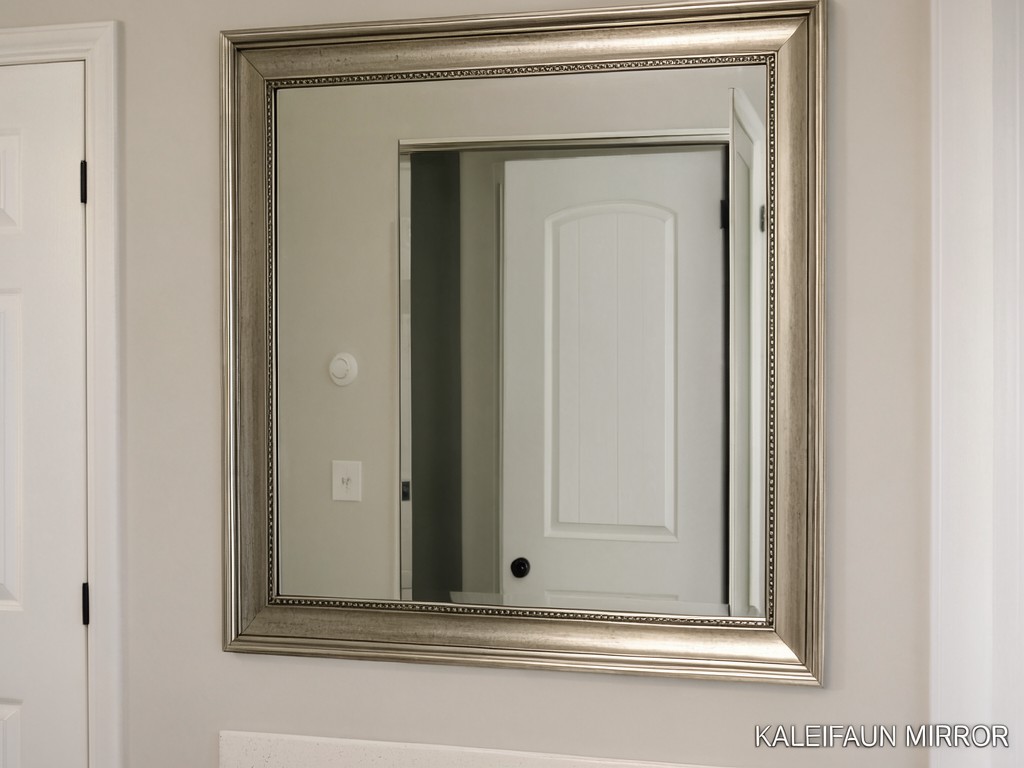
Framed Glass
A frame can protect the glass edge and define the retail style, but adds material, assembly steps and shipping weight. Keep the frame profile and finish sample on file if the range needs consistent replenishment.
Who Uses It and Where It Matters
Importers and wholesale buyers commonly supply home-furnishing retailers, residential developers and hospitality fit-out contractors. Each channel has a different service condition: a retail buyer may need branded packaging and a repeatable finish, while a project buyer needs dimensions and fixing positions to match installation drawings.
In a family home, daily contact with bags, coats and door movement makes secure mounting and protected edges practical priorities. Apartment lobbies and hotel corridors see more frequent use and may need safety backing, durable frame joints and accessible replacement specifications. Near an exterior entrance, humidity and temperature changes make the backing, frame material and care instructions relevant to the purchase decision.
For multi-site rollouts, share the same approved drawing and finish reference with the supplier and installer. That gives the importer a clearer basis for comparing samples and qualifying a second source without treating a visually similar mirror as an automatic match.
Working as a Production Partner, Not a Catalogue Supplier
A second source needs more than a sample that looks close. Share the current specification, target market, pack-out requirements and known installation complaints; the supplier can then identify differences in glass, edgework, frame construction or hardware before they enter the quote.
For OEM orders, artwork and branding usually sit on the carton, protective insert or product label rather than on the reflective surface. Confirm logo placement, colour references, label language, carton marks and approval responsibility before the packaging run. Any change to dimensions, frame profile or hanging hardware should be recorded against a revised drawing or sample approval.
An established rectangular design often needs no dedicated product mould. Setup may instead involve cutting references, drilling or assembly jigs, frame-profile preparation and packaging fixtures. If a custom feature needs a dedicated jig, its setup cost can be spread across a larger order, but the buyer should balance that amortisation against storage, revision and repeat-order needs.
Capacity, Tooling and Scheduling
Cutting and edgework capacity depends on the size mix, glass availability, frame assembly steps and pack-out method. A stable run of one or two sizes is easier to schedule than the same total quantity split across many dimensions and finishes. Ask a prospective supplier to quote against the actual SKU mix, not only the total piece count.
Volume can lower unit cost when it reduces material offcuts, changeovers and repeated packaging setup. It may also require earlier commitment to glass, frame components and printed cartons. Mixed-SKU orders can preserve flexibility, but each finish or size change adds handling and scheduling steps; agree which items can share a production run.
For lead-time planning, separate sample approval, component procurement, production, packing and export dispatch. A tooling or jig change, artwork revision, non-stock frame finish or special crate can extend the schedule. Confirm the order cut-off for specification changes and define how the supplier will identify batches and replacement parts on repeat orders.
Care, Storage and Service Life
Store mirrors upright in their protective packaging on a dry, level surface, with the pack-out instructions followed and the edges shielded from contact. Flat stacking or pressure against an exposed edge can cause damage before installation. For export shipments, packaging should suit the panel dimensions, frame weight and handling route; oversized pieces may need stronger corner protection or a crate.
Use a soft cloth and a glass cleaner compatible with the mirror finish. Keep excess liquid away from the perimeter and backing, since trapped moisture can damage the reflective coating over time. Do not use abrasive pads on the glass or frame finish, and avoid cleaners that can attack painted, plated or sealed surfaces.
Service life depends on installation support, moisture exposure, cleaning practice and impact risk. If damage occurs, replace the mirror or specified component rather than relying on a cosmetic repair to restore its original appearance or mounting security.
For a second-source review, send the existing drawing, target order mix and packaging artwork for a specification and branding check. Request an artwork-and-branding review before sample approval so carton marks, product dimensions and installation details align with the purchase order.