Custom framed beveled bathroom vanity mirrors Factory: Specification, Ordering and Quality Notes
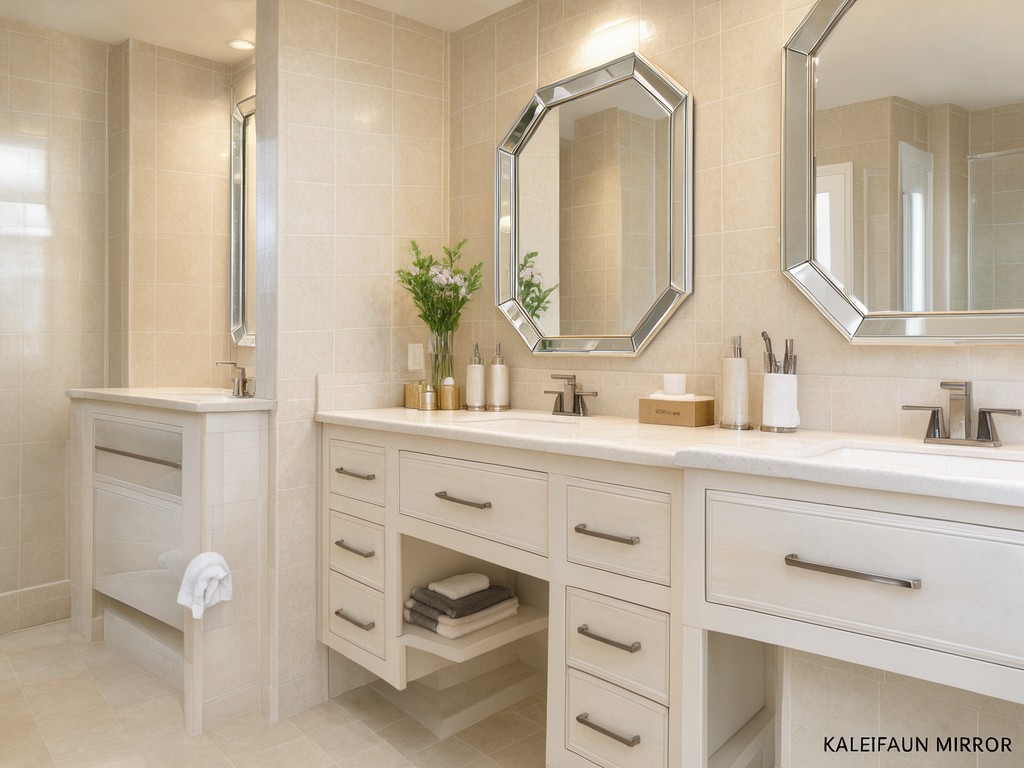
Before comparing quotations, set the size tolerance, frame material, bevel width and hanging method that your repeat order must hold. A mirror can pass a basic visual check yet trigger returns if the frame sits unevenly, the bevel varies from unit to unit or the backing is damaged at an exposed edge. The useful comparison is the cost of controlling those failure points against the cost of replacements and freight claims.
What Actually Determines Performance
Bathroom humidity exposes weak points at the mirror perimeter, frame joints and hanger fixings. If moisture reaches a damaged mirror backing or an unsealed frame edge, dark spots, corrosion or swelling may appear before the reflective surface itself shows wear.
Bevels are ground and polished on the glass edge before mirror coating, so bevel width and polish quality affect both appearance and the visible edge condition. A wider bevel creates a stronger decorative border but removes more glass from the face; keep the width consistent with the design and frame opening. The frame must retain the mirror without pressing hard against the glass, since uneven contact can chip an edge or make the mirror sit out of plane.
Repeat-order control: approve a sample that records overall dimensions, frame profile, bevel width, hanger position and backing appearance. If one of these changes, check the finished assembly again rather than relying on the glass or frame component specification alone.
Materials and Construction Trade-offs
Silvered mirror glass with a protective backing coating is a common choice for vanity use. The cut glass is bevel-ground and polished, cleaned, coated to form the reflective layer, then protected on the back; the framed assembly is completed after the glass has been inspected. Ask how the factory protects the backing during frame installation, because scraping or pinching at the perimeter can leave damage that is difficult to see after packing.
Aluminum frames keep weight down and suit consistent profiles, while stainless steel frames generally cost more and can provide a more substantial metal finish. Moisture-resistant engineered-wood frames allow a wider range of painted or wrapped looks, but exposed edges and joints need appropriate sealing for bathroom conditions. Choose by the expected cleaning routine and installation environment, not by finish appearance alone.
Comparing Two Standard Configurations
Unit price and service life diverge when frame material, edge protection and installation hardware are treated as small details. Use this decision path to match the configuration to the complaints your channel sees most often.
- If low weight and a repeatable narrow profile matter most, choose an aluminum frame; confirm corner alignment and hanger strength on the assembled mirror.
- If a heavier metal appearance is required, compare a stainless steel frame; allow for the added material cost and check the finish at cut edges and joints.
- For either option, specify the same mirror size, bevel width, backing appearance and mounting layout before comparing landed cost. A cheaper frame does not offset repeat damage from poor edge clearance or weak packaging.
| Configuration | Cost and handling | Points to verify |
|---|---|---|
| Aluminum frame with beveled silvered glass | Typically lighter to handle and easier to ship; profile and finish affect the unit price. | Corner fit, coating continuity, glass clearance and hanger placement. |
| Stainless steel frame with beveled silvered glass | Usually higher material and finishing cost; the assembled unit may weigh more. | Joint finish, surface marks, frame squareness and secure mounting hardware. |
What Can Be Customised and What Cannot
A factory can usually customise overall dimensions, frame profile and finish, bevel width, corner style, hanger layout and retail packaging. Custom dimensions may change glass yield and frame setup, so an uncommon size can cost more even when the finished mirror uses the same materials.
Glass thickness, frame clearance and hardware capacity must work together; a requested frame profile cannot be treated as a cosmetic change if it reduces support or leaves no room for the glass edge. Confirm the final dimensions and mounting details on a production drawing or approved sample. Artwork for labels and cartons can be adapted, but a printed mark does not correct a mismatch between the approved sample and the batch.
What Gets Checked Before Shipment
Returns commonly start with an issue that is easy to miss in a quick front-view inspection: a chipped bevel edge, a frame corner that opens slightly, a backing scratch, or a hanger set off the intended centreline. Factory checks should compare finished units with the approved sample and the order drawing, not only confirm that each component is present.
- Measure overall width and height, then check frame squareness and bevel consistency against the approved specification.
- Inspect the reflective face under suitable lighting for visible marks, distortion, coating defects and damage near the bevel.
- Check frame joints, glass retention, hanger position and hardware attachment on the assembled unit.
- Review protective separation and carton support so frame corners and glass edges do not contact adjacent units in transit.
For repeat orders, retain a signed sample or controlled reference and record any approved deviation by batch. That gives the buyer a practical basis for resolving a claim about dimensions, finish or assembly without relying on memory or sales images.
Care, Storage and Service Life
Use a soft cloth and a suitable glass cleaner on the mirror face; keep liquid away from the bevel edge, frame joints and backing. Repeated wetting at the perimeter can attack the mirror backing or finish, so wipe standing moisture promptly rather than letting it collect along the lower edge.
Store cartons upright or in the factory-specified orientation, on a dry level surface, with corner protection intact. Avoid stacking loads that press through the carton onto the glass. For distributors handling transit damage claims, keep the carton and internal protection available until the mirror has been inspected.
Ordering, Tooling and Lead-Time Questions
Two suppliers quoting the same specification may be allowing for different frame tooling, packaging and inspection scope. Send the same dimensioned drawing, finish reference, bevel detail, hanger layout and carton requirements to each factory; otherwise, a low quotation may leave out the controls that prevent repeat claims.
How Does a New Frame Profile Affect Tooling and Lead Time?
A new metal profile or a non-standard frame construction may require tooling or setup before a production sample can be approved. Confirm whether the quote includes that work, how the sample will be checked and whether the approved profile will be held for repeat orders.
Which Details Should Be Locked Before the Purchase Order?
Confirm finished dimensions, glass and frame materials, bevel width, surface finish, mounting hardware, acceptable visual limits, packaging and any labelling artwork. MOQ and production timing depend on the selected profile, finish, order quantity and sample approval; request the factory's schedule against the final specification.
Can Artwork Be Approved Before Bulk Production?
Yes. Provide print-ready label or carton artwork with placement and colour references, then approve a proof before the factory releases bulk packaging. Keep branding review separate from the mirror sample approval so a packaging change does not obscure a product-specification change.
For an artwork-and-branding review, share the intended mirror specification, label files and carton layout through our contact page. Include the approved sample reference and target order quantity so the factory can review branding alongside production and packing requirements.