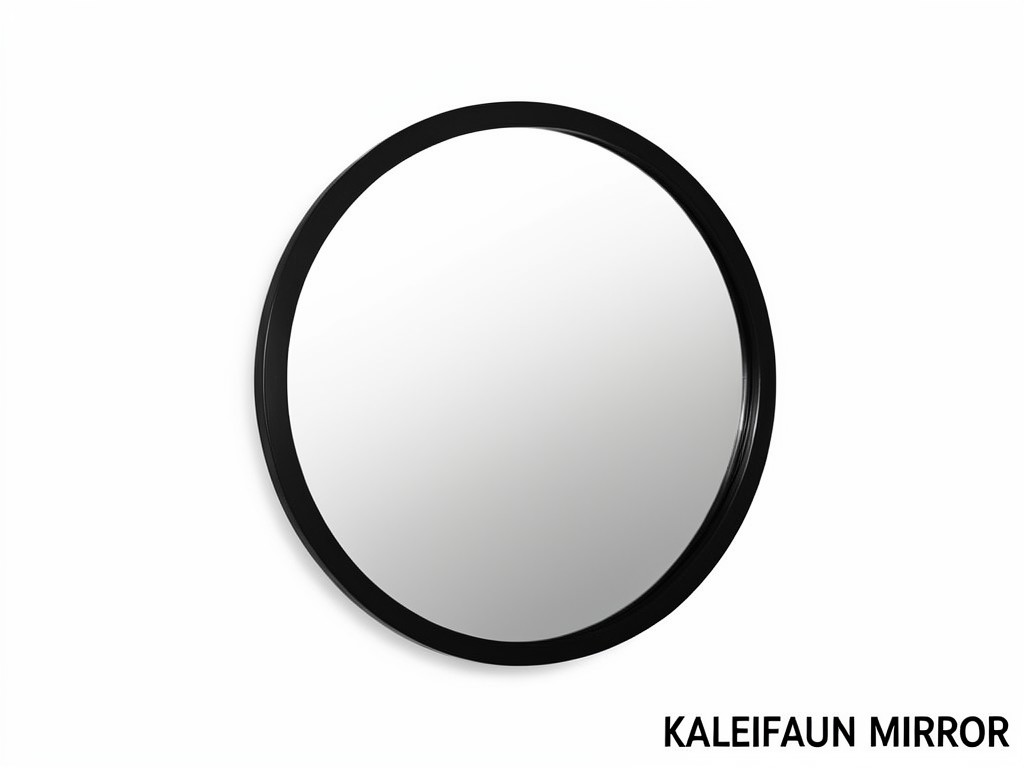
Cost decision: a slim powder-coated steel rim usually gives the lowest unit price; an aluminum rim reduces carried weight and can suit larger diameters, but raises material cost. Approve the diameter, glass thickness, rim profile and black finish together so later lots match the sample buyers priced.
Affordable black circle wall mirror supplier: Specification, Ordering and Quality Notes
Design Constraints Behind the Specification
Process choice shows up later as variation in outside diameter, rim profile and black finish across a production lot. The usual construction starts with cut and ground mirror glass, a formed metal ring, a powder-coated surface and a rear support with a hanging fitting. Each part adds a tolerance; if the ring is out of round, the glass-to-frame gap can vary around the circumference even when the glass itself meets its diameter target.
A larger mirror needs more glass area and a stiffer frame, so reducing glass thickness to lower the quote can increase flex during handling. Agree the finished outside diameter, glass diameter, rim width, thickness and hanger position on one drawing. Set acceptance limits for those dimensions before the first article, then compare repeat lots against the approved sample; small differences become visible when a retailer displays several mirrors together.
Materials and Construction Trade-offs
Consistency is set at the forming stage: a controlled ring profile holds the glass centrally, while uneven forming can leave a changing reveal or make assembly harder to repeat. Low-carbon steel is generally the economical frame choice and accepts powder coating well. Aluminum lowers frame mass, though the profile and finishing route can raise the purchase price.
Mirror glass commonly uses a reflective metallic layer and protective backing paint. The glass edge needs grinding before assembly; chips at the edge can develop into cracks during fitting or transit. A rear board can cover the backing and provide a mounting surface, but adds weight and another part whose dimensions must remain consistent. For a black frame, specify the sheen and visual reference as well as the colour name, since gloss and texture changes are noticeable across adjacent units.
Factory check: compare sample and production pieces for roundness, overall diameter, glass centring, edge condition, hanging hardware position and coating appearance. Record findings by lot; visual matching is more useful when inspectors assess units under the same lighting.
Comparing Two Standard Configurations
The ranges below are planning estimates for common sizes, not fixed weights. Frame section, backing board, hanger and glass thickness shift the finished mass. Confirm the production drawing and sample weight before calculating freight or setting a retail specification.
| Nominal Diameter | Typical Finished Weight | Common Configuration |
|---|---|---|
| 400 mm | About 1.5–2.2 kg | 3–4 mm glass with a slim steel rim |
| 600 mm | About 3.0–4.2 kg | 4 mm glass with steel or aluminum rim |
| 800 mm | About 5.0–6.7 kg | 4–5 mm glass with a more substantial rim |
Powder-Coated Steel
A practical cost target for standard retail diameters and frequent replenishment. Its greater frame mass can help the rim feel firm, but large sizes need suitable hanging hardware and a checked frame section. Specify coating sheen and inspect for thin coverage at joins and edges.
Powder-Coated Aluminum
A lighter frame can reduce finished weight, which may help where customers mount larger mirrors on lighter-duty walls. The material and formed profile often cost more than steel. Confirm the sample for rim rigidity and finish match before making the upgrade across a full range.
Customisation Options and Their Limits
Custom diameters, rim widths, black finishes, rear boards and hanger positions are feasible, but each change affects tooling, assembly or inspection. First-article tooling determines how quickly a new ring profile can be brought into repeat production; a non-standard curve or unusually narrow rim may need a dedicated forming setup. Keep the glass and frame dimensions tied to the same approved drawing, rather than specifying each component separately.
Private-label branding can be applied to the rear label or retail carton artwork, subject to the agreed product configuration. Artwork changes do not correct a mismatch in rim colour or diameter between lots, so approve physical finish samples and dimensional records separately. MOQ and lead time depend on the requested size, frame material, colour setup and whether tooling is already available; ask for those terms against the final specification.
Questions Buyers Ask Before Ordering
How do you keep diameter and finish consistent across repeat lots?
Use an approved drawing and retained sample as the lot reference. The factory can check outside diameter, roundness, glass centring and hanger position, then compare the black coating under consistent viewing conditions. Agree permitted tolerances and the method for reporting deviations before the first production run.
Can I change glass thickness after approving the sample?
A thickness change affects mass, edge fit and the way the glass sits in the frame. It may also require a change to the support or assembly method. Treat the revised thickness as a specification change and request a new sample for approval before placing a repeat order.
What information is needed for a private-label quotation?
Provide target diameter, glass thickness, frame material and profile, finish reference, hanger requirements, order quantity and branding files. If the design uses a new ring profile, request a sample and confirm tooling charges, MOQ and lead time before approving production.
Request a Production Sample
Send the target size, preferred frame material, black finish reference and estimated order quantity. A sample review can establish the dimensional and appearance baseline that later lots must match.