custom round white decorative wall mirror factory - Bulk Supply and Specification Guide
The Problem Buyers Keep Paying For
Cost and durability pull in opposite directions once a white round mirror moves from a sample to a repeat private-label order. A lower-cost frame can show shade variation, corner-like stress at joints, or surface marks that stand out against a white finish; a thicker or more carefully finished frame adds unit cost and carton volume. The decision rule is to compare the finished, packed unit and expected return exposure, not the mirror glass price alone.
Batch complaints often start with small differences: a diameter that shifts between production lots, a white tone that reads warmer under retail lighting, or a hanging point that sits off-centre. On larger mirrors, glass thickness and frame support affect the finished weight and the load at the wall fixing. Agreeing on a signed sample, measurement points, finish reference and hardware position gives inspection teams a repeatable basis for acceptance and gives the buyer a clearer warranty position.
Materials and Construction Trade-offs
Material choice starts with the conditions the product will meet. A dry bedroom or retail display allows more frame choices; a changing area with regular humidity calls for closer review of the frame substrate, sealed edges and rear protection. The options below describe common routes, but the final finish should be approved on a production-representative sample.
| Finish and colour route | Construction fit | Batch and service trade-off |
|---|---|---|
| Painted white MDF or wood frame | Suitable for shaped profiles and a painted, furniture-style appearance. | A sealed finish can support a consistent appearance; exposed edges and joints need inspection for chips and moisture entry. |
| Moulded white PS frame | Useful for repeatable profiles and a lighter finished assembly. | A moulded colour avoids paint variation between frame faces, while mould tooling and profile limits affect setup cost and design choice. |
| White PU-coated or wrapped frame | Can provide a defined surface texture or a continuous decorative skin over a formed profile. | Check adhesion at edges and profile transitions; more surface steps may add labour and inspection time. |
| White painted or coated metal frame | A slim-profile option where a narrow visible border is part of the design. | The coating and cut edges need checks for scratches, exposed substrate and corrosion risk in the intended room conditions. |
Mirror glass is commonly specified with a silvered reflective layer and protective backing paint; glass thickness is selected against diameter, support design and target weight. An optional safety backing film can help retain fragments if glass breaks, but it does not make the mirror unbreakable or replace suitable wall fixings. White frame colour should be matched to an agreed physical sample or controlled colour reference, since screens and ambient light can make the same finish appear different.
Construction Method and Its Effect on Consistency
A repeatable build begins with a controlled glass blank. The factory cuts the round profile, grinds and polishes the edge, checks the diameter, then assembles the glass with the selected frame and rear support. Frame moulding or profile preparation, white finishing, adhesive placement and hanger installation follow the approved drawing and sample.
For OEM batches, the most useful checks are not limited to a visual scan of the front. Diameter and roundness checks catch cutting drift; edge inspection finds chips before assembly; colour comparison under a consistent light source flags finish variation. Final inspection should also verify frame-to-glass gaps, hanger position, finished weight where specified, and rear-panel or backing-film coverage. These controls cost less than sorting mixed cartons after delivery.
Set acceptance limits for diameter, visible gap, colour, hanger location and face defects before the purchase order. If the specification is silent, inspectors may accept different interpretations of the same sample, and the buyer carries the cost of avoidable disputes.
Where This Product Beats Standard Alternatives
A custom round white mirror earns its place when a buyer needs the same diameter, frame profile, white tone and hanging position across a labelled range or repeat order. Stock alternatives may have a lower opening price, but a specification that changes between suppliers can create shelf mismatch, replacement work and warranty claims. Customisation is most useful when it locks down the features customers notice and the parts that affect installation.
Custom Private-Label Batch
A drawing, approved sample and colour reference tie repeat production to a defined frame and mirror assembly. Buyers can choose the profile, diameter, hardware and retail packaging without changing the product concept.
General Stock Mirror
A standard item can suit an urgent or price-led purchase when available dimensions and finishes already match the buyer’s range. The trade-off is less control over frame detail, packaging marks and lot-to-lot appearance.
The cost case depends on reorder volume, freight damage and the buyer’s tolerance for cosmetic returns. A heavier protective pack or a more stable frame finish can raise the landed unit cost while lowering breakage, rework or replacement exposure. Compare those costs against expected sales and claim rates rather than treating the lowest factory quote as the lowest total cost.
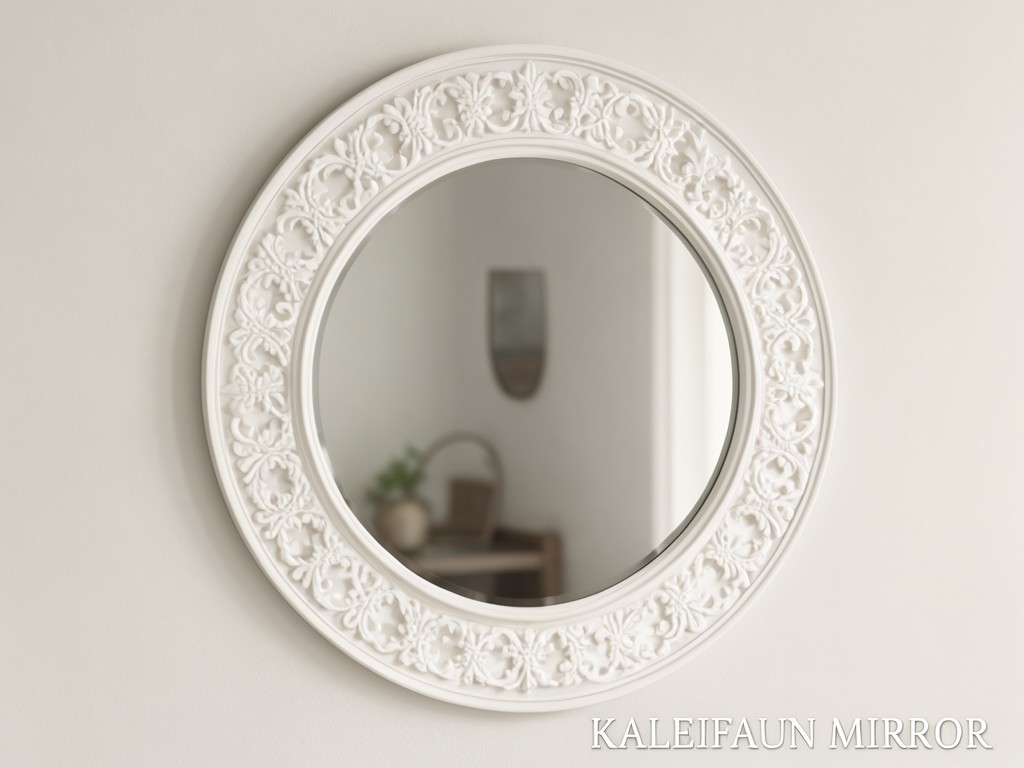
Specification Range and Customisation Limits
Typical project ranges depend on the frame profile, glass support and packaging limits. A buyer should confirm the outside diameter separately from the visible mirror diameter; a broad frame can reduce the reflective area even when the overall size stays unchanged.
- Overall diameter commonly falls around 300–1,000 mm, subject to frame construction, glass availability and export-carton limits.
- Glass thickness is often selected within roughly 3–5 mm; larger diameters or different support layouts may require a revised weight and fixing review.
- Frame width, depth, surface texture, white shade, rear finish, safety backing and hanger type can be specified, but each choice must fit the chosen profile and assembly method.
- A very slim border, deep sculpted profile or non-standard white finish may require dedicated tooling, extra finishing steps or a higher minimum order quantity.
Lock the approved drawing to measurable points: overall diameter, visible glass diameter, frame depth, hanger centre and finished weight range. Do not approve colour from a digital image alone when a close white match matters to a private-label assortment.
Requirements by Buyer Segment
Wholesale buyers usually need a stable master specification, carton-level identification and predictable reorder options across sizes. Their key exposure is mixed appearance or damage that complicates receiving and retail presentation, so they benefit from a signed sample, lot identification and agreed carton markings.
Club or academy purchasing managers tend to prioritize simple replacement and matching units across reception, changing and training-support spaces. Specify hardware and finished weight for the intended wall construction, and ask for a spare-unit or replacement-glass route if serviceability matters. A lower unit price has limited value if a damaged mirror cannot be matched in a later purchase.
For both buyer groups, retail or institutional labels should identify the SKU and handling orientation without obscuring required product information. Confirm the artwork file, barcode placement and language requirements before print approval; late label changes can hold packing even when mirror production is complete.
Ordering, Tooling and Lead-Time Questions
Packaging selection affects breakage risk, dimensional freight cost and the way a receiving team handles the mirror. Confirm the pack format against the product diameter, frame projection, shipment route and whether units will move through a distribution centre before final delivery.
| Packaging format | Typical protection and handling | Buyer trade-off |
|---|---|---|
| Individual inner carton | Face protection, corner or perimeter cushioning, and a fitted carton around each mirror. | Supports unit-level handling and retail labelling; pack size and protection level affect freight cube and material use. |
| Master carton with separated units | Dividers or protective spacing reduce contact between frames and mirror faces during transit. | Can suit wholesale receiving, but carton quantity must fit handling limits and the chosen unit pack. |
| Palletized export load | Stacking pattern, edge protection and load restraint are set for the route and carrier handling. | A defined pallet plan can simplify receiving; pallet dimensions and height may change freight utilization. |
Does a Custom Frame Profile Require New Tooling?
A new moulded profile can require dedicated tooling; a painted wood or MDF profile may instead rely on cutting and finishing setup. The factory can confirm the tooling route after reviewing the profile drawing, target quantity and finish requirements.
What Changes the MOQ and Production Lead Time?
A stock profile with a standard white finish generally avoids some setup steps. New tooling, special colour matching, custom printed packaging or several size variants can raise the MOQ or extend the schedule; the confirmed timing should follow sample approval and material availability.
Which Artwork and Samples Should Be Approved?
Approve a production-representative mirror sample for dimensions, frame finish, hanger location and assembly. Provide print-ready label artwork with the required SKU, barcode and language details, then approve a packaging sample if carton graphics or internal protection are part of the order.
How Can Repeat Orders Match the Approved Batch?
Keep the signed sample, drawing revision, finish reference and inspection limits with the purchase specification. Ask the factory to record the batch and retain the approved construction details so later orders can be checked against the same reference rather than a verbal description.
Send the target diameter, frame reference, white finish target, hanger requirement, estimated order volume and destination market for a tooling and specification review. A drawing and sample-based review can identify cost drivers before the buyer commits to a production run.