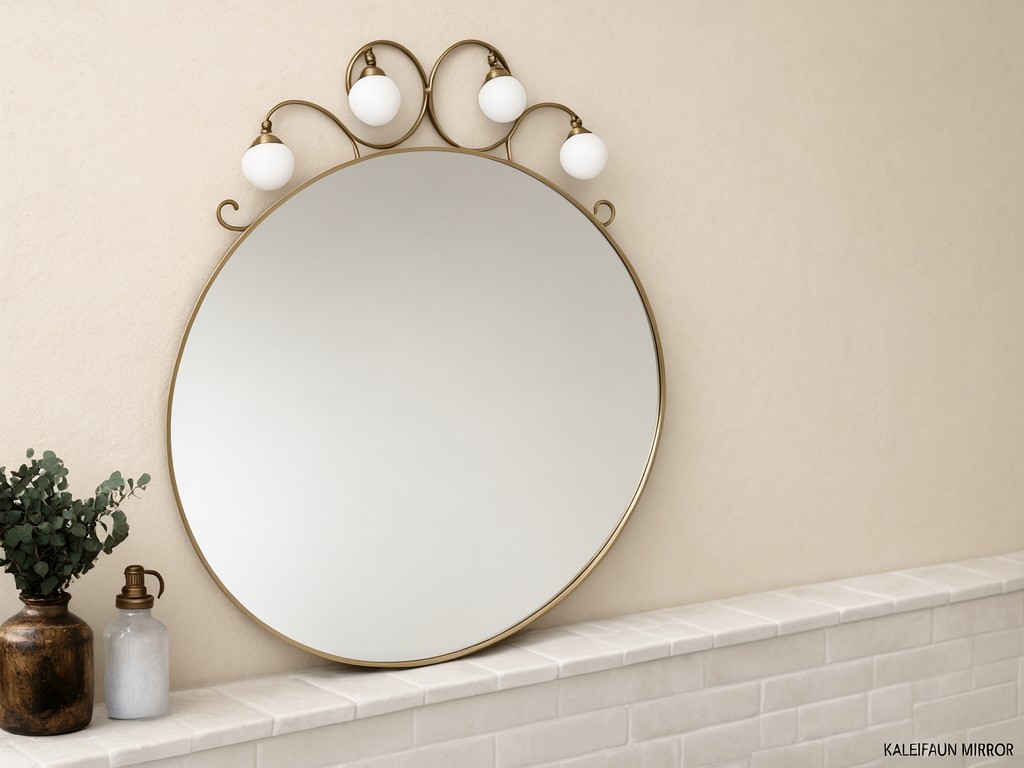
Discount brass round bathroom mirror: Specification, Ordering and Quality Notes
Selection rule: Agree the mirror diameter, frame material and finish sample before production. A brass-plated metal frame can reduce unit cost; solid brass usually carries a higher material cost and different weight. In either case, confirm the mounting details and bathroom humidity exposure against the approved drawing.
Scope of Supply and Physical Form
Consistency is set at the forming stage: roundness, frame profile and the mirror’s position within the frame depend on the forming tool and the dimensions approved for production. A typical supply is a circular glass mirror with a brass or brass-finish metal surround, rear backing and wall-mounting hardware; confirm whether the price includes all four components.
Before a sample is released, specify the outside diameter, visible glass diameter, frame width, projection from the wall, glass thickness and mounting-point position. These dimensions affect both the visual proportion and the fit over existing wall fixings. For a launch date with little schedule flexibility, approve one dimensioned drawing and one physical finish sample as the production reference.
Materials and Construction Trade-offs
The build method decides how closely the purchase price tracks material content. Solid brass offers a metal body through the frame section, while brass-plated steel or aluminum uses a base metal beneath the visible finish. Plated construction can lower weight and cost, but exposed edges, joints and damaged coating need attention in a humid bathroom.
Solid Brass Frame
Choose this where the buyer wants brass throughout the frame section and accepts the additional material cost and weight. Confirm the alloy, section profile, finish method and any clear protective coating in the specification; the word “brass” alone does not define the surface appearance.
Brass-Finish Metal Frame
Brass-plated steel or aluminum can suit price-led programmes where a consistent visible color matters more than solid-brass content. Record the base metal, plating or coating route, sheen and sample approval. Humidity can expose weak points at seams or cut edges, so include those areas in the agreed finish review.
Glass specification also affects cost and handling risk. Set the glass thickness and any backing or safety-film requirement before quotation; those choices change weight, packing needs and the assembly detail. Do not treat a decorative finish sample as approval of the full mirror assembly.
Matching the Product to the Buyer's Need
Process choice shows up later as variation in roundness, frame alignment and finish shade between units. For a value-led retail range, a plated frame can meet the price point if the buyer accepts the specified base metal and approves the actual finish sample. For a bathroom project that calls for solid brass, confirm that specification before costing; substituting a plated frame after approval changes the product, not just the finish.
Match the diameter and mounting layout to the installation, then match frame material and finish to the target price. If the order needs branded retail packaging, artwork approval and carton dimensions should run alongside the sample process. Finalize the drawing, finish reference, hardware and packing configuration in one approval record to reduce late changes that can put a shipping window at risk.
Segment-Specific Requirements
Retail buyers usually need a repeatable shelf appearance across cartons, plus a finish and label presentation that matches approved artwork. Confirm barcode placement, protective-film instructions, included wall hardware and the retail unit pack before bulk production. Changes to artwork after sign-off can require new packaging materials and affect the dispatch plan.
Club or academy purchasing managers fitting locker-room bathrooms should prioritize mounting compatibility, surface-cleaning instructions and the room’s humidity conditions. Where mirrors face regular splashes or frequent cleaning, specify a finish intended for indoor bathroom use and request confirmation of care limits. A bathroom mirror is not automatically suitable for exposed outdoor weather or direct water immersion.
Quality Control and Batch Consistency
Set acceptance criteria against the signed drawing and physical sample, not a general description such as “round” or “antique brass.” The supplier and buyer should agree the measurement points, visual review conditions and sample size before the production lot begins. Keep the approved references tied to the order so later batches can be checked against the same basis.
| Control point | Factory check | Acceptance basis to agree | Batch record |
|---|---|---|---|
| Overall dimensions and roundness | Measure outside diameter, frame width and projection; compare the profile around the circumference. | Approved drawing with tolerances specified by the buyer and supplier. | Recorded dimensions and lot identification. |
| Frame finish and joints | Visual comparison with the signed sample; review seams, corners, edges and coating coverage. | Agreed color, sheen and permissible appearance variation under defined viewing conditions. | Sample reference and inspection notes. |
| Mirror and assembly | Check glass condition, centering, backing and attachment of specified mounting hardware. | Approved sample, drawing and stated component requirements. | Assembly findings and any accepted deviation. |
| Pack-out and identification | Verify protective components, carton markings and approved retail artwork. | Signed packaging specification and approved artwork files. | Packing check and carton or lot references. |
Export Packaging and Handling Protection
Glass edge contact and frame abrasion are the main pack-out risks during handling and transit. Specify separation around the frame, protection over the mirror face, immobilization inside the carton and a suitable master-carton arrangement for the intended shipment. The right configuration depends on mirror diameter, total weight, order quantity and the buyer’s retail-pack requirements.
Approve a packed sample or packaging layout before the full run when the order has custom artwork or a fixed delivery window. Confirm carton markings, quantity per carton, handling labels and any destination-specific retail information early. A change to carton size or pack count after booking can affect freight planning.
Questions Buyers Ask Before Ordering
What needs approval before bulk production starts?
Approve the dimensioned drawing, frame material and finish sample, mirror and mounting configuration, and packaging artwork where applicable. Ask the supplier to confirm that the production reference is attached to the order before materials are committed.
Can a brass-finish frame be used in a humid bathroom?
Suitability depends on the base metal, finish system, joints, edge coverage and care conditions. Request the intended indoor-use specification and cleaning guidance, then review the finish sample and any stated limitations before approval; do not assume the product is rated for outdoor exposure.
How can the order stay on schedule for a launch?
Confirm the production quantity, material option, sample route, artwork, packing format and required ship window at quotation stage. Lead-time confirmation should follow drawing and sample approval, since revisions to diameter, finish or packaging can change purchasing and production timing.
Request a pre-production sample against your drawing and target finish before placing the bulk order. Share the required diameter, frame construction, mounting arrangement, artwork status and intended ship window through a sample request so the quotation and approval sequence reflect your launch schedule.